Albanian Government Approves $40 Million Bailout to Support Air Albania
Albania’s government has approved a $40 million bailout for Air Albania to stabilize operations and support the airline’s financial recovery.
 Jishan Khan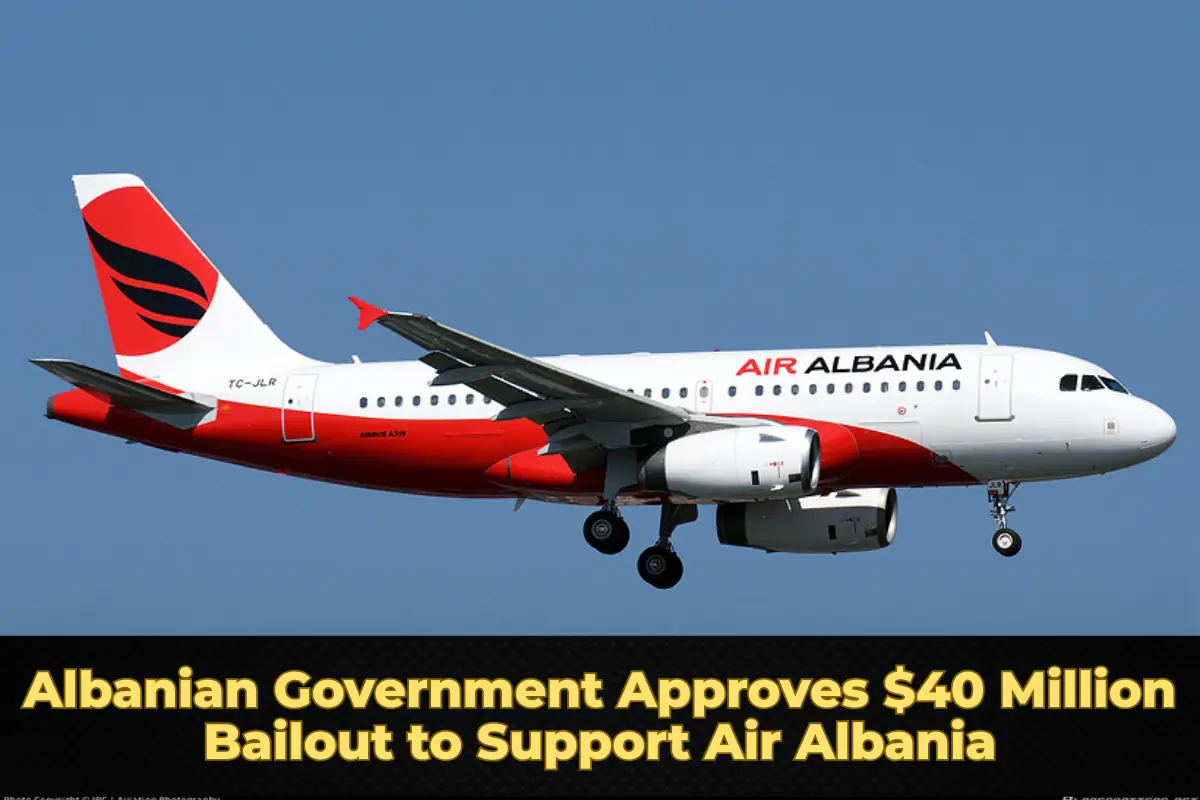
Albania’s government has approved a $40 million financial bailout for national carrier Air Albania in 2026, aiming to stabilize the airline’s operations, address financial challenges, and ensure continued connectivity for the country’s aviation sector. The decision, ordered by the prime minister, comes as the airline faces mounting operational costs and market pressures in a competitive regional environment.
The funding package is intended to provide immediate financial relief to the airline, helping it manage liquidity constraints while maintaining flight operations and essential services. Authorities have emphasized the strategic importance of Air Albania in supporting tourism, economic activity, and international connectivity.
Government Intervention to Stabilize Operations
The $40 million bailout reflects a direct intervention by the Albanian government to prevent operational disruptions at Air Albania. Airlines, particularly smaller national carriers, often rely on government support during periods of financial stress, especially when external factors such as rising fuel prices and fluctuating demand impact performance.
The funding is expected to be used to cover operational expenses, including fuel costs, maintenance, and staffing, ensuring that the airline can continue to operate without significant service reductions. Maintaining continuity is seen as critical for both domestic and international travel links.
Officials have indicated that the support is part of broader efforts to safeguard key national infrastructure and maintain stability in the aviation sector.
Challenges Facing Air Albania
Air Albania has been navigating a challenging operating environment marked by rising costs and increased competition from both regional and international airlines. The airline’s financial position has been under pressure due to fluctuating passenger demand and the impact of global economic conditions.
Fuel prices, which represent a significant portion of airline operating costs, have remained volatile, placing additional strain on carriers with limited financial reserves. For Air Albania, managing these costs while maintaining competitive fares has been a key challenge.
In addition, competition from low-cost carriers operating in Europe has intensified, forcing smaller airlines to adapt their pricing strategies and optimize operations to retain market share.
Strategic Importance of Air Albania
Air Albania plays a vital role in the country’s transportation network, connecting Albania with key European destinations and supporting the tourism sector. As tourism continues to be a major contributor to the national economy, ensuring reliable air connectivity is a priority for policymakers.
The airline also contributes to employment and supports related industries, including hospitality and logistics. A disruption in its operations could have broader economic implications, making government support a strategic decision.
By providing financial assistance, the government aims to protect these economic linkages and maintain confidence in the country’s aviation infrastructure.
Conditions and Oversight
While details of specific conditions attached to the bailout have not been fully disclosed, government financial support for airlines typically involves oversight measures to ensure funds are used effectively. These may include performance targets, financial reporting requirements, and operational benchmarks.
Authorities are likely to monitor Air Albania’s financial performance and operational efficiency closely as part of the support arrangement. Ensuring accountability and transparency is essential in maintaining public and investor confidence.
The bailout may also prompt the airline to implement internal reforms aimed at improving efficiency and reducing costs over the longer term.
Regional Aviation Context
The move by Albania reflects a broader trend in the aviation industry, where governments have stepped in to support airlines facing financial difficulties. Across Europe and other regions, carriers have received varying levels of assistance to navigate challenging market conditions.
Smaller national airlines, in particular, are more vulnerable to economic fluctuations due to their limited scale and resources. Government backing can provide critical support, allowing these carriers to remain operational and competitive.
However, such interventions also raise questions about long-term sustainability and the need for structural adjustments within the industry.
Potential Impact on Market Dynamics
The bailout is expected to help Air Albania maintain its market presence and continue serving key routes, potentially stabilizing competition in the region. By ensuring the airline’s survival, the government is helping to preserve competition and prevent market consolidation by larger carriers.
At the same time, continued government support may influence pricing and capacity decisions, as the airline gains additional financial flexibility. Competitors will be closely watching how the funding impacts Air Albania’s operations and strategy.
The development may also encourage other governments to consider similar measures if national carriers face financial stress.
Future Outlook for Air Albania
Looking ahead, Air Albania is expected to focus on strengthening its financial position and improving operational efficiency. The bailout provides an opportunity for the airline to stabilize its operations and implement strategic changes aimed at long-term sustainability.
Potential areas of focus may include optimizing route networks, enhancing cost management, and exploring partnerships with other carriers. These steps could help the airline improve its competitiveness and resilience in a dynamic market.
The effectiveness of the government support will depend on how successfully the airline can adapt to evolving industry conditions and capitalize on opportunities for growth.
Economic and Industry Implications
The bailout underscores the importance of aviation as a critical component of national infrastructure and economic development. By supporting Air Albania, the government is reinforcing its commitment to maintaining connectivity and supporting key economic sectors.
For the broader aviation industry, the move highlights ongoing challenges related to cost pressures, competition, and financial sustainability. Airlines will continue to face the need for strategic adaptation in response to these factors.
Investors and industry observers are likely to monitor the situation closely to assess the impact of the bailout on Air Albania’s performance and the wider market.
Current Status
The Albanian government has approved a $40 million bailout for Air Albania, with the airline set to use the funds to stabilize operations and continue serving key routes while addressing financial challenges.