Saadia Zahidi Succeeds Willie Walsh as IATA Director General
IATA has appointed Saadia Zahidi as its first female Director General, succeeding Willie Walsh, who will become CEO of IndiGo later this year.
 Jishan Khan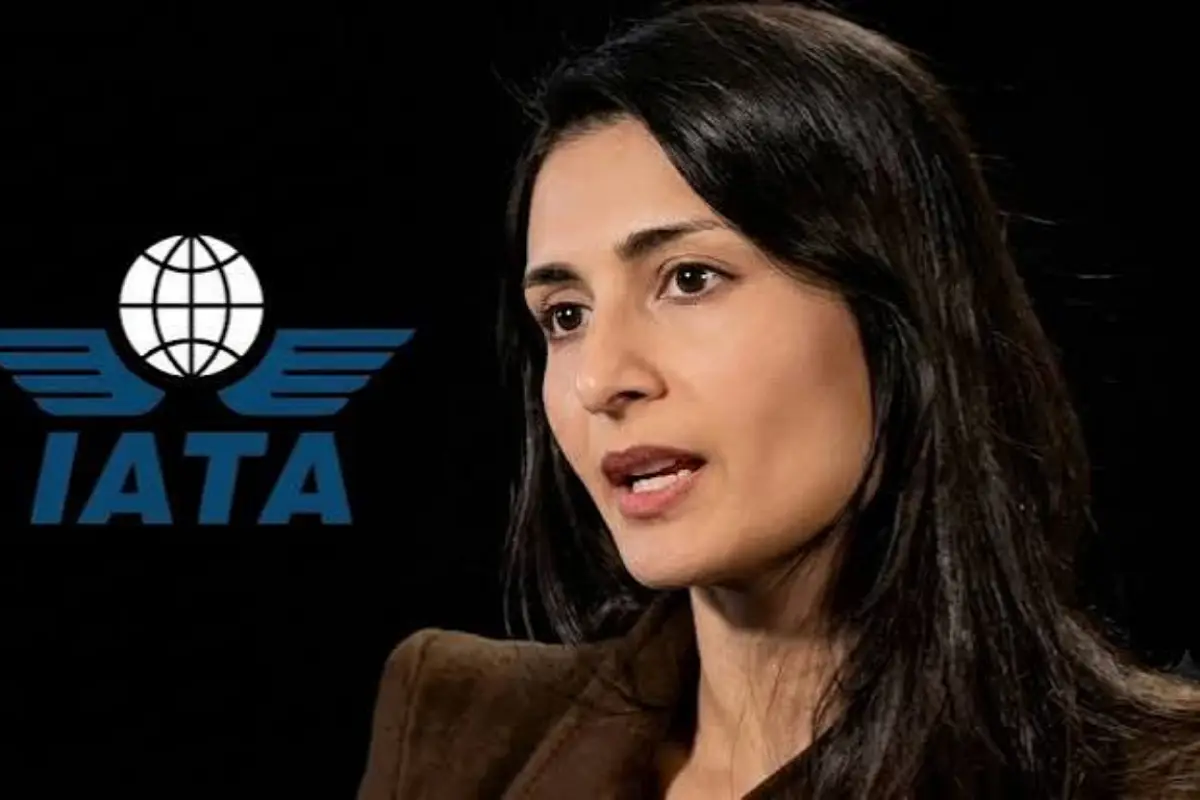
IATA Just Hired an Economist to Run Global Aviation, While Its Outgoing Chief Joins India's Biggest Airline
The International Air Transport Association appointed Saadia Zahidi as its ninth Director General on July 23, 2026, effective November 1, making her the first woman to lead the 82-year-old organisation. She joins from the World Economic Forum, where she has spent over two decades as an economist and policy architect. Her predecessor Willie Walsh, a career airline CEO who ran Aer Lingus, British Airways and IAG, is leaving IATA to become CEO of IndiGo, India's largest carrier.
The contrast in those two career moves tells you almost everything about where aviation's centre of gravity is shifting.
Who Saadia Zahidi Actually Is
Zahidi has been at the WEF since 2004, rising to Managing Director and board member, founding and leading the Centre for the New Economy and Society, and running the Forum's Global Gender Gap, Global Competitiveness, and Future of Jobs reports. She has served on the United Nations Secretary General's panel for Women's Economic Empowerment and the European Space Agency's High Level Advisory Group. She has never run an airline, never managed a hub, and never negotiated a slot allocation.
Every previous IATA Director General came from inside the airline industry. Giovanni Bisignani ran Alitalia. Tony Tyler was CEO of Cathay Pacific. Walsh ran three airlines across two decades. The board's decision to break that sequence is not an accident, it is a statement about what IATA needs to do next that an airline CEO background would not naturally equip someone for.
Why the Board Chose an Economist
Roberto Alvo, chair of the IATA board and CEO of LATAM Airlines Group, named technology and geopolitics specifically as the forces that will reshape aviation, and said Zahidi's skillset positions IATA to articulate the industry's needs through that shift. That framing is deliberate. The Iran conflict cut global airline profits in half in 2026. US-China trade tensions reshaped Boeing's order pipeline. Carbon pricing frameworks are being debated in the European Parliament and at ICAO simultaneously. Aviation's biggest near-term battles are being fought in trade negotiating rooms, climate conferences and government finance ministries, not on airport aprons.
An economist who spent twenty years building consensus between governments, corporations and international organisations at Davos is arguably better equipped for those battles than a former airline CEO whose instincts are operational rather than diplomatic. Zahidi's WEF work on the Future of Jobs report also gives her a sharper lens on aviation's workforce crisis, pilot shortages, ground handler attrition, the competition for technical talent against the defence and technology sectors, than any of her predecessors brought to the role.
The Willie Walsh Exit That Reframes Everything
The fact that Walsh is heading to IndiGo rather than retirement removes the possibility that this appointment was driven by a lack of airline-industry candidates. Walsh is one of the most credible aviation operators of his generation. The industry did not run out of airline executives to lead IATA. It chose not to use one.
Walsh's move to IndiGo is equally telling — India's largest airline, in the world's fastest-growing aviation market, is bringing in one of European aviation's most battle-tested restructuring specialists just as it navigates record losses, the Tata Group's Air India growing rapidly behind it, and the prospect of Adani potentially entering the market. Walsh knows how to take a bloated airline apart and rebuild it leaner. IndiGo clearly thinks that skill set has a near-term application.
Two appointments announced within days of each other. One sends an airline operator to fix the industry's problems from inside a carrier. The other sends a policy architect to fix them from inside the global body that represents them all. Between the two moves, the IATA board has said something clear about where it thinks aviation's hardest problems actually live in 2026.