DGCA drug test plans annual testing for all commercial pilots
DGCA drug test plans annual testing for every commercial pilot in India after an Air India captain tested positive for marijuana following a serious incident.
 Jishan Khan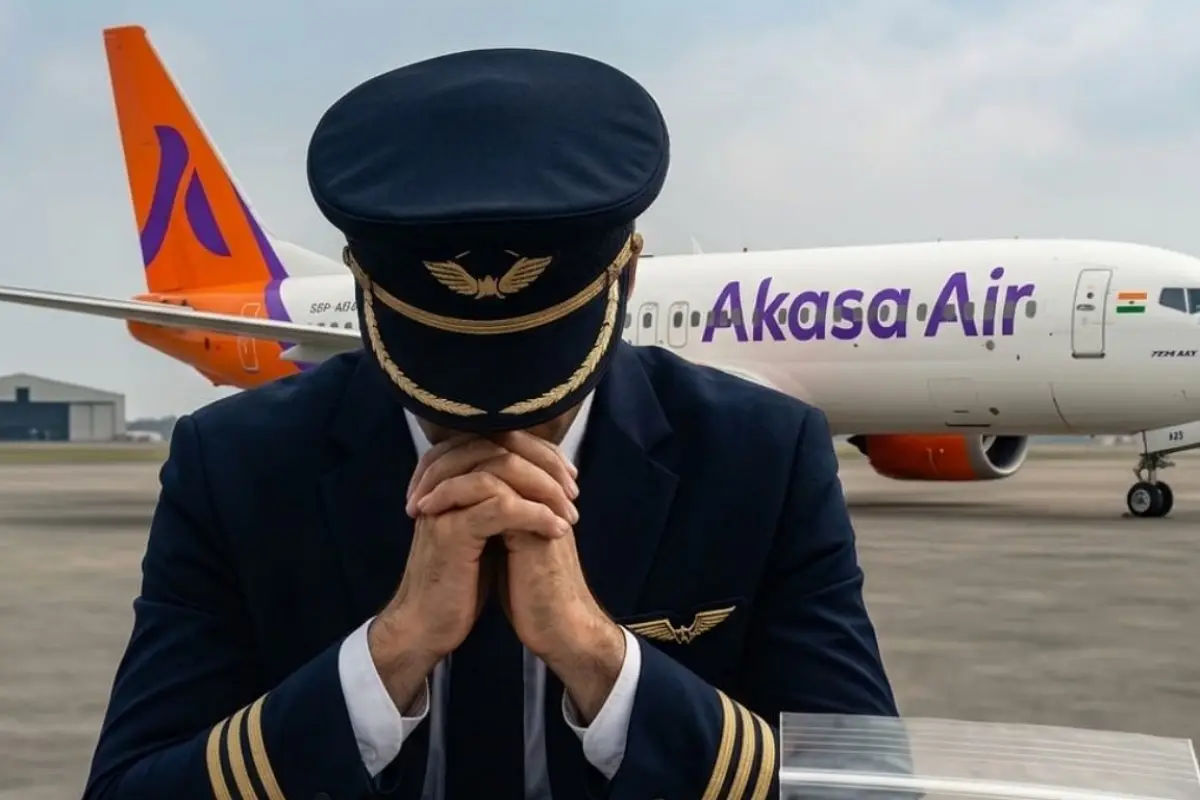
Civil Aviation Minister Ram Mohan Naidu confirmed in late August 2026 that India's DGCA is consulting airlines and pilot bodies on moving from testing 10% of the country's pilot workforce annually to requiring every single commercial pilot to undergo at least one random test a year. "There are multiple ways of approaching this dope test," Naidu said. "Right now, the rule says 10% across the overall pilot network. DGCA is engaging, and one of the opinions from our side is that everyone has to go through it in the year at a random time." The trigger was specific and identifiable: the captain flying Air India's August 4 Phuket-Delhi flight, which suddenly lost 300 feet of altitude and injured 24 people, returned a confirmed positive result for marijuana in his post-incident testing. The proposed change would significantly expand DGCA drug test coverage across India's commercial aviation sector.
What Actually Happened on Flight AI2379
Air India Flight AI2379, an Airbus A320neo carrying 137 passengers and eight crew, was flying from Phuket to Delhi on August 4, 2026 when it suddenly dropped roughly 300 feet in altitude. The sudden descent threw passengers and crew around the cabin, injuring 20 passengers and four cabin crew members before the aircraft recovered and landed safely. Both pilots underwent mandatory psychoactive-substance testing immediately afterward, as required under existing DGCA post-incident protocols. The captain's initial test came back requiring confirmatory testing, and that confirmatory result returned positive for marijuana, becoming a major trigger for renewed debate around pilot marijuana test India rules.
That sequence is important to understand precisely, because it establishes something India's existing regulatory framework was actually designed to catch. Post-incident testing has been mandatory under DGCA rules since 2022. The system worked exactly as intended in this specific case, a serious in-flight event triggered testing, and testing caught an impaired pilot. What the Phuket-Delhi incident exposed instead is the much larger gap sitting outside that post-incident trigger: the routine, non-incident-driven testing regime that only requires 10% of India's pilot workforce to be tested annually, on a random basis, meaning the overwhelming majority of Indian commercial pilots go through an entire year without ever being tested at all, absent an accident or serious incident forcing the issue. That gap is now at the centre of proposed Indian pilot drug testing reforms.
A Regulatory Framework That Has Not Materially Changed Since 2022
India's psychoactive substance testing rules for pilots and air traffic controllers were first issued by the DGCA in 2021, taking effect January 31, 2022, requiring aircraft operators, MRO organisations, flying training organisations and air navigation service providers to test at least 10% of their flight crew and controllers annually for a defined panel of substances, amphetamine, cannabis, cocaine, opiates, barbiturates and benzodiazepine. The rules also mandated testing before employing any pilot or admitting a trainee, and required testing of anyone who had previously refused a drug test administered by a foreign regulator during international operations. That framework has run essentially unchanged for four years, a 10% annual sampling rate that, on paper, gives any individual pilot roughly a one-in-ten chance of being tested in any given year, and correspondingly leaves the large majority untested unless a post-incident or pre-employment trigger applies.
Why Air India Moved Faster and Further Than the Regulator Itself
Nine days after the Phuket-Delhi incident, Air India acted unilaterally, well ahead of any DGCA order. An internal memo to pilots dated August 13 announced full, mandatory screening of every Group pilot for prohibited substances and medications, effective that same day, testing to be conducted concurrently with training at the airline's Gurugram Academy, post-flight at Flight Briefing Centres and Air India offices, or at pilots' respective operating bases. The airline's own letter framed the decision as going beyond regulatory minimums specifically because "we nevertheless now feel that it is important to go further," and stated the move followed concerns raised directly by pilots themselves, intended to reinforce safety and professionalism across the airline. The captain involved in the Phuket-Delhi incident was subsequently removed from flying duties.
That timeline matters for understanding the sequence correctly. Air India's 100% internal screening was not a response to a DGCA mandate, it preceded any regulatory order entirely, with the airline choosing to test its full pilot workforce as an act of self-imposed governance while the DGCA was still in the consultation phase of deciding whether to mandate the same thing sector-wide. The regulator's proposed shift to universal annual testing, now under discussion for the August 2026-July 2027 window, is effectively catching up to a standard Air India had already unilaterally imposed on itself weeks earlier. The broader DGCA pilot drug testing proposal would extend that standard across the industry.
This Is Not Air India's First Pilot Substance Incident This Year
The Phuket-Delhi case sits alongside a separate, earlier 2026 episode that received considerably less coverage but is directly relevant context: an Air India pilot was removed from a flight before departure at Vancouver International Airport after Canadian police breathalyser tests showed he was unfit for duty, an incident Transport Canada formally labelled a "serious matter" in correspondence with Air India, with Canadian authorities indicating enforcement action was likely to follow. Two confirmed substance-related pilot fitness failures at the same airline within the same calendar year, one domestic, one flagged by a foreign regulator, gives Air India's own decision to move unilaterally to 100% screening a considerably stronger internal justification than a single isolated incident would have provided, and likely strengthens the DGCA's own case for extending the same standard across every Indian carrier rather than leaving it to individual airline discretion.
Why Universal Testing Is Harder to Implement Than It Sounds
Naidu's own comments acknowledged the government "would consider both aviation safety and the operational impact of any changes", a genuine trade-off, not just political hedging. India's commercial pilot workforce runs into the tens of thousands across IndiGo, Air India, Akasa, SpiceJet, Vistara-merged Air India, and the dozens of smaller and regional operators this feed has covered extensively throughout 2026, from Fly Baghdad to Serene Air to StarFlyer's cross-border ambitions. Moving from testing roughly 10% of that population annually to testing effectively 100% represents an order-of-magnitude increase in laboratory capacity, sample collection logistics, confirmatory testing turnaround times, and the administrative burden of scheduling random tests without disrupting flight operations at scale, precisely the kind of infrastructure buildout that takes real institutional capacity to execute reliably, not simply a change in the wording of a regulation.
That operational complexity is likely why the DGCA moved to formal stakeholder consultation with airlines and pilot organisations, including bodies like the Indian Commercial Pilots Association, rather than issuing an immediate blanket mandate. Getting the logistics wrong, false positives disrupting flight schedules, testing backlogs grounding otherwise fit crew, or inconsistent application across smaller regional carriers with less testing infrastructure than Air India or IndiGo — could create new operational safety risks of its own, even while closing the substance-testing gap the Phuket-Delhi incident exposed.
What Happens to a Pilot Who Actually Tests Positive
India's existing framework, unchanged since 2020-2021, already specifies clear consequences: a pilot testing positive in an initial screening is removed from safety-sensitive duties pending confirmatory testing at a DGCA-approved laboratory. A confirmed positive result sends the pilot for mandatory rehabilitation, with return to flying duties permitted only after clearance from a psychiatrist and additional medical evaluation. A second confirmed positive test after returning to duty results in outright licence cancellation, a permanent bar from flying commercially in India. That structure remains in place regardless of whether the testing population expands from 10% to 100%; what changes under the proposed reform is not the consequence for a confirmed positive, but the statistical likelihood that a pilot using a prohibited substance is actually caught in the first place, rather than continuing to fly undetected between the comparatively rare random tests the current 10% sampling rate would otherwise catch them in.
The Bigger Question This Incident Actually Raises
India's aviation regulator built a drug-testing framework in 2022 that worked exactly as designed the moment an actual incident occurred, Flight AI2379's post-incident testing caught an impaired pilot precisely because post-incident testing was mandatory. What it could not do, by design, was catch that same risk before an aircraft carrying 145 people had already lost 300 feet of altitude with 24 injuries as the cost of discovery. Moving to universal annual testing does not guarantee catching every case before an incident occurs either, random annual testing still leaves gaps between test dates, but it meaningfully raises the statistical odds of detection well before a post-incident trigger becomes the only backstop. Whether India's aviation testing infrastructure can actually scale to deliver that coverage reliably, without creating new operational strain across dozens of airlines simultaneously, is the practical question the DGCA's ongoing consultation now has to answer before any formal order replaces the 10% standard that has governed Indian commercial aviation since 2022.