Shohin Airlines Takes Delivery of First L-410 NG
Shohin Airlines takes delivery of its first L-410 NG in Dushanbe, marking its move into fixed-wing aviation ahead of planned A320neo and A321neo operations.
 Jishan Khan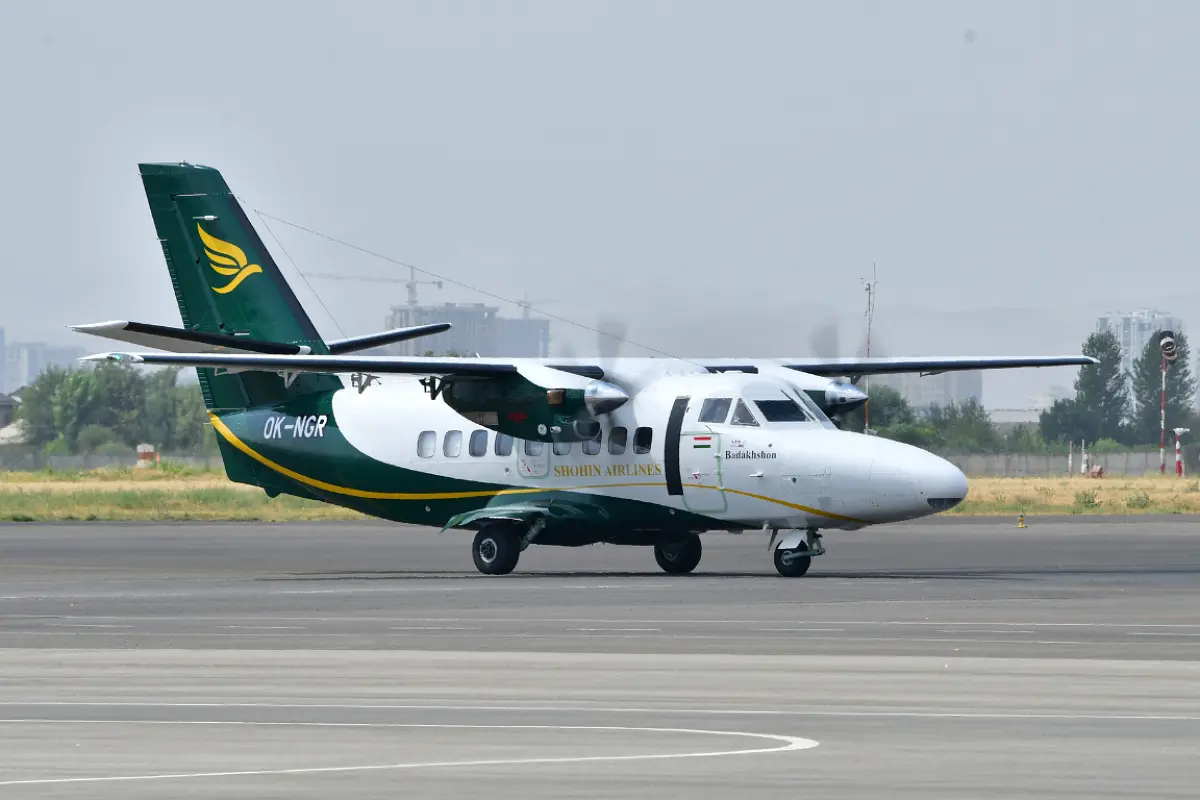
Shohin Airlines Ordered Four Airbus Jets at Farnborough, Its Actual First Flight Will Be on a 19-Seat Turboprop That Just Landed in Dushanbe
Shohin Airlines took delivery of its first Let L-410 NG turboprop on September 24, 2026, a genuinely modest 19-seat regional aircraft that nonetheless represents the company's very first step into fixed-wing operations. Until this delivery, Shohin's entire fleet consisted exclusively of helicopters. That gap between where this company actually is today and where its headline ambitions point is the real story here, and this feed has been tracking exactly this airline's rise since it first surfaced as a named challenger to Somon Air's Tajik monopoly back in July.
Why This Delivery Is Actually Catching Up to a Promise Made in April
Shohin Airlines first signalled its fixed-wing ambitions in April 2026, when FlightGlobal reported the company had already signed for an Aircraft Industries L-410 turboprop from the Czech Republic specifically to operate short-haul domestic flights, well before the company had commenced any scheduled passenger operations at all. That April agreement was itself paired with something considerably bigger: a tentative deal for two A321neos and two A320neos, discussed further in an April 10 meeting with Airbus, with the airline describing negotiations as being "in their final stage." Three months later, at Farnborough on July 21, that tentative Airbus discussion became real, Shohin Airlines disclosed a firm order for two A320neos and two A321neos, its first-ever Airbus commitment, configured for 176 and 196 seats respectively in dual-class layouts.
Today's L-410 NG delivery is the physical arrival of the aircraft that April agreement promised, meaning Shohin's actual operational history, as distinct from its order-book headlines, now stretches from a helicopter-only company to a genuine fixed-wing operator, five months after first announcing the plan and two months after securing far larger jet commitments the company has not yet begun receiving.
Why a 19-Seat Turboprop Matters More Than Its Size Suggests
The L-410 NG is not a scaled-down placeholder aircraft chosen simply because it was available cheaply. It is purpose-built for exactly the terrain Tajikistan's domestic geography demands, capable of operating from short, unpaved or poorly maintained runways in mountainous conditions that a jet aircraft, or even most regional turboprops, cannot safely access. Tajikistan is one of the most mountainous countries on earth, with roughly 93% of its territory covered by mountains, including sections of the Pamir range among the highest in the world. Domestic connectivity between Dushanbe and remote regional centres has historically depended on exactly this kind of rugged, short-field-capable aircraft, not narrowbody jets, which is precisely why Shohin's very first fixed-wing aircraft is a turboprop built for mountain flying, rather than the A320neo family jets that generated considerably more international attention at Farnborough.
That sequencing reveals something honest about how Shohin is actually building its business, distinct from how it is marketing its ambitions. The L-410 NG can begin generating real domestic passenger revenue, building operational history, and training Tajik crews on genuine fixed-wing commercial operations almost immediately, while the A320neo family jets, with no disclosed delivery timeline in any of the reporting on the Farnborough order, remain a considerably more distant commitment that Airbus's own production queue, the same global backlog this feed has documented delaying deliveries for Vietravel, Avianca and dozens of other carriers throughout 2026, will determine the pace of.
Why Turkish Airlines Shows Up in This Story Before a Single Jet Has Arrived
Separate reporting from Farnborough coverage confirms Shohin Airlines has already established partnerships with Turkish Airlines, Turkish Technic and the Turkish Aviation Academy, covering training, maintenance and what the airline describes as "operational excellence" support. That is a genuinely significant detail for a company that, as of Farnborough, had not yet commenced any scheduled passenger operations at all. Building institutional relationships with an established, technically sophisticated partner for pilot training, maintenance certification and operational standards before a single commercial flight has actually operated mirrors exactly the pattern this feed has documented with Somon Air's own Boeing relationship and ASKY's dependency on Ethiopian Airlines, smaller, newer carriers in emerging aviation markets consistently anchoring themselves to larger, more established partners specifically to borrow the technical credibility and operational infrastructure a genuine startup airline cannot build independently in its first years.
Why This Fits the Exact Tajik Aviation Liberalisation Story This Feed Already Identified
This feed's earlier coverage of Somon Air's first Boeing 737 MAX delivery flagged Shohin Airlines specifically as the emerging second competitor benefiting from Tajikistan's new Open Skies policy, the government resolution that lifted market access restrictions previously limiting which airlines could serve Dushanbe and on what terms. That coverage noted Shohin was "in the final stage of acquiring four Airbus A320neo aircraft backed by a USD 200 million European investment fund" language that maps precisely onto what has now actually happened at Farnborough, just with the financing detail not repeated in the most recent Airbus-focused coverage.
Two private Tajik carriers, previously operating in a market Somon Air had dominated alone since 2008, are now simultaneously modernising with next-generation jets in a country whose aviation market grew 40% to 18.1 million passengers in 2025, among the fastest growth rates of any aviation market globally, per IATA's own data this feed has cited repeatedly. Shohin's L-410 delivery is the first tangible physical evidence that the second half of that competitive story, not just Somon Air's continued expansion, but a genuine second entrant actually building operational capability rather than simply announcing intentions, is now underway in reality, not merely in press releases and airshow order books.
What Still Has to Happen Before "Registered June 2025" Becomes "Actually Flying Passengers"
Multiple sources covering the Farnborough order are explicit that Shohin Airlines, registered as recently as June 2025, has still not commenced scheduled passenger operations of any kind as of that late-July announcement. This September L-410 delivery changes that calculus meaningfully, a functioning, delivered aircraft is a considerably more concrete milestone than a signed agreement or a disclosed order-book entry, but the airline still needs to secure its Air Operator Certificate, establish route network approvals, and build the operational infrastructure to actually run commercial flights before "fleet expansion" translates into passengers boarding Shohin-branded aircraft anywhere in Tajikistan.
CEO Zafar Ahmadzoda's own framing of the L-410 delivery as "an important step in implementing the company's development strategy and forming its own aircraft fleet" is genuinely accurate rather than merely promotional, this is a real, foundational step, not a symbolic gesture. But the gap between a single 19-seat turboprop landing in Dushanbe and the four A320neo family jets that generated Shohin's international headlines two months earlier remains considerable, and every prior milestone in this company's short history, the April L-410 signing, the tentative April Airbus talks, the July firm order, has arrived roughly on the timeline this feed would expect for a genuine, methodically sequenced startup airline build-out, rather than a company overpromising and underdelivering. Whether that same disciplined pacing holds once the far more complex and capital-intensive task of actually receiving and operating A320neo family jets begins is the question this L-410 delivery cannot yet answer on its own.