Singapore Won’t Interfere in SIA’s Air India Funding Decision
Singapore will not interfere with SIA’s decision on Air India’s $1.1 billion funding request, leaving the airline to make the decision commercially.
 Jishan Khan
Once Politicians Start Directing Individual Investment Decisions, Commercial Discipline Will Be Compromised", Singapore Just Told SIA It's On Its Own With Air India
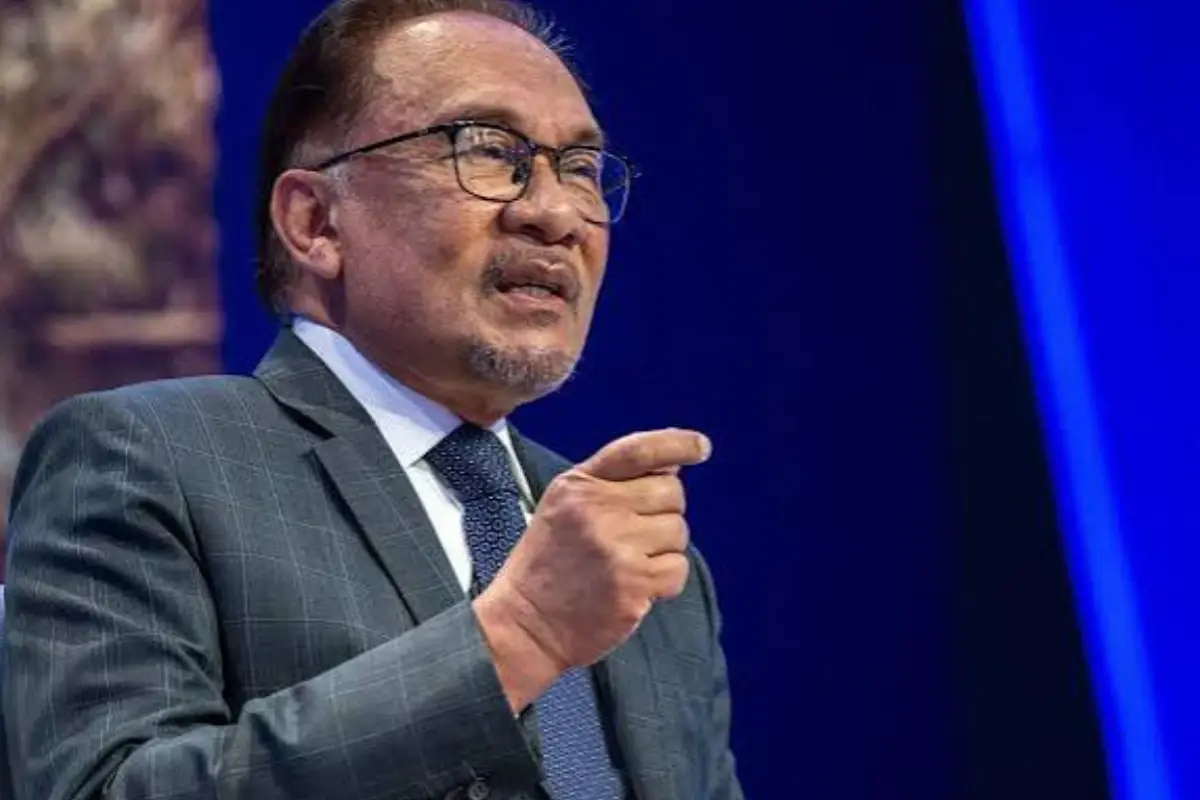
Singapore Senior Minister K Shanmugam told reporters on September 5, 2026 that the government will not intervene in any decision Singapore Airlines makes regarding Air India, as the Indian carrier moves closer to securing roughly ₹10,000 crore (US$1.1 billion) in fresh financial support from its shareholders. The statement was unusually direct for a government whose sovereign wealth arm, Temasek, owns a majority stake in SIA. "Once governments or politicians start directing individual investment decisions, commercial discipline will be compromised," Shanmugam said. "Decisions will become politicised, shaped by political considerations, rather than commercial judgment. In the end, Singaporeans will bear the cost."
That is not a government staying neutral by accident. It is a government going out of its way to make sure nobody mistakes its silence for a signal either way and in doing so, placing the entire weight of this Singapore Air India decision on SIA's own board.
Why This Statement Needed to Be Made at All
Shanmugam's comments arrive directly on the back of this feed's earlier coverage of a Singapore parliamentary question specifically targeting this issue, Workers' Party MP Kenneth Tiong had filed a formal question for oral answer asking the transport minister to assess whether losses from SIA's foreign associates had compromised the airline's "capacity to provide essential transport services." That question forced the government's hand: with a Temasek-owned airline potentially about to fund a billion-dollar request from a loss-making Indian associate, and a sitting MP publicly raising the question in Parliament, silence from the government would itself have been read as either implicit endorsement or implicit disapproval. Shanmugam's remarks close that gap deliberately, drawing the sharpest possible line between government ownership and government direction.
He extended that same logic explicitly to Temasek itself, "Temasek and its subsidiaries decide how to invest across a wide portfolio with investments of varied risks and varied time horizons," he said, adding that Temasek "does not account to the government for its individual investments or the investment decisions of its portfolio companies." That is a notable thing for a senior minister to say on the record about the state's own sovereign wealth fund, an explicit acknowledgment that Temasek's day-to-day capital allocation, even at a company as symbolically important to Singapore as its national airline, sits outside direct government oversight by design.
What SIA Is Actually Being Asked to Decide
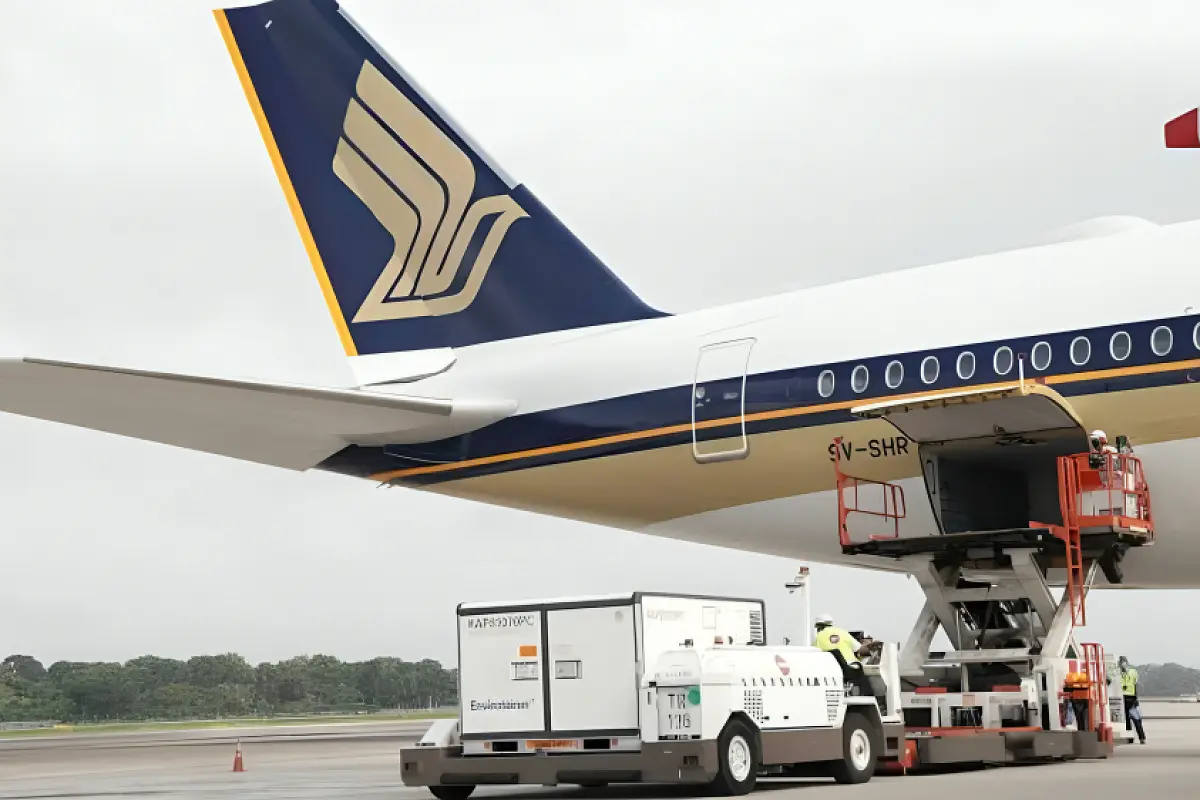
Air India is seeking approximately ₹10,000 crore (US$1.1 billion) in aggregate from its two shareholders, Tata Sons, which holds 74.9%, and Singapore Airlines, which holds 25.1% following the 2022 Vistara merger. Under proportional ownership, that split would put SIA's own share of the request in the range of roughly US$275 million, with Tata Sons carrying the remainder. Multiple reports indicate the funding would not arrive as a single lump sum but would be linked to performance milestones and released in stages, a structure that gives both shareholders an ongoing mechanism to pause or reconsider further disbursements if Air India's turnaround metrics fall short at any given checkpoint, rather than committing the full amount upfront on faith alone.
That staged, milestone-linked design is itself a signal of how this round of funding differs from SIA and Tata's original 2022 commitment. When the Vistara merger was first announced, SIA said explicitly that it intended "to fully fund this investment with its internal cash resources" and that both parties had "agreed to participate in additional capital injections, if required, to fund the growth and operations of the enlarged Air India" an open-ended commitment made at a moment of optimism before the merger had even closed. Four years later, with real losses, a real fatal crash, and real geopolitical disruption behind it, the shareholders appear to be building in considerably more discipline around exactly when and how further money moves. The proposed Air India $1.1 billion funding is therefore being treated very differently from the original commitment.
Shanmugam's Careful Framing of What SIA Actually Owes Its Shareholders
The minister was equally precise about what accountability does look like, even without government interference: "SIA shareholders, as well as the broader public, have a right to expect that SIA will be accountable and transparent," he said. "People have a right to expect that there will be a rigorous assessment before money is committed." SIA has the responsibility to "assess its investments in Air India in relation to the resources it has for the long-term growth and profitability of the company", language that puts the burden of proof squarely on SIA's own board and management, not on any external political authority, to demonstrate that continued funding is commercially justified rather than simply a face-saving continuation of a strategic bet that has not yet paid off.
SIA's own public position, delivered in response to shareholder queries back in July, offers a preview of how that internal assessment has been running. The airline said it was seeing "tangible progress" in Air India's transformation and that the Indian carrier "continues to be a key part of its long-term multi-hub strategy" despite the turbulence this feed has documented extensively, the fatal Boeing 787-8 crash, Pakistan's ongoing airspace ban, and the Iran conflict's fuel cost shock. Notably, SIA also disclosed it had undertaken a formal impairment assessment after identifying indicators warranting a review of Air India's carrying value on its books, and concluded no write-down was necessary. That is a meaningful data point on its own, an airline conducting the accounting exercise specifically designed to test whether an investment's value has permanently deteriorated, and formally concluding it has not, even amid record annual losses at the associate in question.
The Deepening Commercial Relationship Sitting Alongside the Funding Question
What makes SIA's calculus more complex than a pure financial write-off-or-fund decision is the extent to which Air India has become operationally interwoven with SIA's own network strategy well beyond the equity stake itself. In January 2026, the two carriers signed a Commercial Cooperation Framework Agreement specifically to deepen their partnership toward a full joint business agreement, the kind of revenue-sharing structure this feed covered in detail with the Singapore Airlines-ANA joint venture, where two carriers coordinate fares, schedules and capacity as though operating a single network rather than two competing ones. Air India CEO Campbell Wilson described the airline's ambition to keep "forging stronger commercial partnerships, especially with our fellow Star Alliance member carriers", and the two airlines currently codeshare across 61 points in 20 countries and territories, following an October 2024 expansion that added 51 destinations to the combined network.
That commercial entanglement means SIA's Air India decision is not simply "do we like this investment as a standalone financial asset." It is also "how much of our own network strategy, connecting traffic and joint business economics now depend on Air India remaining a credible, functioning partner", a question that makes a clean walk-away option considerably less attractive than the pure equity math alone might suggest, even for a board under genuine pressure to demonstrate commercial discipline.
Why "Commercial Discipline" Is Doing a Lot of Work in This Statement
Shanmugam used the phrase "commercial discipline" twice in his remarks, and it is worth taking seriously as more than a rhetorical flourish. The implicit argument is that government-linked companies function best, and ultimately serve taxpayers best, when they are held to the same investment discipline any private shareholder would apply, walking away from a bad bet when the numbers say so, and continuing to fund a good one on the same terms regardless of who is watching or what political optics are in play. That framing puts real pressure on SIA's board precisely because it removes the easiest excuse available to a state-linked company facing a difficult capital allocation decision: the ability to point to political or national-interest considerations as justification for either continuing or ending support.
Whatever SIA ultimately decides, funding its proportional share of the ₹10,000 crore request, negotiating different terms, or declining further support, Shanmugam's statement ensures that decision will be read, fairly or not, as a pure test of SIA management's own commercial judgment. There is no political cover left to hide behind either way.