NH Collection Maldives Reethi Resort Returns to Baa Atoll
NH Collection Maldives Reethi Resort reopens in Baa Atoll with 105 renewed villas, eight restaurants, sustainable design and a relaxed wellness philosophy.
 RUKAIYA KADIWAL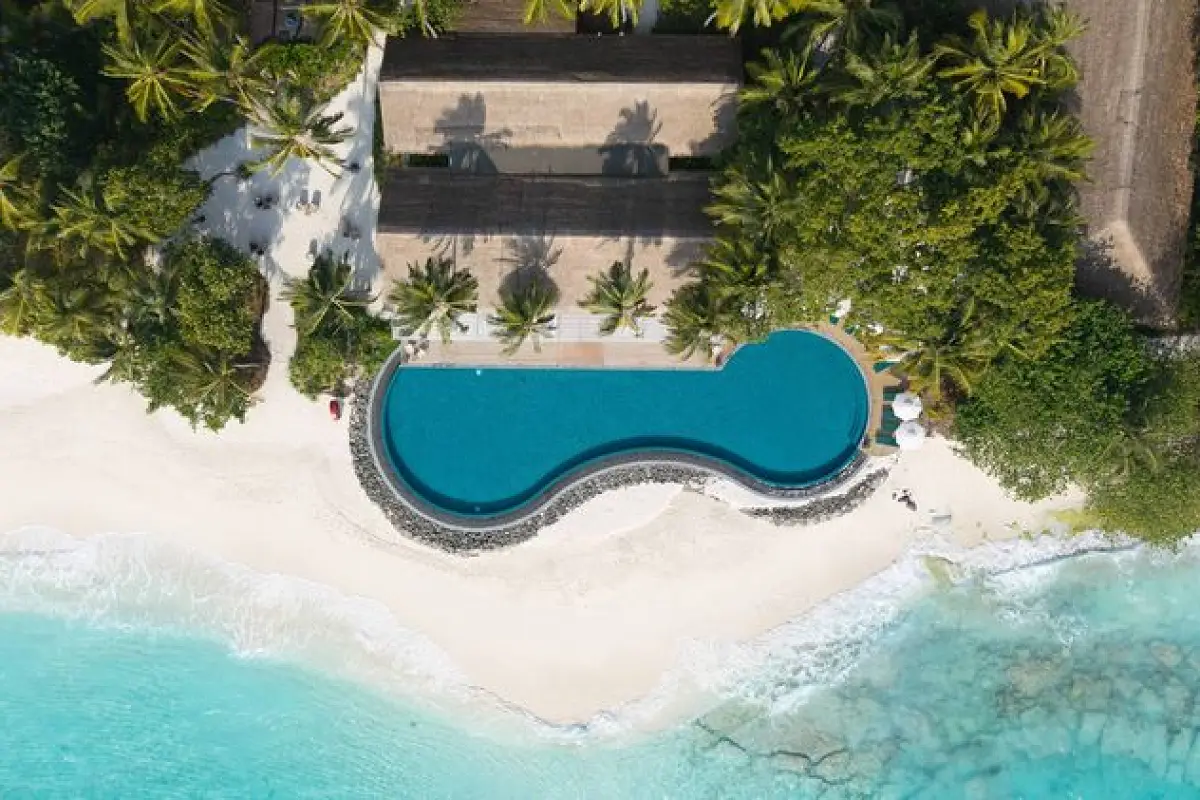
There is a particular quiet that settles over Fonimagoodhoo in the last hour before sunset, when the day's boat traffic has thinned and the only sound left is water folding gently against sand. It is in this hour that NH Collection Maldives Reethi Resort reveals what its recent refurbishment was really designed to protect, not a collection of new amenities, but the island's own unhurried rhythm.
The Maldives has never needed much help being beautiful. The water already does impossible things with the colour blue, the beaches need little introduction, and beneath the surface, reefs stay alive with marine life while evenings arrive slowly enough to make watching the sun disappear feel like a legitimate plan. Perhaps the harder task for any resort here is knowing when to intervene and when to simply let the island speak for itself. More on the wider NH Collection portfolio can be found through the brand's official website.
A Refurbishment Built Around Restraint
Following an extensive refurbishment and rebrand, Reethi Resort has returned to Fonimagoodhoo in Baa Atoll with 105 renewed beach and overwater villas, refreshed restaurants and bars, family facilities, recreation spaces and a renewed wellness offering. Yet one of the more interesting aspects of the refurbishment is what it has tried not to disturb.
Located within a UNESCO Biosphere Reserve, the resort incorporated sustainable construction materials into the refurbishment while making efforts to minimise waste across operations. A newly planted garden now supplies herbs and vegetables to the kitchens and fresh flowers to the villas, encouraging greater self sufficiency while keeping the property closely connected to the island on which it sits. The result is a resort that feels refreshed without appearing disconnected from its surroundings.
Villas That Let the Landscape Lead
The villas follow much the same philosophy. Rather than competing with the colour outside, interiors are deliberately calm, built around warm neutrals, timber and bamboo, while open air showers and generous views keep the landscape constantly present. The thatched roof beach villas open directly onto the sand and sit within easy swimming distance of the house reef, with configurations suited to couples as well as families. At the more private end of the spectrum, the 150 square metre Reethi Suite occupies a secluded stretch of beach, complete with its own pool and views toward the open ocean.
Then there are the 30 overwater villas, curving around the island's northern tip and looking out over open water. Their interiors incorporate work created by the resort's own artisans using recycled materials, another small example of the refurbishment looking to what the island already has rather than simply importing everything from elsewhere. None of these details are presented as grand gestures, which is perhaps why they work.
What Lies Beneath the Surface
Sustainability in a place like the Maldives is inseparable from the guest experience, since protecting the environment is also protecting the very thing people have travelled thousands of kilometres to see. Just offshore, the house reef is home to angelfish, clownfish, reef sharks and sea turtles, with scuba diving, freediving, catamaran sailing and kayaking making the surrounding Indian Ocean part of the resort itself. Around fifteen minutes away lies Hanifaru Bay, known for seasonal gatherings of manta rays and whale sharks, giving Reethi a spectacle no amount of programming could manufacture.
Eight Reasons to Stay for Dinner
Food is where the resort becomes noticeably more playful. Across eight restaurants and bars, each venue carries enough personality to make moving around the island part of the experience, with herbs and vegetables picked from the Reethi Garden and fresh fish sourced from local fishermen. Jumla serves as the all day dining hub, with live cooking stations and menus moving between Mediterranean, Indian and Maldivian influences, while Caravella offers an intimate fine dining experience inside a wine cellar, pairing a chef's tasting menu with rare vintages.
Alifaan moves dinner onto the beach, where steaks, local seafood and garden vegetables meet an open fire beneath the palms, while Kaiyo sits above the lagoon with ocean views in every direction, its Asian inspired sharing menu moving between bao buns, spring rolls, satay and sushi. Madumaithiri keeps things relaxed beside the infinity pool, and Atardecer occupies the island's western edge, where tapas and cocktails accompany the sunset before DJ sets and fire performances carry the evening forward. Handhuvaru, an intimate rum bar, offers one of the resort's more unusual stories, ageing a variety of rum on site in a cask submerged beneath the ocean. And when even a restaurant feels too ordinary, Adrift moves dinner elsewhere entirely, turning a secluded sandbar, a moonlit beach or a villa terrace into the evening's dining room.
Wellness Without the Obligation
Reethi's approach to wellness is similarly relaxed. REVIVE Spa & Wellness sits within a tropical garden, drawing on Eastern therapies and natural Maldivian ingredients, with its signature Maldivian Delight treatment combining a coconut scrub with a virgin coconut oil massage, finished with coconut sorbet. The wider menu spans magnesium based treatments, Ayurvedic techniques, Crystal Chakra Healing, Himalayan Thermal Therapy and Elemis facials, though there is no requirement to turn a holiday into a wellness programme. Guests can move between beach volleyball, tennis, badminton, pickleball and the gym, or choose yoga, sound therapy and guided meditation on the beach. Wellness here can mean movement, stillness, or doing nothing at all for several hours while staring at the ocean.
Running an Island From the Inside
Behind the villas and postcard views sits the considerably more complicated task of running a remote island resort, a responsibility that falls largely to Hotel Manager Melroy Steve Fernandes. Asked about the growing importance of GCC travellers, Fernandes was direct about the shift in strategy. "Following our rebranding, the GCC has become one of our key strategic growth markets. Our enhanced resort offering, including more private villa experiences, elevated butler service and family-friendly facilities, aligns well with the expectations of GCC travellers, who value privacy, personalised service and quality family time," he said. The comment matters because it reveals how closely the physical refurbishment was tied to a specific, evolving guest profile rather than a generic upgrade.
Fernandes also spoke about what distinguishes the dining program within the resort's broader identity. "Food and beverage is one of the strongest storytelling elements of our resort. With eight distinctive F&B outlets, every restaurant offers its own personality and experience, allowing guests to discover something different throughout their stay," he said, pointing to Caravela's Age of Discovery narrative and Atardecer's oceanside barbecue as examples of that variety in practice.
On what has stood out most since reopening, Fernandes pointed to a specific, tangible moment. "Standing alongside the team on opening day as we unveiled our first bottles of rum matured beneath the Indian Ocean was a milestone that symbolised months of dedication, planning and belief in a shared vision," he said. It is a small detail, a cask of rum resting on the seafloor, but one that captures how much of Reethi's identity has been built from patience rather than spectacle.
Room for Every Kind of Traveller
Perhaps one of Reethi's strongest qualities is that it does not insist on one version of a Maldivian holiday. There are couples seeking privacy and families wanting room to play, with an expanded kids' club offering indoor and outdoor play areas alongside a shaded family pool. Some guests will spend most of their trip underwater, others will plan their days around dinner reservations, and some will have no ambition beyond finishing a book beneath a palm tree. The island accommodates all of them without losing its sense of intimacy, a balance that echoes how residents elsewhere have come to treat hospitality spaces as an extension of daily life rather than an occasional indulgence, as seen in how Dubai's hotels have become woven into everyday routine for the people who live there.
Even arriving retains some of the theatre that makes a Maldivian holiday feel distinct. Reethi sits around 35 minutes from Malé by seaplane, or alternatively, guests can take a domestic flight to Dharavandhoo Airport followed by a fifteen minute speedboat ride to the island. That final stretch of water may matter more than it first appears, because the appeal of somewhere like Reethi is not simply arriving at a beautiful resort. It is the feeling that something has been left behind, the airport, the traffic, the notifications, the obligation to make every minute productive. What remains is an island, a reef, a villa, somewhere good to eat, and an ocean stretching far beyond all of it. NH Collection has given Reethi a new chapter, but the most important decision may have been understanding that a place this naturally extraordinary does not need to be reinvented. It simply needs to be looked after.