Oldest Businesses in Edmonton Reveal a City's Hidden History
The oldest businesses in Edmonton, from a 1915 railway hotel to century-old law firms, reveal how the city's commercial roots run deeper than most realise.
 RUKAIYA KADIWAL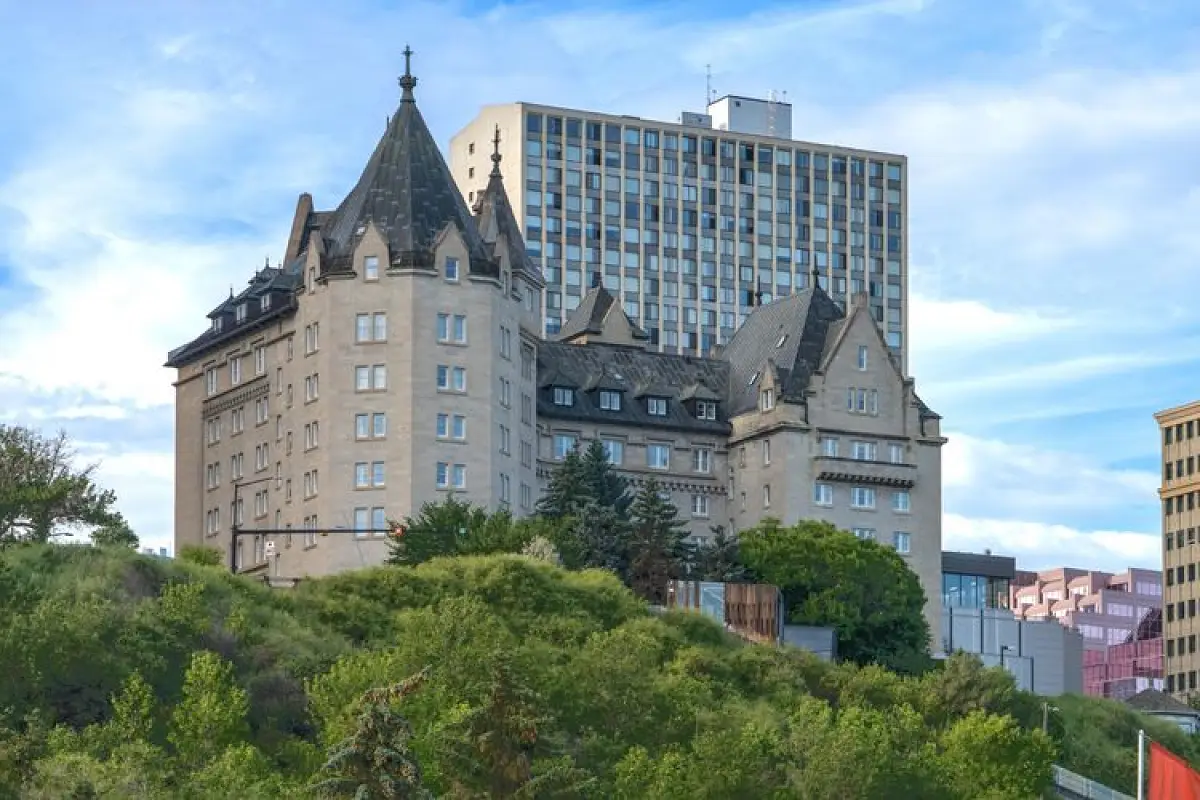
The morning light catches the Chateauesque turrets of the Fairmont Hotel Macdonald long before most of downtown Edmonton stirs, the same silhouette that greeted railway passengers arriving in 1915. Among the oldest businesses in Edmonton, this hotel stands as one of the most visible reminders that the city's commercial history runs far deeper than its glass towers suggest, a story recently documented by Daily Hive using data from the city's 2025 Business Census.
That census found more than 158 businesses in Edmonton over a century old, some tracing their roots back to the 1800s, long before Alberta itself became a province. Behind each of those numbers sits a shopkeeper, a lawyer, or a hotelier who simply kept showing up, decade after decade, while the city grew up around them.
A Bicycle Shop That Became a Local Institution
United Sport & Cycle began in 1928 as little more than an owner and a handful of employees selling bicycles at a time when a bike was a genuine mode of transportation rather than a weekend hobby. Customers could pay for their bicycles a dollar a week, a payment plan that reflected both the era's economics and the trust the shop placed in its neighbours. Following the Second World War, the business merged into United Cycle and Motor Co. Ltd., eventually consolidating several smaller shops into one location on 82nd Avenue.
Today, the business operates from a sprawling Gateway Boulevard location, marked outside by its now familiar giant Stanley Cup statue. A small detail lingers from its earliest days: the original phone number, 31181, still functions, simply extended into the modern format of 780-433-1181, a quiet thread connecting nearly a century of customers to the same line.
The Butcher Shop That Never Left the Neighbourhood
Acme Meat Market has spent 125 years serving Edmonton, beginning on Whyte Avenue before settling for decades at 95 Street and 76 Avenue. In 2017, the shop crossed the street into Ritchie Market, a move that modernised its setting without disrupting its identity. Ownership has remained remarkably close knit throughout its history, passing from the Pheasey and Eldridge families, who founded the shop in 1921, to the Meyer family, the first owners from outside that original lineage.
A Railway Hotel That Hosted Royalty
Few properties among Edmonton's historic businesses carry the ceremonial weight of the Fairmont Hotel Macdonald. Opened by the Grand Trunk Pacific Railway Company on July 5, 1915, the hotel was built to accommodate travellers moving through Alberta on an expanding rail network. Its guest list over the decades reads like a condensed version of royal Canadian visits, including a stay by the future King Edward VIII and, in 1951, Princess Elizabeth and Prince Philip during their tour of Canada.
That history matters beyond nostalgia. A hotel surviving more than a century in the same building, through economic downturns, world wars, and complete shifts in how people travel, speaks to a kind of institutional resilience that newer hospitality brands rarely get the chance to prove.
Optometrists, Law Firms, and the Quiet Backbone of Edmonton
Not every entry among the Edmonton oldest businesses comes with a dramatic origin story. Dr. Gilbertson & Associates has been examining Edmontonians' eyes since 1901, operating continuously for 125 years without the kind of public milestones that draw headlines. The Edmonton Chamber of Commerce, founded in 1889 as the Edmonton Board of Trade, has spent over 130 years advocating for the same business community it was created to serve, one of its earliest goals being the push to bring a railway to the city.
Law firms, in particular, dominate the list of continuously operating businesses. McCuaig Desrochers LLP traces its roots to 1895, when Alexander Cameron Rutherford, who would later become Alberta's first premier, opened an office near the railhead of the Calgary and Edmonton Railway. Duncan Craig LLP has operated since 1894, moving only a few blocks within downtown Edmonton across more than a century, weathering the First World War, the Great Depression, and the shift from typewriters to computers along the way. Emery Jamieson LLP, established in 1893 as Beck & Emery, and Parlee McLaws LLP, which opened its Edmonton office in 1889 after originating in Calgary, round out a surprisingly deep bench of legal institutions that predate Alberta's very existence as a province.
What Longevity Reveals About Edmonton's Business Culture
Pioneer Press, founded in September 1894 by R.J. Pettapiece, offers a different kind of endurance story, one built on changing hands rather than staying static. Sold to the McDonald family within two years, then purchased by Jim Edgar and George McEwen in 1963, the printing business has retained employees who have stayed with the company for 30 years or more, a detail that speaks to workplace loyalty as much as commercial survival.
Taken together, these businesses reveal something specific about Edmonton's economic identity. Unlike cities where commercial history tends to cluster around a single dominant industry, Edmonton's oldest surviving businesses span hospitality, retail, law, food, and civic advocacy in roughly equal measure. That diversity suggests a city whose early growth was never dependent on one sector alone, a pattern that has arguably protected it from the kind of single industry decline that has hollowed out other North American cities over the past century.
A City That Remembers Its Own Beginnings
None of these businesses set out to become historical landmarks. Bicycle shops and butcher counters rarely open with permanence as their explicit goal, they open to solve an immediate need for a neighbourhood, and permanence, when it comes, arrives quietly, decade by decade, through the ordinary act of staying open. Recognition of longstanding hospitality and service brands has become something of a trend across North America this year, echoed in stories like AER at Four Seasons Hotel Mumbai earning national recognition for its enduring reputation, another example of hospitality legacies being reassessed and celebrated in real time.
What makes the oldest businesses in Edmonton worth pausing over is not simply their age, but what their survival implies about the people who kept them running. Somewhere behind every dollar a week bicycle payment, every butcher counter transaction, and every royal visit to a railway hotel sits a quieter story of ordinary continuity, the kind that rarely makes headlines in the moment but eventually becomes, a century later, the very foundation a city recognises as its own.