Opo Hotel West Bengal Opens in New Town Ahead of Durga Puja
Opo Hotel West Bengal marks the brand's first Kolkata property, opening in New Town in mid-October with 24 rooms, a rooftop bar, and a 40-seat all-day restaurant.
 RUKAIYA KADIWAL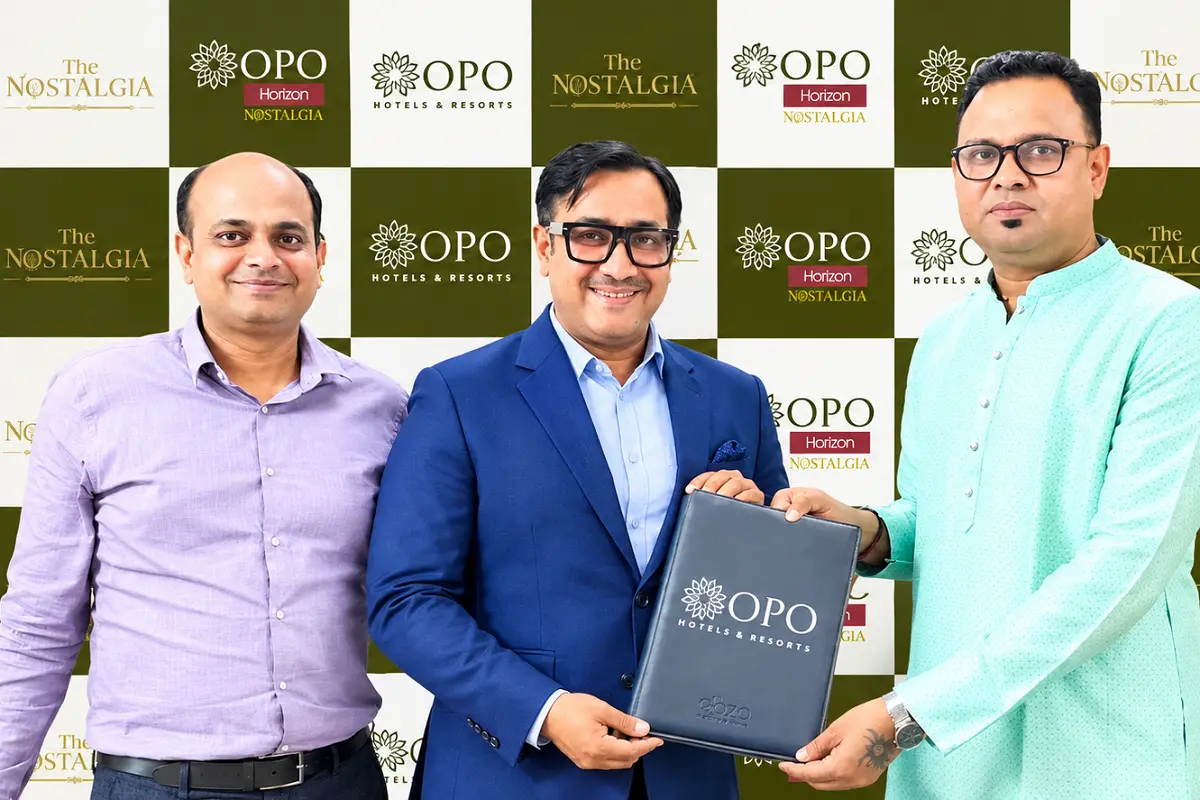
Durga Puja arrives in Kolkata the way monsoon does, announced well before it appears, anticipated in a way that shapes the weeks preceding it as much as the festival itself. The city reorganises around it. Pandals rise in neighbourhoods where they have risen every year for generations. Hotels fill with visitors who have come to watch the city become, briefly, the most elaborate outdoor gallery in South Asia. It is into this moment, the days just before Durga Puja in mid-October 2026, that Opo Hotels and Resorts has chosen to open its first West Bengal hotel in New Town, a district on the eastern edge of Kolkata that has been building its own identity steadily and with intention across the past two decades.
Opo Hotel West Bengal Arrives in New Town Kolkata in Mid-October
The Opo Hotel West Bengal property in New Town, Kolkata, will bring 24 rooms, a 40-seat all-day restaurant, two banquet spaces, and a rooftop bar and lounge to a location opposite Axis Mall in the New Town-Rajarhat district. The management agreement was signed on August 31, 2026, with opening scheduled for mid-October. It will be Opo Hotels and Resorts' first property in West Bengal and an addition to the company's expanding presence across eastern and northeastern India, which already includes plans for hotels in Guwahati and Itanagar.
The timing is deliberate. A hotel that opens just before Durga Puja in Kolkata enters a market at the peak of its seasonal hospitality demand, when the city's hotels fill with visitors from across India and the Bengali diaspora returning to watch the festival that defines Kolkata's cultural calendar more completely than any other event. For a 24-room property opening for the first time, that initial occupancy context is as good as the hospitality industry in this city provides.
The CEO and the Philosophy Behind the Expansion
Sandeep Basu, Opo's chief executive officer, described the company's expansion approach in terms that distinguish deliberate selection from simple scale. "For Opo Hotels and Resorts, expansion is not about simply adding keys to our portfolio," he said. "It is about identifying the right markets, partnering with the right owners and creating properties with a clear commercial and experiential proposition." His framing matters because it positions the New Town opening within a specific strategic logic rather than as a straightforward market entry. Opo has chosen West Bengal now, and the reasoning behind that choice is as significant as the building itself.
Basu was specific about what New Town offers. The district, he said, provides a strategic location, a strong hospitality market, and multiple revenue streams. That assessment reflects what New Town-Rajarhat has become since its development began in earnest in the 2000s: a planned township that now contains corporate offices, retail, entertainment venues, and hotels, positioned as the eastern counterpart to Kolkata's older commercial areas and increasingly capable of sustaining its own hospitality demand independent of the cultural and transit traffic that flows through the city's central zones.
New Town and What the District Has Become
New Town-Rajarhat did not exist in its current form a generation ago. It was planned and developed as a relief valve for a city that had run out of room to grow within its historic boundaries, a township built on the eastern periphery to absorb the commercial and residential expansion that the older city could no longer accommodate. The corporate offices that have established themselves there represent a category of consistent business travel demand that the hotels built alongside them exist to serve, guests arriving for meetings and staying for a night or two rather than the extended leisure visits that bring visitors to Kolkata for Durga Puja.
The Opo property's location opposite Axis Mall places it within this commercial and retail fabric while also positioning it to benefit from the lifestyle and social events demand that the surrounding entertainment and dining infrastructure generates. A hotel with two banquet spaces and a rooftop bar and lounge in this location is not simply a place to sleep before an early morning meeting. It is a venue for the celebrations and gatherings that New Town's resident and corporate population generates throughout the year, a commercial logic that the property's configuration reflects directly.
The Asset-Light Model and What It Enables
Opo Hotels and Resorts operates under an asset-light model, partnering with property owners and handling operations, sales, revenue management, and guest experience rather than acquiring or developing real estate. The model is not unique in the Indian hospitality sector, where asset-light management contracts have become the dominant mode of expansion for independent hotel companies that want to grow their geographic footprint without the capital requirements of direct ownership. What distinguishes Opo's application of the model is the selectivity that Basu described, the emphasis on the right markets and the right partners rather than the maximum number of agreements.
The New Town property was signed in late August and is opening less than two months later, a pace of conversion from signed agreement to operational hotel that reflects the asset-light model's primary commercial advantage: the ability to bring a property to market quickly when the owner relationship, the building, and the operating team are already aligned. For a festival-timed opening, that speed is not incidental. It is the point.
A Rooftop Bar Above New Town's Skyline
The rooftop bar and lounge is the detail in the Opo New Town property's programme that carries the most social significance. New Town's skyline, a mix of corporate towers, residential complexes, and the structured open spaces of a planned township, offers a view of contemporary Kolkata that is quite different from the one available from the older city's rooftops. Standing at the top of a building in New Town and looking across the district is looking at what a city decided to become rather than what it grew into, which gives the rooftop a different quality of atmosphere from one that overlooks the Victorian and colonial architecture of central Kolkata.
For a 24-room hotel, a rooftop bar and lounge serves a function beyond accommodating overnight guests. It creates a destination within the property for the local and corporate community that surrounds it, a space that can generate covers and covers revenue independently of the room occupancy that the hotel's small key count limits. Opo's inclusion of this element alongside the 40-seat all-day restaurant and two banquet spaces describes a commercial model that treats the hotel as a neighbourhood venue as much as an accommodation product.
Eastern India and the Expansion Beyond Kolkata
The West Bengal opening sits within Opo's broader strategy for eastern and northeastern India, a region that the company has identified as a growth corridor and in which it has additional properties planned for Guwahati and Itanagar. The northeast of India represents a hospitality frontier in the sense that branded hotel supply across much of the region has historically lagged behind visitor demand, particularly in the capital cities of the smaller northeastern states where infrastructure development and improved connectivity have been expanding the addressable market for organised accommodation.
Guwahati in Assam is the region's commercial hub and the most established market for branded hospitality in the northeast. Itanagar in Arunachal Pradesh is more frontier in character, a state capital where the combination of scenic appeal, governmental activity, and the steady improvement of road and air connections has been creating demand that the existing hotel supply has not always been sufficient to meet. For Opo, building presence in both Kolkata and these northeastern capitals creates a network within a region that many larger hotel companies have historically approached with caution.
An Earlier Opening and the Pilgrimage Parallel
In February 2026, Opo opened the 40-room Opo Horizon Surbhi Grant in Khatu, Rajasthan, near the Khatu Shyam Temple, which draws millions of devotees each year. The pilgrimage-adjacent positioning of that property and the Durga Puja timing of the Kolkata opening share a commercial logic: faith travel in India generates some of the most concentrated and reliable demand surges in the hospitality sector, and a hotel that positions itself within reach of that demand at the right moment benefits from occupancy that other properties in less advantaged locations cannot access regardless of their quality or pricing.
For a company building its portfolio through management partnerships rather than direct ownership, the ability to identify these demand-adjacent locations and sign agreements with owners in them is the core skill that distinguishes successful asset-light operators from those that simply aggregate contracts. Basu's emphasis on the right markets is a description of exactly this capability.
A Hotel Opening Its Doors as the City Prepares to Celebrate
The 24 rooms at Opo's New Town hotel will be occupied for the first time in a week when Kolkata is doing what Kolkata does every year in October, assembling something that takes months to build and exists fully for only a few days, a festival that the city gives itself over to completely and that visitors from across the world now come specifically to witness. A new hotel opening in that week will receive guests who are in the city for something larger than the hotel itself, something that will have been happening long before the property existed and will continue long after this particular opening is forgotten. That is not a disadvantage for Opo New Town. It is what the timing was chosen to provide: an entry into a market at the moment when the market most fully reveals what it is capable of drawing. The rooftop bar will have its first view of a New Town that, for a few October nights, will be lit differently than it is for the rest of the year.
Related reading: Inside the Castle Hotel Ruthin: a Wetherspoon in a Welsh castle