QR Menus Take Over Hospitality in 2026
QR menus are changing hospitality with faster service, AI recommendations, multilingual access, and sustainable dining solutions.
 Pratyaksha Singh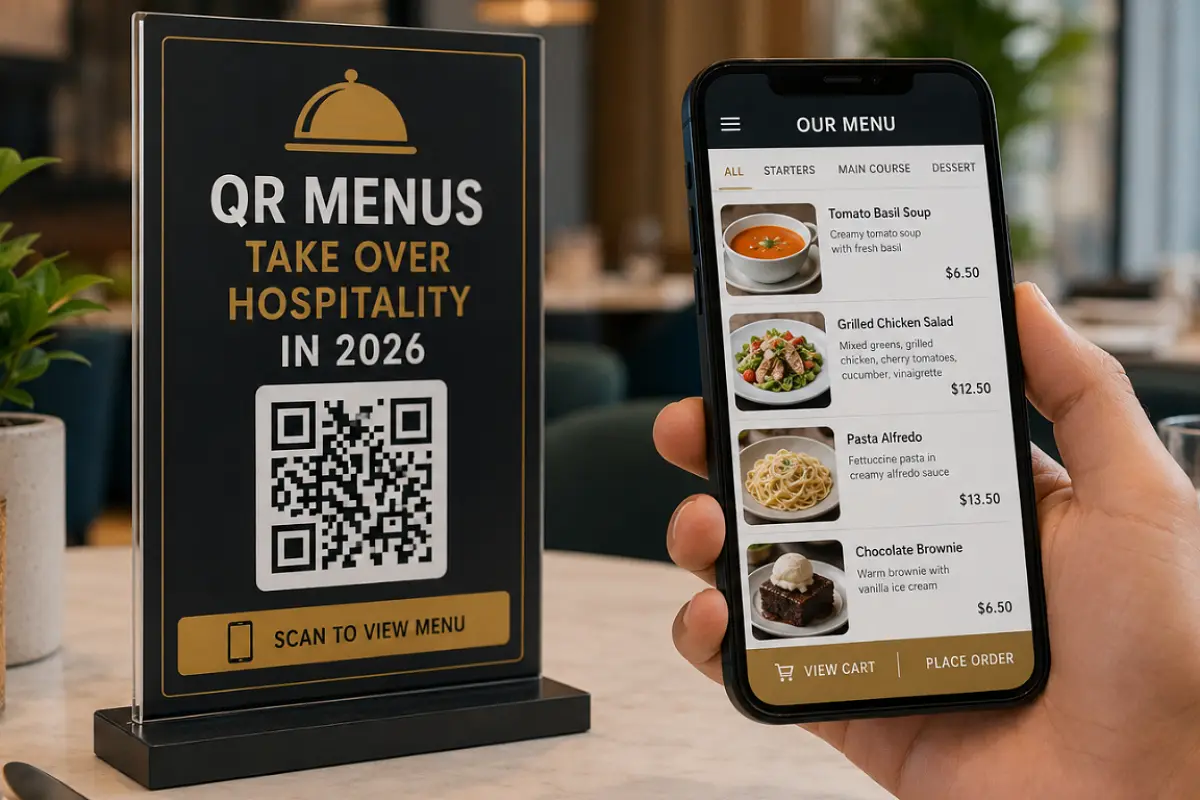
QR menus have steadily replaced traditional menus across the hospitality industry. As restaurants and cafes adapt to a more digital world, QR menus have become a go-to solution. They are easy to update, environmentally friendly, cost effective, and help deliver faster service to guests.
QR menu adoption in India has grown by nearly 340% since 2020, and around 72% of urban restaurants were using QR based menus by 2026. Cities like Bengaluru, Mumbai, and Delhi are leading this digital dining movement, driven by their strong tech culture and high concentration of modern cafes and restaurants.
Our own findings also reveal how deeply QR culture has entered the Indian hospitality sector. In Udaipur alone, there are now more QR menus visible across restaurants and cafes than traditional hotel menu formats.
Globally, over 83% of restaurants now use QR based digital menus in some form, showing how quickly the hospitality industry has embraced contactless dining technology. Surveys suggest that 78% of diners prefer QR menus over traditional paper menus for their speed and convenience, and restaurants using digital ordering systems have reported a 25 to 35% increase in average order value along with faster table turnover.
A comparative survey across tourism-heavy regions such as Jaipur, Mysore, Kerala, and Himachal Pradesh also showed a strong rise in QR based dining systems, especially in cafes, boutique hotels, rooftop restaurants, and tourist focused hospitality outlets.
Why Are Restaurants Shifting to QR Menus?
Restaurants are shifting to QR menus because they make operations faster, simpler, and more efficient. Staff no longer need to carry physical menu cards from table to table. Guests simply scan a code and browse on their own phones. This speeds up the ordering process, reduces physical contact, and cuts down on printing costs.
Beyond that, QR menus give management far greater flexibility. Prices can be changed, items can be added or removed, and promotional or discount offers can go live instantly with no delays, no reprinting, and no outdated information reaching guests. Research confirms that medium sized restaurants save over ₹4 lakh annually when they factor in the full cost of printing menus, table cards, specials boards, and promotional inserts.
|
Feature |
Traditional Menu |
QR Menu |
|---|---|---|
|
Cost |
Expensive to print and reprint |
Cost-effective, one-time setup |
|
Format |
Physical, paper-based |
Smartphone-based |
|
Handling |
Passes between many hands |
Completely contactless |
|
Visuals |
Limited or static |
High-quality, interactive images |
|
Updates |
Requires reprinting |
Instant, real-time updates |
|
Data |
No insight into customer behaviour |
Tracks what guests browse and order |
How Do QR Menus Improve the Customer Experience?
Diners no longer need to wait for a staff member to bring a menu. They scan the QR code at the table and immediately have access to the full menu with food photos, prices, ratings, nutritional information, and recommendations all in one place. In many setups, they can even place their order directly from their phone.
Promotions and discount offers are visible right there on the menu, without any need for staff to mention them. Digital menus can also be set up in multiple languages, which is a big plus for restaurants that welcome international guests.
From the kitchen’s side, orders go directly to the kitchen display, cutting down on miscommunication and errors. This keeps service smooth and tables turning faster.
What Challenges Do QR Menus Create?
Like any technology, QR menus come with their own set of challenges, and it is important to be honest about them.
Some guests, particularly older diners, may find it uncomfortable or difficult to navigate a digital menu on a smartphone. For them, the experience can feel impersonal or frustrating. There is also a real dependency on connectivity. Slow internet, a phone with low battery, or a technical glitch at the wrong moment can disrupt the dining experience entirely.
Perhaps most importantly, QR menus remove the natural back and forth that happens when a guest asks a staff member for a recommendation. That moment of human connection, a server suggesting the house special or describing how a dish is prepared, is something a screen simply cannot replicate.
Restaurants have started addressing these challenges through a hybrid approach by keeping a few physical menus available for guests who prefer them, while offering QR menus as the primary option.
Pro Tip
Diners appreciate the convenience of QR menus and other digital tools, but they still value human interaction. A warm welcome, a genuine recommendation from the staff, and a moment of real conversation are what make a dining experience memorable, not just efficient. Restaurants that find the right balance between technology and hospitality will always stand out. The QR menu should make service smoother, not replace the human element that brings guests back.
2026 Trends in QR Menu Technology
-
AI integration is becoming the biggest development in QR menu technology. Menus can now offer personalised food recommendations based on a guest’s past orders or dietary preferences.
-
Multilingual options are becoming standard, payment integration is getting smoother, and some platforms are experimenting with augmented reality (AR), allowing diners to see a 3D view of a dish before ordering.
Restaurants are also using QR menus as a data tool. Every scan provides insight into what guests are looking at, what they are skipping, and what they are ordering. This is information that used to cost a great deal to gather through external research. For independent restaurants in India, this is a meaningful advantage.
-
Sustainability is becoming a major reason behind QR menu adoption, as restaurants move away from printed paper menus and focus more on eco friendly operations.
As the technology continues to evolve, QR menus are no longer just a convenience. They are becoming a genuine business and operational tool for the hospitality industry.