How AI is Transforming Restaurants in 2026 and Changing the Dining Industry
Discover how AI is transforming restaurants in 2026 through smarter operations, personalized dining experiences, automated systems, predictive kitchens, and restaurant technology innovation.
 Prajakta Sanjay Warwadkar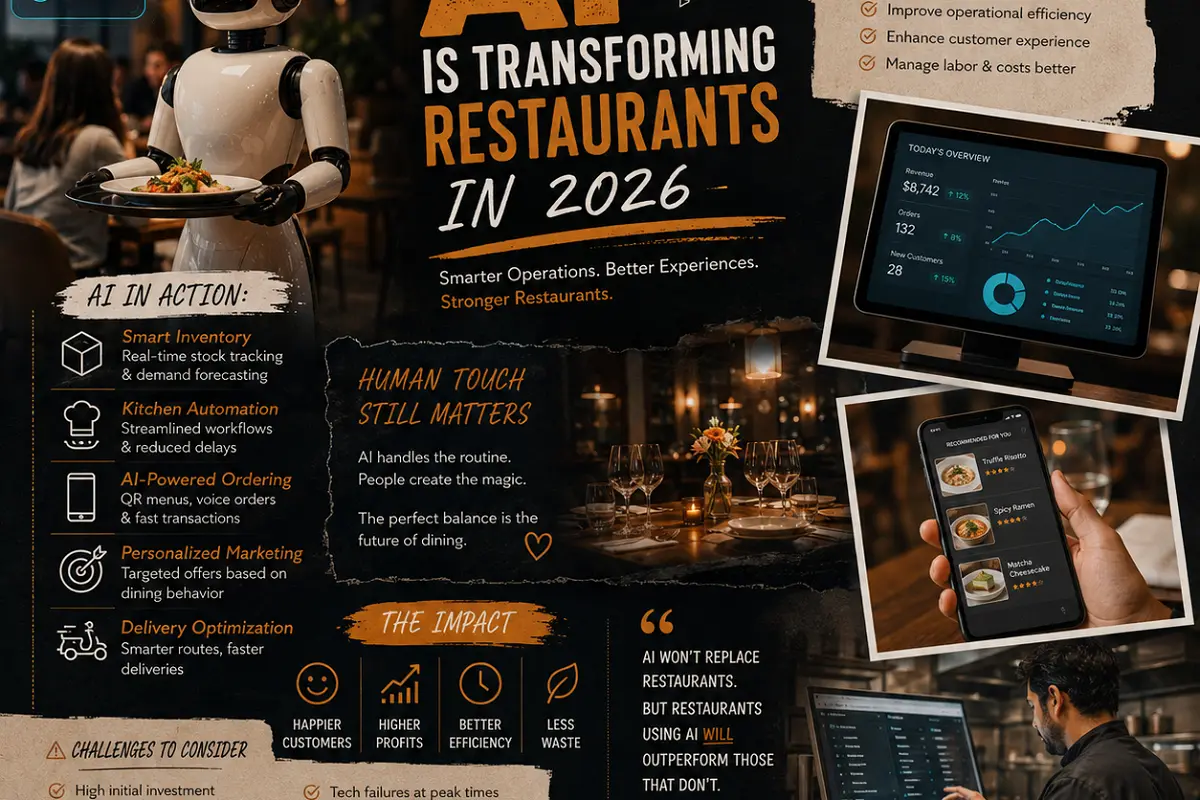
How AI is Transforming Restaurants in 2026
AI is changing restaurants much faster than people expected. Not in a dramatic robot-chef kind of way, at least not yet. What’s really happening is restaurants are quietly using AI to make operations smoother, service quicker, and customer experiences more personalized without diners even noticing half the time. And honestly, some of it works really well. Some of it still feels a little forced.
Why Are Restaurants Suddenly Investing So Much in AI?
Because running restaurants became exhausting.
Food costs fluctuate constantly, staffing is unpredictable, customers expect faster service every year somehow, and restaurants are under pressure to keep everything efficient without making the experience feel rushed.
AI helps with things like:
-
inventory tracking
-
predicting busy hours
-
reducing ingredient waste
-
managing online orders
Not exciting to customers maybe. But for restaurant owners? Huge difference.
One badly managed kitchen can lose ridiculous amounts of money just from over-ordering produce every week. Most diners never see that side of the business though.
How Is AI Changing the Customer Experience?
More than people realize honestly.
Customers interact with AI through:
-
reservation systems
-
automated booking chats
-
personalized dish suggestions
-
QR-based menus and ordering systems
Some restaurants now analyze previous customer orders to recommend meals automatically. Convenient, but slightly unsettling too if you think about it too much.
And platforms connected to Instagram, delivery apps, loyalty systems, they’re collecting dining habits constantly. Spicy food preferences, vegan choices, protein-heavy meals. Restaurants know customer behavior better now than they probably ever did before.
What Restaurant Areas Are Being Affected Most by AI?
A lot of the biggest changes are happening quietly behind the scenes.
|
Restaurant Function |
How AI Is Being Used |
|
Inventory Management |
Predicting ingredient demand |
|
Kitchen Operations |
Reducing delays and food waste |
|
Customer Service |
Automated bookings and support |
|
Marketing |
Personalized offers and promotions |
|
Delivery Systems |
Faster route and order tracking |
Kitchen automation is growing too. Especially inside chain restaurants where consistency matters more than creativity sometimes.
Some chefs appreciate the precision. Others think it removes personality from cooking a little. Both opinions are probably fair.
Is AI Actually Replacing Restaurant Staff?
Not really. Despite all the headlines.
Restaurants still rely heavily on people because hospitality is emotional at its core. Customers still want warmth, recommendations, casual conversations, small interactions that don’t feel scripted.
AI mostly handles repetitive tasks:
-
payment processing
-
booking management
-
demand forecasting
-
customer data analysis
And honestly, that’s probably where it works best. Nobody misses waiting ten minutes for a card machine anyway.
But fully automated dining spaces? They still feel cold. A little dystopian almost.
What Problems Are Restaurants Facing With AI?
Cost is a big one. Smaller restaurants especially struggle with advanced AI systems because setup and training aren’t cheap.
Then there’s:
-
staff resistance to new systems
-
technology failures during peak hours
-
customer concerns around data privacy
And honestly, some restaurants overdo the automation. Too many screens, too little interaction. At some point the place stops feeling like hospitality and starts feeling like self-checkout at a supermarket.
That balance matters more than operators think.
What Are Restaurants Getting Right About AI?
The smartest restaurants use AI quietly. Almost invisibly.
Pro-Tip: In our experience, restaurants see the best customer response when AI removes inconvenience without replacing human interaction completely. Faster reservations and smoother billing? People love that. But diners still remember warm service and genuine conversations far more than smart software.
That human side still carries the experience. Probably always will.
What Happens Next for Restaurants in 2026?
2026 Trends:
Restaurants are moving toward AI systems that blend naturally into operations instead of feeling overly futuristic. Voice-enabled ordering, predictive kitchens, personalized dining suggestions, all of that will keep growing. At the same time though, diners may start valuing human hospitality even more because of how automated daily life is becoming.
Funny enough, the more technology enters restaurants, the more people seem to appreciate simple human interaction.
🔗 Read More:
Maybe that’s where the industry is heading now. Not toward fully robotic restaurants, just smarter systems handling the stressful parts quietly in the background while people focus on the actual dining experience. Or at least, that’s what restaurants are trying to achieve.