Practical Check-in Procedure: Front Office Training Guide
Learn practical check-in procedure with SOP, guest handling steps, coordination workflow, and service standards in front office hotel operations.
 Shah Vaibhavi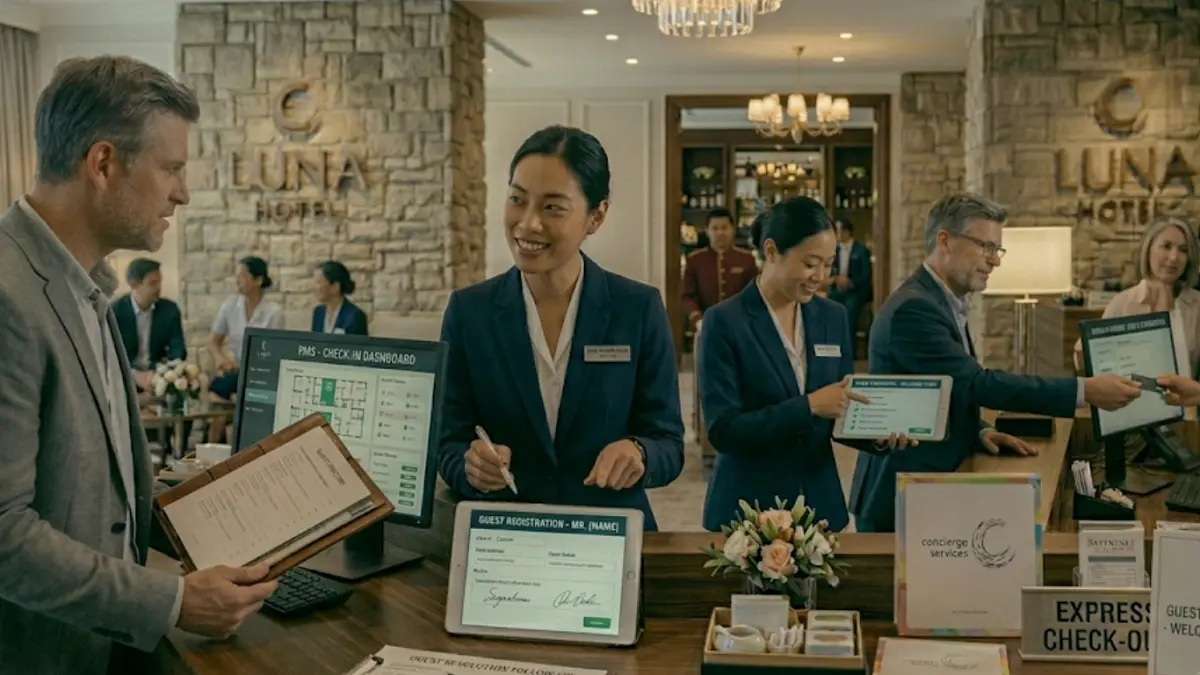
Talk behind the counter is focused on one thing—if check-in feels messy, the whole stay feels messy. Guests don’t see your system. They feel your control.
Overview of Practical Check-in Procedure in Front Office
Check-in is where you take control of the guest’s stay. Or lose it.
It’s not just handing over a key. It’s verifying details, locking payments, assigning the right room, and setting expectations—fast and clean.
-
Guest identification
-
Reservation validation
-
Payment handling
-
Room readiness check
-
Clear communication
Do it right, and the guest relaxes. Do it wrong, and you spend the stay fixing it.
Pro-tip: Smooth check-in hides backend chaos. That’s the goal.
SOP Procedure for Practical Check-in
Stick to the steps. No shortcuts.
Step 1: Pre-Arrival Preparation
Check arrival list, VIPs, special requests, and room status before shift. Systems must be updated.
Step 2: Guest Acknowledgment
Acknowledge within 5 seconds. Eye contact. Professional welcome.
Step 3: Reservation Verification
Pull booking from PMS. Confirm name, dates, room type, and payment method.
Step 4: Guest Identification
Ask for valid ID. Verify as per legal and hotel policy.
Step 5: Registration Process
Complete registration card (digital or physical). Get signature if required.
Step 6: Room Allocation
Assign based on availability, preference, and planning.
Step 7: Payment Handling
Take advance or pre-authorize card as per policy.
Step 8: Key Issuance
Encode and issue correct room key/card.
Step 9: Information Sharing
Keep it short—room location, breakfast timing, key services.
Step 10: Closing Interaction
Close clean. Offer help. Don’t just move to the next guest.
Pro-tip: Rushed steps create slow problems later.
Front Desk Workflow and Operational Steps
Control the flow, especially when it’s busy.
-
Arrival Queue Management: Acknowledge everyone. Even a quick “I’ll be with you” matters
-
System Coordination: Use PMS for real-time updates
-
Room Readiness Confirmation: Never assign without checking status
-
Data Accuracy: One wrong entry = billing issues later
-
Key Control: Issue and log properly
Coordination at the desk:
-
Housekeeping: Confirm room readiness
-
Bell Desk: Handle luggage and escort
-
Security: ID checks and monitoring
-
Accounts: Payment and billing clarity
Pro-tip: Poor hand-off slows everything down.
Guest Interaction Process During Check-in
This is where guests judge you instantly.
-
Greeting: Smile. Eye contact. Keep it real
-
Communication: Clear, simple, no over-explaining
-
Personalization: Use the guest’s name
-
Body Language: Stand straight, stay attentive
-
Waiting Time: If delay, inform early
Situations you’ll face:
-
VIP Guests: Fast, clean, no errors
-
Group Arrivals: Pre-register. Don’t build a queue
-
Walk-ins: Explain clearly—availability, rates, policies
-
Early Arrivals: Offer options, don’t leave them hanging
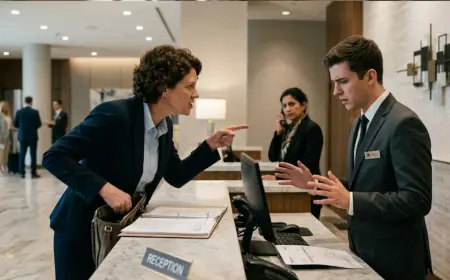
Complaint during check-in?
Listen. Acknowledge. Fix or escalate—without breaking flow.
Pro-tip: Guests accept waiting. They don’t accept confusion.
Tools and Systems Used in Check-in Process
Use your tools properly. That’s your speed.
-
Property Management System (PMS): Reservations, profiles, room status
-
Key Card Encoding System: Secure access cards
-
Payment Gateway: Card authorization and transactions
-
Registration Systems: Guest documentation
-
Communication Tools: Internal coordination
-
Queue Management Systems: Control peak-hour flow
Systems don’t slow you down. Poor usage does.
Service Standards and Performance Metrics
You’re measured every shift.
-
Guest acknowledgment: within 5 seconds
-
Check-in time: 3–5 minutes
-
Queue wait: max 5–7 minutes
-
Data accuracy: 100%
-
Room readiness: on time
-
Payment processing: 1–2 minutes
-
Guest feedback: positive arrival experience
Miss these, and pressure builds fast at the desk.
Evaluation and Training Assessment
No improvement without checks.
-
Role plays for real scenarios
-
Supervisor watching live check-ins
-
System audits for PMS accuracy
-
Guest feedback reviews
-
Performance checks on speed and clarity
-
Mystery audits for real behavior
Training focus stays simple:
-
Speed
-
Accuracy
-
Communication
Pro-tip: Fast is good. Controlled is better.
In conclusion
Check-in sets the tone. Always.
Control the steps. Control the interaction. Control the flow.
That’s how you run a clean desk—and a smooth stay.