How to Stay Calm with Difficult Guests: Front Office Training
Learn how to stay calm with difficult guests in front office with SOP, guest handling techniques, and service standards for effective conflict management.
 Shah Vaibhavi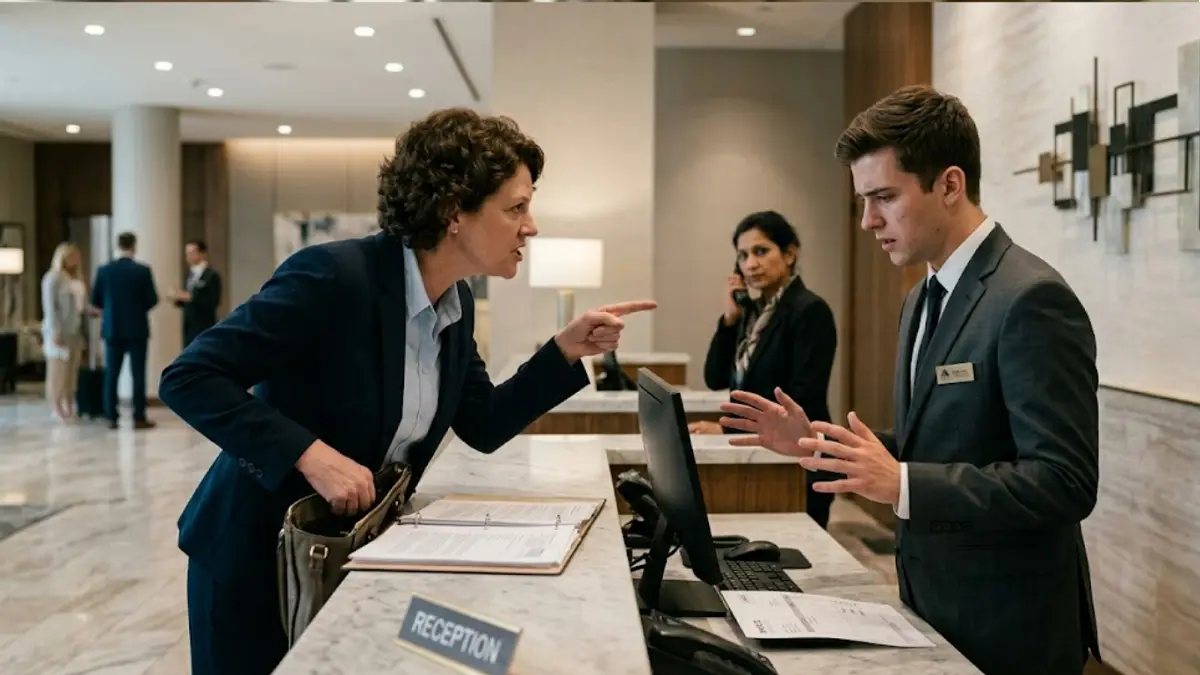
Talk behind the counter is always about one thing, who lost control and who kept it. And at the desk, the calm one always wins.
Overview of Staying Calm in Front Office Operations
Stay calm difficult guests front office means one thing: you control yourself first, then the situation.
Guests come in tired, angry, confused. Delays, billing issues, overbooking, this is daily business.
But if you react emotionally, the problem doubles.
Stay calm, and you think clearly.
Stay calm, and the guest starts settling down.
And remember, guests don’t just listen to you, they read your reaction.
Pro-tip: The moment you show frustration, you lose authority.
SOP Procedure to Stay Calm with Difficult Guests
Step 1: Pause and Control Reaction
Don’t jump in fast. Take a second. Reset.
Step 2: Maintain Professional Posture
Stand straight. Eye contact. No crossed arms.
Step 3: Listen Without Interrupting
Let them talk. Don’t cut them off.
Step 4: Acknowledge the Issue
“I understand your concern.” Keep it simple.
Step 5: Avoid Personalization
It’s not about you. Never take it personally.
Step 6: Speak in Calm Tone
Slow. Clear. No sharp edges in your voice.
Step 7: Clarify the Problem
Ask questions. Get the full picture.
Step 8: Offer Solution
Give options within hotel policy. No false promises.
Step 9: Escalate if Needed
Call the supervisor or Duty Manager when required.
Step 10: Follow-Up
Check back. Make sure the guest is settled.
Pro-tip: Fast reaction creates mistakes. Controlled reaction creates solutions.
Front Desk Workflow and Emotional Control
Pre-Shift Preparation
Prepare your mindset. Busy shift = pressure.
Check-in Stage
Room not ready? Stay calm. Explain clearly.
During Stay Monitoring
Watch guest mood early. Fix before it blows up.
Complaint Handling
Calm behavior first. Solution second.
Peak Hour Management
Busy is not an excuse to lose control.
Interdepartmental Coordination
Stay calm even when chasing housekeeping or maintenance.
Documentation
Log every issue. Don’t rely on memory.
Shift Handover
Pass issues cleanly. No emotional carryover.
Pro-tip: Most escalations happen because staff react, not because of the problem itself.
Guest Interaction Process for Difficult Situations
Step 1: Stay Composed
Control face. Control posture.
Step 2: Listen Actively
Let them vent. Don’t rush.
Step 3: Show Empathy
“I understand how this is frustrating.”
Step 4: Avoid Arguments
Never prove the guest wrong at the desk.
Step 5: Keep Voice Calm
Lower tone. Slower pace.
Step 6: Offer Solutions
Clear options. No confusion.
Step 7: Maintain Positive Body Language
Eye contact. Open stance.
Step 8: Confirm Agreement
Make sure they accept the solution.
Step 9: Thank the Guest
Acknowledge their patience.
Pro-tip: You’re not there to win an argument. You’re there to close the issue.
Tools and Systems Supporting Calm Handling
-
Property Management System (PMS): Check guest history fast
-
Guest Profile Database: Spot repeat issues or preferences
-
Incident Reporting System: Record tough cases
-
Internal Communication Tools: Fix problems quickly with other teams
-
Task Management Systems: Track what’s pending
-
Training Modules: Build emotional control and soft skills
Tools don’t calm the guest, you do. Tools just support you.
Service Standards and Performance Metrics
-
Response Time: Within 3 seconds
-
Voice Control: Calm and steady always
-
Resolution Time: 10–15 minutes for standard issues
-
Escalation Time: Immediate for serious cases
-
Guest Satisfaction: Positive after resolution
-
Behavior Standard: No visible frustration
-
First Contact Resolution: No repeat explanations
If the guest has to repeat the issue, you lost control somewhere.
Evaluation and Training Assessment
-
Supervisor Observation: Watch real behavior at the desk
-
Role Play Training: Practice pressure situations
-
Guest Feedback Analysis: Check behavior impact
-
Mystery Audits: Real-time performance check
-
Incident Review: Break down what went wrong
-
Performance Reviews: Measure control and professionalism
-
Continuous Training: Build stress handling skills
In conclusion, calm is not optional at the front desk, it’s your strongest tool. Control your reaction, control the guest, control the outcome. That’s how professionals run the desk, even on the worst days.
Also read: Learn verbal vs non-verbal communication in front office management with SOP