Radisson Portfolio Deal Signals Renewed Investor Confidence in India’s Hospitality Growth Story
VA major Radisson hotel portfolio transaction highlights renewed investor confidence in India’s hospitality sector, reflecting strong demand fundamentals and growing interest in branded hotel assets.
 nishathapa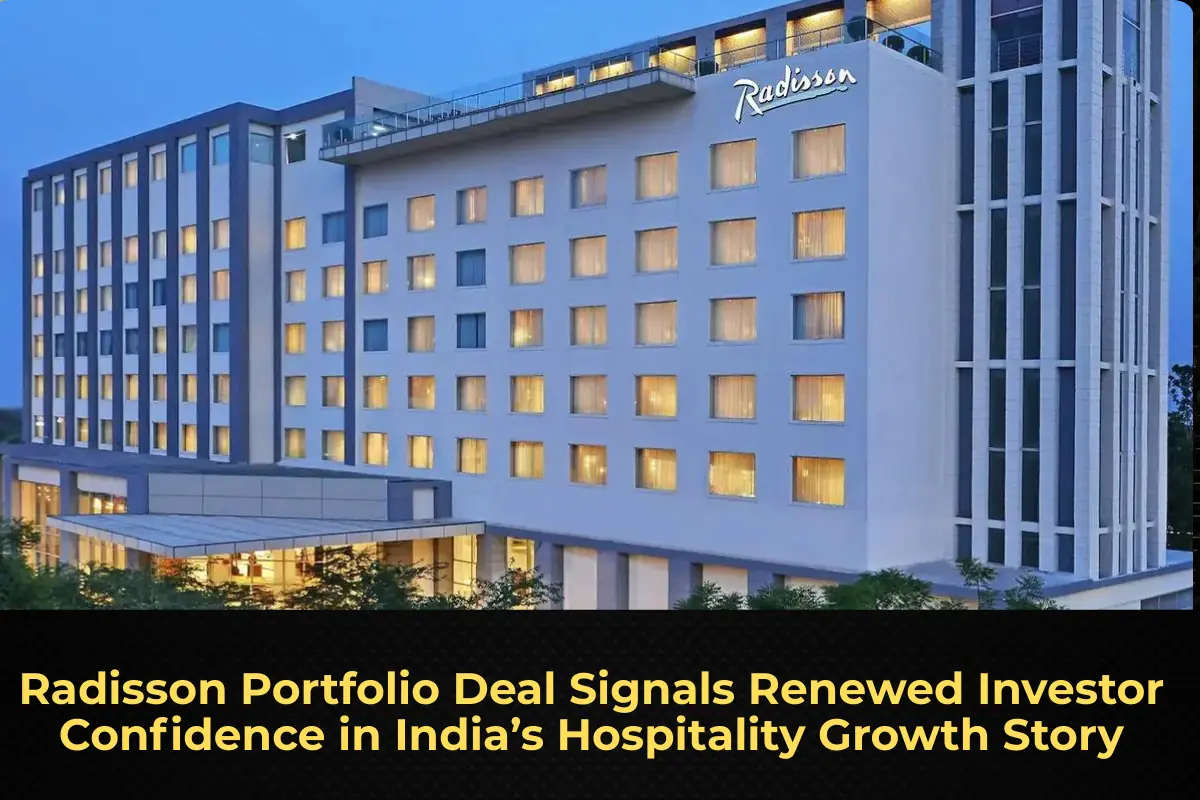

Radisson Portfolio Transaction Highlights India’s Rising Hotel Investment Appeal
India’s hospitality investment landscape continues to gain momentum, and a recent transaction involving a portfolio of Radisson-branded hotels has drawn significant attention from industry observers. The development underscores growing investor confidence in India’s branded hotel sector and signals renewed capital interest in large-scale hospitality assets.
The transaction involving approximately 50 Radisson hotels in India reflects a broader trend: institutional and private investors are increasingly viewing Indian hospitality as a long-term growth opportunity rather than a cyclical play. With improving occupancies, rising average room rates, and strong domestic travel demand, branded hotel portfolios are once again becoming attractive investment vehicles.
Branded Portfolios Regain Momentum
Branded hotel portfolios offer several advantages to investors, including operational consistency, established distribution systems, loyalty program access, and brand recognition. Radisson’s established presence in India makes such portfolios particularly compelling.
India remains one of the fastest-growing hospitality markets globally, supported by a strong domestic travel base and expanding infrastructure. The scale of this portfolio transaction demonstrates that investors are willing to commit substantial capital when brand strength and market fundamentals align.
Why Radisson’s India Footprint Matters
Radisson has built a significant presence across India over the past decade, spanning metro cities, state capitals, industrial hubs, and emerging leisure destinations. This diversified geographic spread reduces market concentration risk and enhances the stability of portfolio-level performance.
For investors, diversification across multiple cities ensures exposure to different demand drivers—corporate travel, weddings and social events, regional tourism, and government-related stays—thereby mitigating volatility.
India’s Investment Case: Stronger Than Ever
Several structural factors are strengthening India’s hotel investment case:
- Domestic Travel Growth: India’s large and growing middle class continues to fuel consistent travel demand.
- Infrastructure Development: New airports, highways, and industrial corridors are unlocking fresh hotel markets.
- Limited Branded Supply: Compared to global benchmarks, India still has relatively low branded hotel penetration, leaving significant room for expansion.
- Improving Financial Metrics: Occupancy levels and average daily rates have shown strong recovery and upward momentum.
These factors collectively create an environment where large branded portfolios can generate predictable long-term returns.
Asset Consolidation and Institutional Interest
The transaction also highlights a broader consolidation trend within the hospitality sector. As markets mature, portfolios often shift hands between developers, private equity players, and institutional investors seeking stabilised assets.
For global investors, India offers an attractive combination of yield potential and long-term appreciation. Branded hotel portfolios, especially those associated with internationally recognised operators, provide operational stability and scalable growth platforms.
Portfolio Scale as a Competitive Advantage
Owning a large portfolio under a single brand umbrella allows for economies of scale in procurement, marketing, technology implementation, and staff training. This operational efficiency can significantly enhance profitability compared to standalone assets.
Additionally, larger portfolios offer stronger bargaining power in corporate contracting and group bookings, further supporting revenue stability.
Market Timing and Strategic Positioning
The timing of this Radisson portfolio transaction aligns with a broader recovery phase in India’s hospitality cycle. Corporate travel is steadily normalising, MICE (Meetings, Incentives, Conferences, and Exhibitions) demand is returning, and wedding-related bookings remain robust across multiple cities.
Investors appear to be positioning themselves ahead of the next sustained growth phase, recognising that early entry into stabilised assets can generate long-term value.
Challenges Remain, but Outlook is Positive
Despite strong fundamentals, investors must remain mindful of certain challenges, including regulatory complexities, land acquisition hurdles, and evolving taxation structures. However, experienced operators and diversified portfolios help mitigate these risks.
India’s hospitality industry is also becoming more organised and transparent, further strengthening investor confidence in the sector.
Long-Term Implications for the Industry
Large-scale transactions involving internationally recognised brands signal maturity in India’s hotel investment market. Such deals can attract additional institutional capital, accelerate consolidation, and encourage further development across underserved regions.
The Radisson portfolio transaction reinforces the narrative that India’s hospitality sector is entering a sustained growth cycle supported by demographic strength, economic expansion, and rising travel aspirations.
Conclusion
The movement of a significant Radisson-branded portfolio in India highlights renewed investor conviction in the country’s hospitality growth trajectory. As domestic travel strengthens and branded supply continues to expand, large-scale transactions are likely to become more frequent.
For investors, operators, and developers alike, the message is clear: India’s hospitality market is no longer just an emerging opportunity—it is a strategic growth market with long-term potential.