Hotels Face Bartender Shortage as Hospitality Schools Rethink Training
Hotel bartender shortage continues as hospitality schools adapt training with practical skills and industry partnerships. Read more.
 Prajakta Sanjay Warwadkar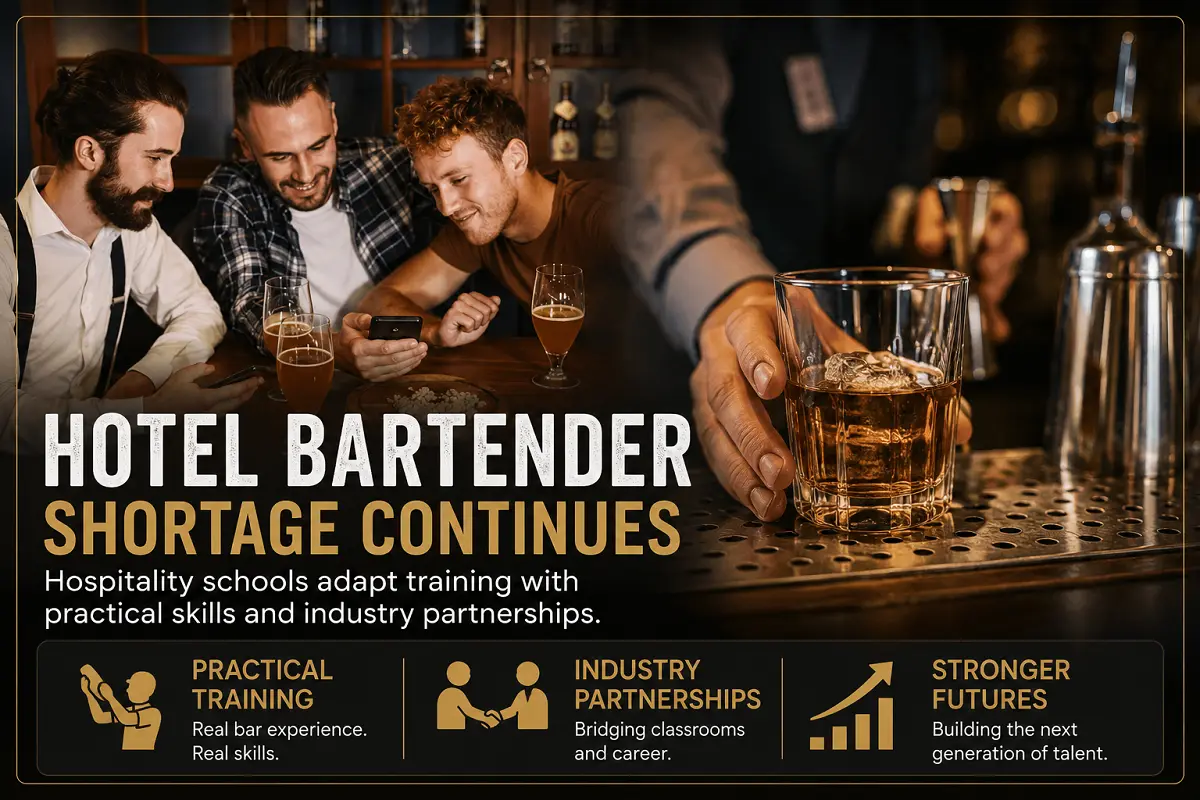
NEW YORK, July 21, 2026 — Hotels across the hospitality industry are facing an increasing shortage of skilled bartenders as changing workforce expectations, employee turnover and evolving career choices reshape recruitment. Industry experts say stronger collaboration between hotels and hospitality schools could help rebuild the talent pipeline and prepare future professionals for modern food and beverage operations.
The shortage extends beyond filling vacant positions. Hotel operators are now focusing on developing long-term career pathways that encourage young professionals to view bartending as a rewarding hospitality career rather than a temporary job.
Hotel Bartender Shortage Pushes Industry to Rethink Training
Hotel bars remain an important part of the guest experience, offering everything from signature cocktails at luxury properties to casual beverages at resorts and business hotels. However, finding trained bartenders has become increasingly difficult as younger workers seek flexible careers, better workplace culture and clearer opportunities for professional growth.
Industry organizations continue to highlight staffing challenges across hotels, with food and beverage departments among the areas experiencing the greatest recruitment pressure. When qualified bartenders are unavailable, hotels often experience slower service, heavier workloads for existing staff and inconsistent guest experiences.
Hospitality Schools Play a Larger Role
Hospitality educators are responding by expanding practical learning that reflects real hotel operations. Modern culinary and hospitality programmes increasingly focus on beverage preparation, guest communication, inventory management, responsible alcohol service and operational efficiency.
Industry leaders believe practical education helps students understand that bartending requires technical expertise, customer service skills and business knowledge rather than simply preparing drinks.
"Students are more likely to choose hospitality careers when they understand the long-term opportunities available beyond entry-level positions."
Hands-On Experience Matters
Experts say classroom education alone is no longer enough. Hotel environments demand professionals who can work efficiently during peak service hours, communicate confidently with guests and maintain quality standards across different service settings.
Internships, apprenticeships and supervised hotel training allow students to gain valuable workplace experience before entering full-time employment. These programmes also give hotel operators the opportunity to mentor future employees while introducing them to brand standards and guest service expectations.
Hotels Strengthen Industry Partnerships
Many hospitality businesses are increasing partnerships with culinary institutes and hospitality schools through guest lectures, hotel visits, internships and recruitment programmes. These initiatives help students gain exposure to real hospitality environments while allowing employers to identify potential talent early.
Industry observers note that structured career pathways also improve employee retention. Showing clear progression from barback to bartender, beverage supervisor, bar manager and food and beverage leadership positions encourages long-term commitment.
Technology Supports Continuous Learning
Digital learning platforms are becoming valuable tools for hospitality training. Hotels use online modules to educate employees on menu knowledge, compliance requirements and service procedures, while hospitality schools integrate technology into beverage education.
Despite these advances, educators agree that practical experience remains essential. Bartending continues to rely heavily on interpersonal communication, teamwork and hands-on operational skills that cannot be fully developed through digital learning alone.
Future Success Depends on Collaboration
Industry experts believe rebuilding the hotel bartender pipeline requires stronger cooperation between hospitality schools, employers and students. Educational institutions can provide practical, industry-focused training while hotels create structured development programmes that support career growth.
As hospitality continues to recover and guest expectations evolve, investment in workforce development is expected to play an increasingly important role in maintaining service quality across hotels worldwide.
Source: Industry analysis based on hospitality workforce trends, educational insights and publicly available workforce information from hospitality organizations and labor market data. https://localbartendingschool.com/