Melco Resorts and Entertainment Wins Five Dining Awards 2026
Melco Resorts and Entertainment wins five accolades at the 10th Trip.Gourmet Awards, with Jade Dragon earning Black Diamond and four more restaurants honoured in Macau.
 RUKAIYA KADIWAL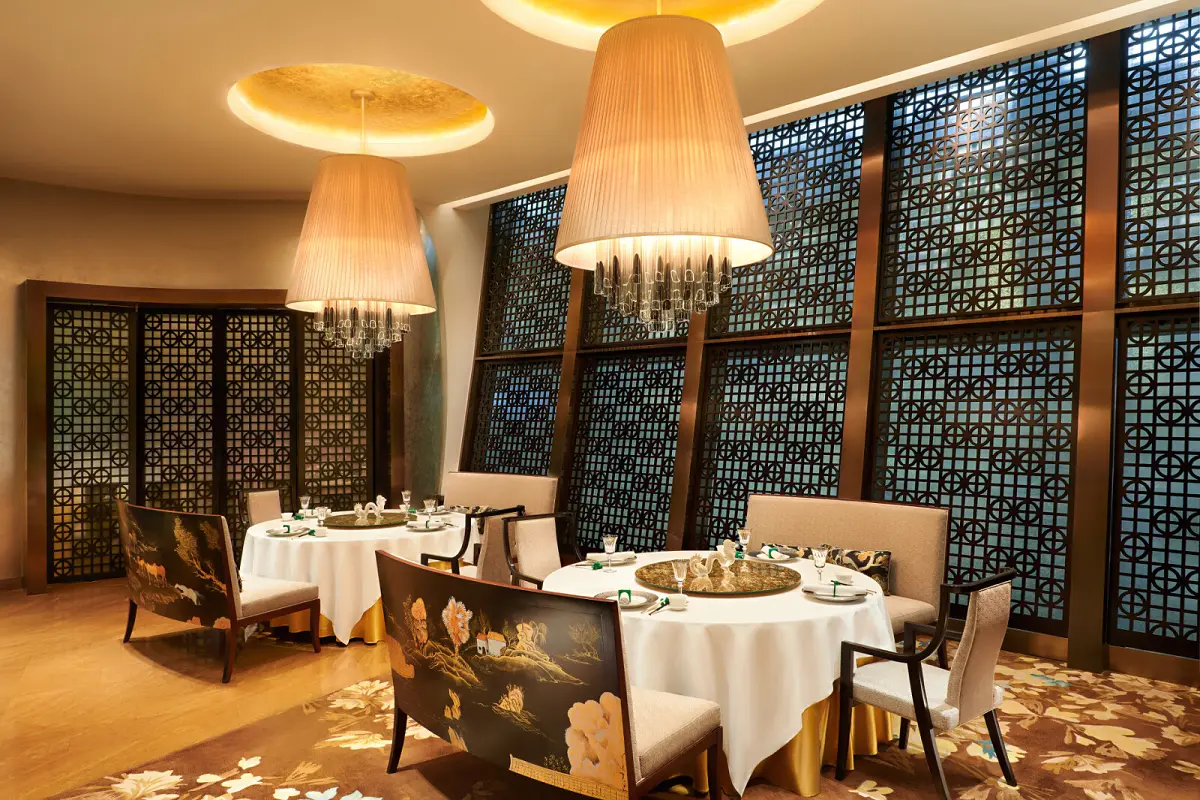
The ceremony in Singapore on September 8, 2026 marked ten years of the Trip.Gourmet Restaurant Rankings and Fine Dining Awards. Across a decade of annual recognition, the awards have tracked the maturation of Asian fine dining from a category still proving itself to international critics into one that sets its own standards and exports them outward. When Jade Dragon at City of Dreams Macau received the highest distinction in the room, the Black Diamond recognition, it was not a surprise to the industry. It was a confirmation of something that has been building for years in a city that, between its casinos and its kitchens, has decided that gastronomy belongs at the center of what it offers the world.
Melco Resorts and Entertainment Takes Five Accolades at Trip.Gourmet 2026
Melco Resorts and Entertainment received five accolades at the tenth anniversary edition of the Trip.Gourmet Restaurant Rankings and Fine Dining Awards, presented in Singapore on September 8, 2026. The five restaurants honored span two of Melco's integrated resort properties in Macau, City of Dreams and Studio City, and represent a range of culinary traditions from Cantonese and Chinese to French, Japanese, and innovative seasonal cooking. The sweep positions Melco not merely as a hospitality operator with strong restaurants but as the dominant force in fine dining across Macau's competitive culinary landscape.
Lawrence Ho, Chairman and CEO of Melco, addressed the significance of the achievement in terms that directed credit away from the corporate structure and toward the people who produce the food. "Achieving five major honors at the tenth anniversary of the Trip.Gourmet Awards is a great testament to our unwavering commitment to world-class hospitality," he said. "This milestone belongs entirely to our extraordinary culinary and F&B team colleagues." His framing matters because it acknowledges the gap between an operator's ambitions and the daily kitchen reality that determines whether those ambitions produce something worth recognizing. Five accolades are not won by strategy documents.
Jade Dragon and the Weight of the Black Diamond
Jade Dragon, the Chinese fine dining restaurant at City of Dreams Macau, received the Black Diamond recognition, the highest distinction the Trip.Gourmet awards confer. The accolade arrives at a restaurant that already holds MICHELIN three stars and Black Pearl three diamonds, a combination that makes it the only Chinese restaurant in the world to carry that particular set of credentials simultaneously. Within the global fine dining ecosystem, that distinction is not a marketing claim but a structural fact about how multiple independent evaluation systems have assessed the same kitchen over time.
What Jade Dragon represents within Macau's culinary development is something more particular than its award count suggests. A Chinese restaurant achieving the highest possible recognition from both Western and Chinese evaluation frameworks is a statement about the capacity of Chinese culinary tradition to occupy the summit of global fine dining on its own terms, not as an exotic category alongside European cuisine but as a peer to any kitchen producing food at the highest technical and creative level. That argument, made through decades of Chinese culinary tradition and refined through the specific practices of a single kitchen, is what the Black Diamond recognition formally acknowledges.
Alain Ducasse at Morpheus and the French Classics in Cotai
Alain Ducasse at Morpheus, also at City of Dreams, received the Diamond accolade for its legendary French classics. The restaurant holds MICHELIN two stars and Black Pearl one diamond, and operates within the Morpheus hotel, designed by the late Zaha Hadid, whose exoskeleton structure gives the building a visual drama that the restaurant interior both complements and quietly refuses to compete with. A French restaurant inside a building of that architectural profile has to earn its identity through the food rather than the setting. Two MICHELIN stars and a Diamond at Trip.Gourmet suggest it has done that.
The presence of an Alain Ducasse restaurant in Macau is itself a signal about how seriously the city's integrated resort operators have committed to bringing global culinary reputations to a peninsula whose food culture was historically defined by its own distinct Macanese and Cantonese traditions. The conversation between those traditions and the imported European fine dining that has arrived alongside the resort development is one of the more interesting culinary dynamics in Asia, and it plays out across Melco's portfolio in ways that the award results reflect.
Three Platinum Recognitions Across Three Distinct Culinary Languages
The remaining three awards cover ground that reflects the breadth of Melco's dining ambitions rather than a concentration in a single cuisine or format. Yí, at City of Dreams, received Platinum status for its innovative Chinese cuisine, a kitchen described as distilling Chinese gastronomy to its essence through a creative approach to seasonal dining. The Black Pearl one-diamond restaurant is working in the space between tradition and invention that defines much of contemporary Chinese fine dining, taking the foundational flavour logic of the cuisine seriously while refusing to treat technique as fixed.
Sushi Kinetsu, also at City of Dreams, earned Platinum status for its Edomae sushi craftsmanship, holding MICHELIN one star and Black Pearl one diamond. Edomae sushi, the Tokyo style built around aged and cured fish rather than the purely fresh-catch approach that defines many Western interpretations of the form, requires a precision of timing and technique that reveals itself in texture and flavour rather than visual drama. A MICHELIN star and a Platinum from Trip.Gourmet at a sushi counter in Macau represents the kind of culinary transplantation that succeeds only when the sourcing and the craft travel together rather than just the name and the format.
Pearl Dragon at Studio City, Melco's cinematically-themed integrated resort, completed the five with a Platinum accolade of its own, as a MICHELIN-starred restaurant that fuses modern flair with Cantonese tradition and incorporates Chaozhou essence into dishes built from the finest seasonal ingredients. Cantonese cooking at the highest level, rooted in technique, ingredient quality, and the restraint that lets the primary flavour speak clearly, is as demanding a culinary discipline as any European tradition, and Pearl Dragon's awards reflect consistent mastery of that discipline.
What Five Awards at One Ceremony Means for Macau's Culinary Position
Ho's remark at the ceremony extended beyond Melco's own recognition to locate it within a broader civic ambition. The five accolades, he said, reinforce Melco's commitment to Macau's ongoing development as a UNESCO Creative City of Gastronomy. That designation, held by Macau since 2017, is not simply a tourism credential but a framework within which the city's culinary institutions are understood as part of its cultural infrastructure. A private resort operator winning five awards at a major regional culinary ceremony contributes to that framework in ways that public investment in food culture alone cannot.
For the global hospitality industry watching Macau, the concentration of internationally recognized fine dining within Melco's integrated resort portfolio raises questions about the relationship between gaming-driven resort development and culinary excellence that are not straightforward to answer. The conventional assumption that casino resorts are not where serious food happens has been systematically dismantled in Macau over the past decade, and Melco's September 2026 award haul is among the clearest data points yet that the dismantling is complete.
The Team Behind the Accolades
Ho's closing remarks at the ceremony were among the most direct in their acknowledgment of where these awards actually originate. "Their continued dedication, creativity and tireless pursuit of excellence ensure that every guest enjoys an unforgettable journey with us," he said of the culinary and food and beverage teams across the five restaurants. "I am deeply thankful to our team for their hard work and passion." The language is not unusual for a CEO addressing an award ceremony. What gives it weight in this context is the specificity of what the teams have achieved, five distinct culinary languages, five separate kitchens, five sets of techniques and seasonal calendars and service cultures, all performing at the level that international evaluation frameworks identify as exceptional.
An integrated resort's culinary operation at this scale involves coordination across procurement, training, kitchen management, and service that is invisible in the finished dish and essential to its consistency. The guest who sits at a white-clothed table at Jade Dragon and receives a plate that has earned MICHELIN three stars and a Black Diamond is experiencing the output of a system that extends from the fishing boats and farms supplying the kitchen to the sommelier who pours the wine and the manager who adjusts the room temperature between courses. Awards recognise the restaurants. The people who produce them know which part of that chain they occupy.
A City Still Writing Its Culinary Chapter
Macau's position as a UNESCO Creative City of Gastronomy was always an aspiration as much as a recognition, a designation that acknowledged potential alongside achievement. Ten years of Trip.Gourmet awards, a decade of MICHELIN evaluations, and five accolades collected by a single operator at a single ceremony suggest that the aspiration has been met at least partially in practice. What the city's culinary scene will look like in another decade, whether the concentration of excellence within the integrated resort properties expands into the broader food culture of the peninsula, is the longer story that September 8, 2026 has added a chapter to rather than concluded. The kitchens at City of Dreams and Studio City will open tomorrow with the same mise en place they had today, the awards framed somewhere visible and the service beginning without ceremony, which is exactly how it should be.
Related reading: Taikourou Tokyo: the jumbo gyoza destination at Tokyo Station