Air India Express Wins AI Customer Experience Award for Tia
Air India Express' Tia handled nearly four-fifths of guest queries during April's West Asia disruptions, alongside 15,000 daily queries and 75% self-service.
 Jishan Khan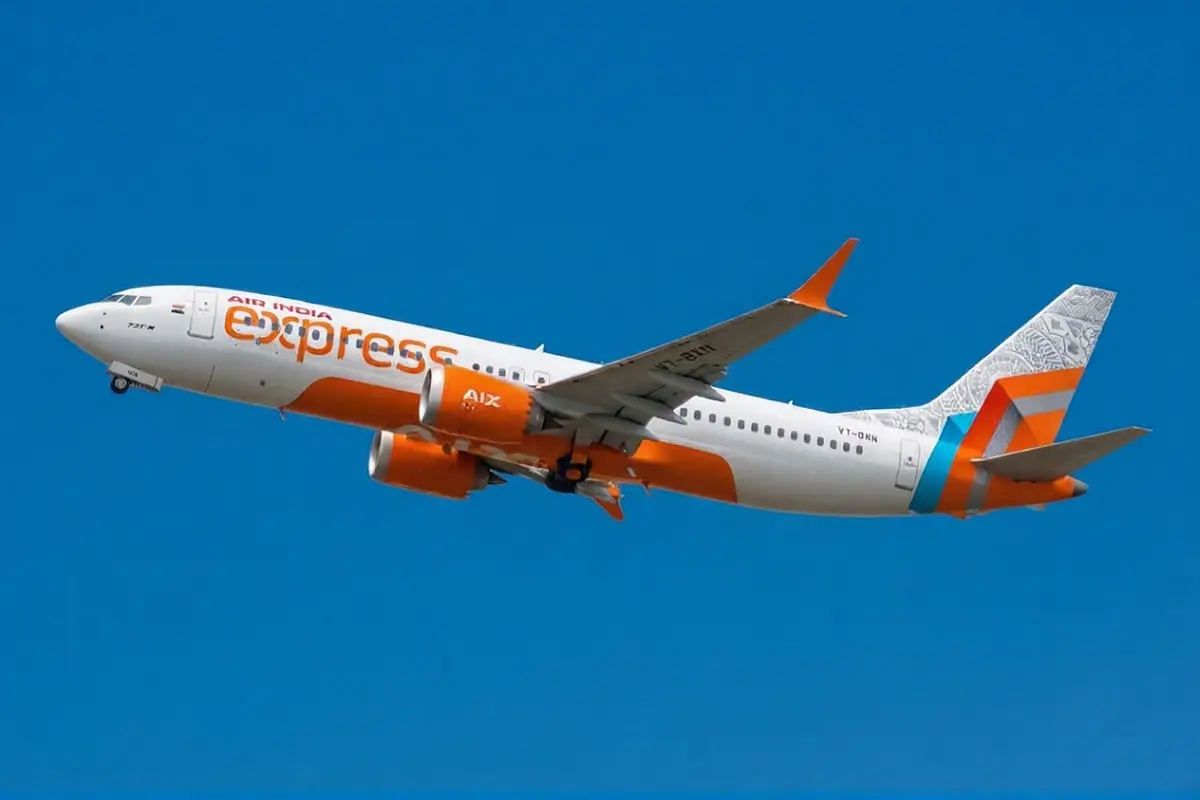
"Nearly Four-Fifths of All Guest Queries" Tia's Real Test Wasn't a Chatbot Award, It Was April's West Asia Chaos
Air India Express won 'Best Use of AI in Customer Experience' at the UBS Forums 25th CX Strategy Summit & Awards 2026 for Tia, its AI-powered guest support platform, days after receiving a 4-Star Skytrax World Airline Rating, the highest tier available to a value carrier. Every outlet covering this award leads with the headline metrics: more than 75% of guest interactions now resolved through self-service, roughly 15,000 queries handled daily, over 100 self-service options spanning bookings, cancellations, refunds and baggage queries. Those numbers describe a chatbot performing well in ordinary conditions. The single sentence buried in the middle of the release describes something considerably more consequential: during the West Asia-related disruptions in April, Tia handled nearly four-fifths of all guest queries received.
That detail is not a footnote. It is the actual evidence this award is measuring something real.
Why "West Asia Disruptions in April" Is Not a Vague Phrase in This Feed's Coverage
This feed has tracked the Iran conflict's aviation consequences continuously since it began on February 28, 2026, the Strait of Hormuz closure, the fuel price shock that forced Canada's emergency airline loan facility, Cathay Pacific's repeatedly postponed Dubai and Riyadh returns, Qatar Airways' evacuation flight surge, and the broader mass cancellations that saw over 11,000 flights grounded and more than one million passengers stranded across the Middle East within days of the conflict's outbreak. Air India Express's own reference to "West Asia-related disruptions in April" sits squarely inside that same crisis window, a period when Indian carriers specifically were managing airspace closures, rerouted schedules, and passengers stranded across Gulf hubs simultaneously, exactly the kind of chaotic, high-volume disruption event that overwhelms a conventional airline call centre within hours.
A customer support system that can absorb nearly 80% of query volume during precisely that kind of event, rebooking passengers, rescheduling flights, processing cancellations including changes to both origin and destination stations, subject to seat availability, is being tested under conditions no ordinary product demo or award submission could simulate. Most AI customer service tools are evaluated on their performance during calm, predictable operating conditions. Tia's most meaningful data point is what happened when conditions were the opposite of calm.
Why That Distinction Matters More for Air India Group Specifically
This feed's own recent coverage of Air India Group's broader operational and reputational position gives this award particular context. New CEO Tewolde Gebremariam's first public message to staff was explicitly about safety, punctuality, baggage handling and aircraft cleanliness, basic operational reliability, prioritised ahead of any growth or expansion messaging, following the AI171 crash and a subsequent Phuket-Delhi hydraulic incident that this feed covered in detail. India's DGCA has separately moved to mandate universal pilot drug testing after a confirmed positive result on that same Phuket-Delhi flight. Air India Group as a whole has spent much of 2026 working to rebuild operational credibility after a genuinely difficult stretch of incidents, crashes and financial losses.
Air India Express's Skytrax 4-Star rating and this AI customer service award arrive as a specific, verifiable counterpoint inside that larger, harder story. They do not erase the safety and reliability questions surrounding the wider Air India Group, Tia handling chat queries has nothing to do with pilot drug testing or hydraulic system failures. But they demonstrate that at least one part of the group's transformation effort, the low-cost subsidiary specifically, rather than the full-service mainline carrier, is producing independently verified, externally validated results in a part of the business that is genuinely within the airline's control: how it communicates with and supports passengers when things go wrong.
Why "First Chatbot-Based Assistance Platform Deployed by an Airline in India" Actually Matters
Tia's original 2021 launch predates the current generation of large language model-powered customer service tools that have become standard across the airline industry over the past two to three years. That five-year head start is operationally significant in a way that a brand-new AI deployment could not replicate quickly: Air India Express has had half a decade to accumulate real interaction data, refine which of its 100-plus self-service functions actually resolve passenger problems versus which ones generate frustration and an eventual handoff to a human agent, and build the integration between Tia and the airline's actual booking, refund and rescheduling systems that makes genuine self-service, not just answering questions, but actually executing a rebooking or refund, possible. This feed's earlier coverage of Forthcode's ANiX platform drew a specific distinction between AI that merely answers questions and AI that connects passenger intent to systems capable of acting on it; Tia's five-year evolution from a basic chatbot into a platform genuinely executing origin-and-destination changes during a live crisis is a real-world example of an airline having already closed exactly that gap Forthcode's newer product is still trying to solve for the industry broadly.
Why the Skytrax Timing Reinforces Rather Than Coincides With the AI Award
Air India Express's own framing is explicit that the two accolades are connected pieces of the same transformation story: Skytrax's 4-Star rating reflects "enhancements across onboard, airport, and service delivery standards," while Tia demonstrates the airline "elevating the digital experience" in parallel. That is a coherent, two-track narrative, physical product and service standards improving on one axis, digital support infrastructure improving on a separate but complementary axis and having both validated by independent, credible external bodies within the same fortnight gives Air India Express a considerably stronger evidentiary basis for claiming genuine transformation than either accolade would carry alone. A Skytrax rating without operational data to back it can feel like a snapshot; a chatbot efficiency statistic without independent validation can feel like marketing. Together, arriving in the same week, they read as corroborating evidence rather than two isolated PR wins.
What 15,000 Daily Queries Actually Represents at Scale
Fifteen thousand resolved queries daily, sustained continuously rather than as a peak burst figure, implies an airline handling well over five million individual customer service interactions annually through this single platform, a volume that would be genuinely difficult and expensive to staff through human agents alone, particularly for a value carrier whose entire commercial model depends on maintaining a lower cost base than full-service competitors. That is the quieter, more durable commercial logic underneath this award: Tia is not simply a passenger-facing convenience feature, but a structural cost advantage that lets Air India Express maintain 24/7 multi-channel support website, app, WhatsApp, voice, across a customer base this size without correspondingly scaling human call centre headcount at the same rate, freeing Customer Happiness Specialists to handle the roughly quarter of interactions that genuinely require human judgment, with full interaction history and context already carried over from Tia's initial engagement.
What Comes Next, According to the Airline's Own Roadmap
Air India Express has specified its next development priorities as multilingual assistance, deeper personalisation and expanded self-service capabilities, a roadmap that, if genuinely executed, would extend Tia's reach into exactly the passenger segments a purely English-language chatbot currently underserves. India's domestic aviation market spans dozens of regional languages, and a low-cost carrier whose customer base skews toward price-sensitive, often first-time flyers travelling on routes across India's smaller cities has a genuinely different linguistic profile than a premium international carrier's largely English-fluent business traveller base. Multilingual capability is not a cosmetic upgrade for Air India Express specifically, it is closing a functional accessibility gap that likely explains a meaningful share of the roughly 25% of interactions Tia currently still hands off to human agents.
Whether that roadmap delivers is a question only future performance data can answer. What this week's award and April's crisis-response figure together confirm is that, for one specific and measurable slice of Air India Group's much larger transformation effort, the results are not merely aspirational, they were tested under genuinely difficult, real-world conditions during exactly the kind of regional aviation crisis this feed has spent 2026 documenting, and the platform held.