Pink's Hot Dogs Japan: Hollywood Legend Opens First Tokyo Store
Pink's Hot Dogs Japan is set to open in Tokyo by late 2026 through a partnership with Sunpark, bringing the L.A. legend's flagship menu to Japan.
 RUKAIYA KADIWAL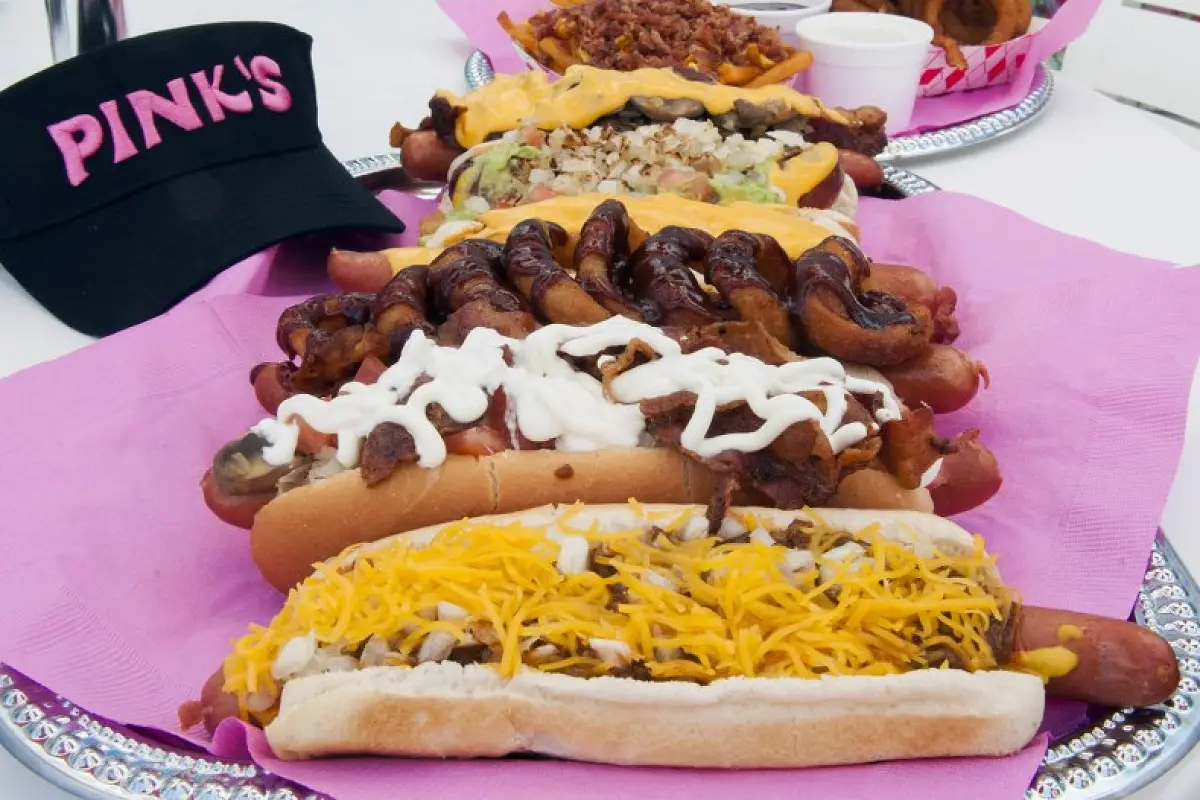
The line outside the little red and pink building on La Brea Avenue moves the way it has for generations: slowly, patiently, under a neon sign that has watched Hollywood grow up around it. A woman in her sixties tells her granddaughter, visiting from Osaka, that this is where her own mother once waited an hour just to bring home a chili dog wrapped in wax paper. The girl takes a photo of the sign, not the food, and sends it to a group chat back in Japan. Weeks later, she will not need to fly to Los Angeles to taste what her grandmother remembers. Pink's Hot Dogs Japan is coming to her instead.
A Pushcart That Became a Landmark
Richard Pink did not grow up thinking of hot dogs as heritage. He grew up thinking of them as Tuesday. His parents, Paul and Betty Pink, began selling hot dogs from a $50 pushcart near La Brea and Melrose in 1939, at a time when the neighborhood was mostly empty lots and studio backlots. By 1946 they had saved enough to open a permanent stand, and what followed was not so much a business plan as a slow accumulation of trust: regulars who became friends, friends who became famous, and a corner of Los Angeles that eventually could not be separated from the smell of grilled onions and simmering chili.
Eight decades later, the family still runs it. Pink's now counts eight locations across Southern California and two more in Nevada, along with earlier ventures into the Philippines and South Korea. What has not changed is the sense, inside the company, that expansion only means something if it carries the original spirit with it. That is the question now facing Pink's as it prepares for its most symbolically loaded move yet: a flagship restaurant in Tokyo.
Why Tokyo, and Why Now
The announcement, confirmed by the company to City News Service, was framed less as a business decision than as a kind of overdue reunion. Pink's Hot Dogs co-owner Richard Pink said the family has long welcomed guests from Japan to the Los Angeles restaurant, and that their enthusiasm has meant a great deal to him. He described the Tokyo opening as a chance to carry a piece of that Los Angeles tradition across the Pacific, and to share the family's history and hospitality with an entirely new community.
It is a sentiment that explains itself once you have stood in the La Brea Avenue line. For years, staff have noticed the steady presence of Japanese tourists, cameras out, treating the visit less like a meal and more like a pilgrimage. That informal data point, repeated often enough, eventually became a business case. The company noted that its Hollywood location has welcomed many Japanese guests over the years, and said their enthusiasm gives it confidence the brand will resonate in Japan.
To make the leap, Pink's has partnered with Sunpark, a Japanese restaurant management and consulting firm. Sunpark operates more than 100 restaurants throughout Japan and brings extensive experience in restaurant operations, and Pink's said it is confident in the firm's ability to maintain the food quality, atmosphere, and service that have defined the brand for generations. An exact address in Tokyo has not yet been disclosed, though the opening is expected before the end of 2026.
What Diners in Tokyo Can Expect
The menu will not be a simple copy and paste job. The Tokyo restaurant is expected to offer around 15 varieties of hot dogs, alongside hamburgers, side dishes, desserts, and drinks, with Japan exclusive items designed for local tastes. That balance, familiar enough to feel authentic, adapted enough to feel considerate, is the quiet challenge every American food brand faces when it lands in Japan, a market known for rewarding precision and punishing anything that feels careless.
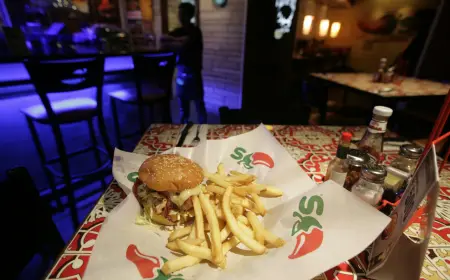
Sunpark has been direct about that intention. The company said it is planning limited menus and product sizes suited to the preferences of Japanese customers, a signal that the Tokyo location will lean into the American original rather than dilute it, while still trimming portions and offerings to fit local dining habits. Reporting also notes the classic toppings guests can expect, including chili, cheese, bacon, jalapenos, and onion rings, served on hot dogs ranging from nine inches up to a full foot long.
The Weight of a Neon Sign
There is something particular about the way an 86 year old restaurant carries its own mythology into a new country. Betty White once joked that hot dogs, alongside vodka, were the secret to her long life, and Kim Kardashian has been photographed there more than once. None of that fame was engineered. It accumulated, meal by meal, the way the family itself grew the business: unhurried, almost accidental, until one day it was simply true that Pink's belonged to Los Angeles the way a landmark belongs to a skyline.
Recreating that feeling inside a Tokyo storefront is not something a menu alone can do. It depends on staff who understand why a regular customer's order matters, on a room that feels lived in rather than staged, and on a willingness to let the brand be shaped, gently, by the community that adopts it. Sunpark's scale across Japan gives Pink's the operational backbone to manage that balance, but the emotional labor, the part that turns a restaurant into a landmark, will fall to whoever is standing behind the counter on opening day.
A Broader Pattern of American Brands Heading East
Pink's is not traveling alone. Randy's Donuts, another Los Angeles institution, opened its first Japanese location in Tokyo the previous year, and its early reception has been read across the industry as proof that Japanese diners are receptive to American nostalgia brands when the execution is careful. The pattern extends beyond Japan as well. American dining concepts have been testing similar strategies elsewhere in Asia Pacific, a trend explored in a broader look at US dining brands expanding into markets like Australia, where familiar names are betting that a well told origin story travels just as well as the food itself.
For Pink's, the ambitions are not modest. The company has stated a goal of reaching between 20 and 30 locations across Japan by the end of 2030, a target that would make Japan one of its largest markets outside California within a matter of years. It is a significant bet for a family business that spent most of its history content to let a single line of customers stretch down one Hollywood block.
What This Means for the Industry
Restaurant expansion into Japan carries real risk. The market is famously exacting about consistency, hygiene, and service ritual, and it has quietly humbled more than one confident American brand. Success tends to depend less on the strength of the original concept than on how honestly a company partners with local operators who understand those expectations from the inside. Sunpark's decades of domestic experience are the clearest reason analysts expect Pink's to have a smoother entry than most.
There is also a cultural exchange happening underneath the business logic. Hot dogs are already common in Japan, sold from convenience store counters to specialty stalls, but Pink's is betting that its specific version, loud with toppings and rooted in a very particular Los Angeles story, offers something that feels new rather than redundant. Whether Tokyo diners embrace that framing will say something about how American food heritage translates once it is no longer surrounded by the city that created it.
A Quiet Kind of Homecoming
Back on La Brea Avenue, the line keeps moving the way it always has. Somewhere in Tokyo, a storefront that does not yet exist is being measured, wired, and imagined into being, carrying with it eight decades of a family's patience and a corner of Los Angeles that refused to stay put. What travels across the Pacific will never be an exact copy of the original, and perhaps it was never meant to be. What it can carry, if the people building it get it right, is the same simple promise that made a pushcart into a landmark in the first place: that someone remembered you, kept the recipe honest, and left the light on.