ROSY Cleveland Best Restaurant Named in NYT Top 50 of 2026
ROSY Cleveland best restaurant recognition arrives as the NYT names the Ohio City wood-fire grill the only Ohio entry on its 50 best restaurants in America 2026 list.
 RUKAIYA KADIWAL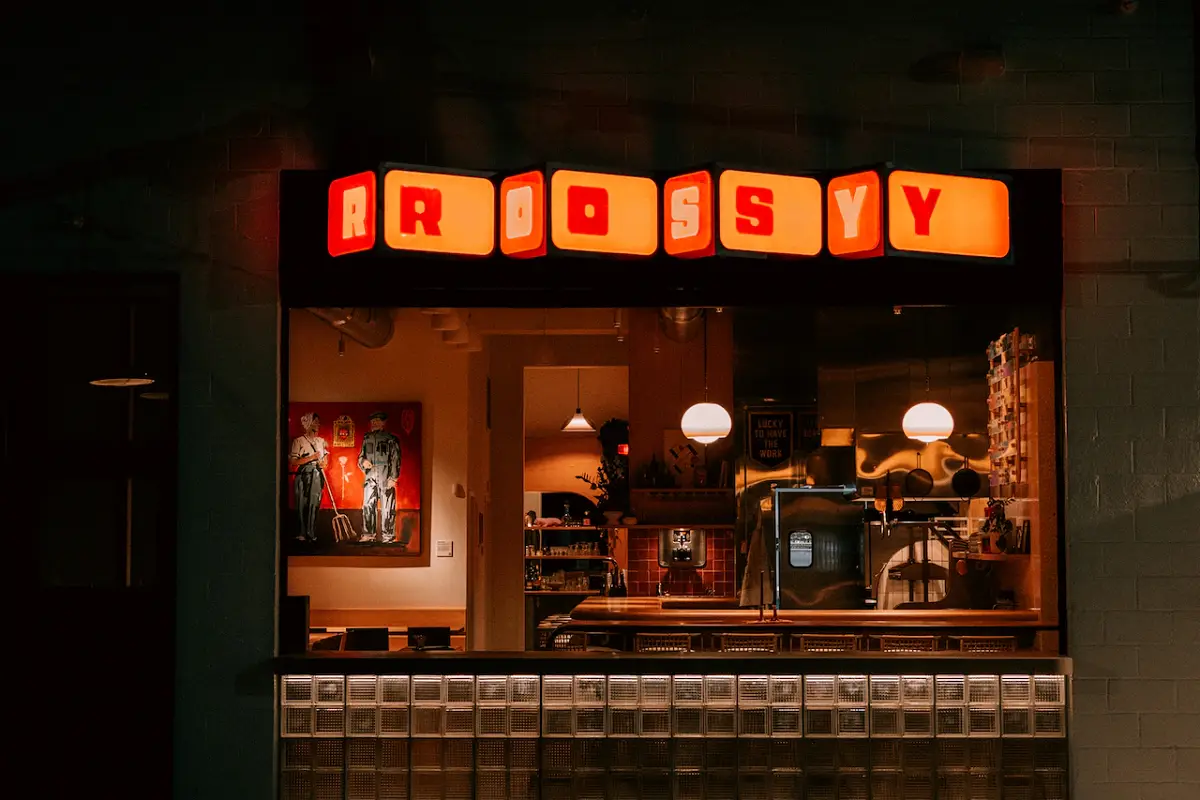
The sign above the window glows orange against the dark exterior of a brick building on Church Avenue, its letters arranged in those particular illuminated blocks that belong to a specific kind of American commercial nostalgia, the kind that signals warmth and intention rather than corporate uniformity. Inside, a wood-fire grill occupies the center of the operation, its smoke rising through a kitchen open enough to the dining room that the act of cooking is part of what a guest at ROSY witnesses across an evening. Ohio City, the Cleveland neighborhood that has been accumulating serious restaurants for several years, has received a national confirmation of something its regulars already understood.
ROSY Cleveland Best Restaurant Earns its Place on a National List
ROSY Cleveland best restaurant recognition arrived on September 15, 2026, when the New York Times named the Ohio City restaurant at 2912 Church Avenue as the only Ohio entry on its 50 Favorite Restaurants in America Right Now list for 2026. A team of sixteen reporters traveled the country to compile the list, which features only new entries, restaurants that have not appeared on previous editions. ROSY, which opened in February 2026, qualifies as one of the newly opened restaurants since the 2025 rendition of the list. For a restaurant less than eight months old to appear on a national list of this standing is a result that compresses a timeline that most restaurants spend years working toward.
The recognition places ROSY within a conversation that the New York Times' annual restaurant list reliably generates, about which American cities are producing serious cooking, about whether the cultural geography of fine dining is shifting away from the coastal concentrations that have historically dominated it, and about what it means for a restaurant in Cleveland to be named alongside places in New York, Los Angeles, Chicago, and every other city that a list of fifty naturally encompasses. ROSY is the only Ohio answer to all of those questions this year.
The Concept and the Fire at Its Center
ROSY's cooking is built around an open wood-fire grill, a format that organises not just the kitchen's equipment but its entire culinary philosophy. Wood-fire cooking demands a particular relationship with ingredients, one in which the direct and indirect heat of live flame becomes a primary seasoning element, where char and smoke and the caramelisation produced by proximity to burning wood contribute flavour that no other technique replicates. A kitchen centered on a wood-fire grill is a kitchen that has decided heat itself is a creative tool rather than a utility.
The menu draws its inspiration from the Istrian Peninsula in the Adriatic, the coastal region shared between Croatia, Slovenia, and Italy whose culinary traditions sit at the intersection of Central European and Mediterranean cooking, where truffles and preserved meats and hearty stews meet the olive oil and seafood of the Adriatic coast. The New York Times praised the restaurant's highly seasonal menu and specifically cited grilled leeks with romesco stracciatella and cotechino sausage among the standout dishes, preparations described as inspired by ancestral European cooking. The language of ancestral cooking speaks to a menu that treats culinary tradition as a living source rather than a historical category to be quoted and moved past.
Ohio City and the Neighborhood Behind the Restaurant
ROSY's address on Church Avenue in Ohio City places it within a neighborhood that has been developing a serious restaurant identity over the past several years, accumulating the kind of independent operators whose decisions about where to open are as much about community as they are about demographics. Ohio City is a neighborhood with its own character, distinct from downtown Cleveland and from the suburban restaurant corridors that serve different parts of the metropolitan area, and the restaurants that have opened there share an orientation toward the neighborhood as a place rather than a market.
A restaurant that earns a New York Times national recognition within its first year of operation in Ohio City is doing something for the neighborhood's reputation that extends beyond its own dining room. It places the street it sits on into a national frame of reference, makes the case that serious cooking is happening in Cleveland not as an exception to a general rule about where American dining culture lives but as a genuine contributor to what that culture is becoming.
The List and What It Means to Appear on It
The New York Times' annual 50 Favorite Restaurants list carries a particular weight in the American dining conversation because of the methodology behind it. Sixteen reporters, spread across the country, conducting the kind of on-the-ground research that produces a list grounded in actual eating rather than reputation management or critic consensus. The decision to include only new entries gives the list a timeliness that annual lists built around cumulative reputation do not share. A restaurant on this list is not there because it has spent years being good in a way the industry has acknowledged. It is there because something about what it is doing right now, in this year, struck the reporters who visited it as worth including alongside the other forty-nine.
For ROSY, the timing of its appearance on the list is itself a story. A restaurant that opened in February and appeared on a national best-of list by September has compressed the standard arc of recognition into a period that most restaurants would not consider sufficient to establish a reputation at all. That compression suggests a kitchen operating with clarity and confidence from an early stage rather than a restaurant finding its voice across its first year of service.
What a Wood-Fire Kitchen Communicates
The decision to center a restaurant on a wood-fire grill is not a neutral design choice. It commits the kitchen to a daily relationship with fire that requires a different kind of skill and attention than a conventional range. The moisture content of the wood, the temperature of the ambient air, the weight and density of each specific ingredient, all of these variables behave differently over live fire than they do on a controlled gas flame, and the cook who has mastered wood-fire cooking has developed a sensory attentiveness that the format demands and rewards.
For a restaurant drawing its culinary inspiration from the Istrian Peninsula, the wood-fire grill is not an aesthetic affectation. It is historically accurate. The cooking traditions of the Adriatic coast, shaped by centuries in which fire was the primary and often the only available heat source, produced a body of technique built around exactly what the grill at ROSY's center provides. The ancestral European cooking the Times cited as an inspiration is cooking developed in relationship with fire, and a contemporary restaurant kitchen that maintains that relationship is working in the tradition rather than merely referencing it.
Cleveland and the Larger Question of American Dining Geography
ROSY's inclusion on the Times list arrives at a moment when the geography of American culinary recognition has been shifting with increasing visibility. The assumption that serious cooking happens primarily in New York, Los Angeles, and a handful of other coastal cities has been challenged repeatedly over the past decade by restaurants in Nashville, Houston, Detroit, and now Cleveland that have produced food at a level that national critics cannot overlook without distorting their own credibility. A list of fifty restaurants that spans the actual diversity of American cities is a more accurate list than one that concentrates its attention on the coasts, and the sixteen reporters who traveled the country to compile this year's edition appear to have arrived at ROSY in Ohio City and found something worth the journey.
For Cleveland, a city whose relationship with its own culinary reputation has been complicated by decades of economic difficulty and the particular diminishment that follows from being compared unfavorably with larger American cities, a New York Times recognition of this kind carries a weight beyond the restaurant that earned it. It is a data point in a longer argument about what the city is capable of producing, one that the city's chefs have been making through their cooking for longer than the national recognition has been arriving.
A Grill Still Hot, a Street That Will Not Be Quiet for a While
Church Avenue in Ohio City is not a destination yet in the way that certain restaurant streets in American cities become destinations, where the density of recognized establishments creates a gravitational pull that draws visitors from outside the neighborhood specifically to eat. It is still a neighborhood street where ROSY's orange sign glows above a storefront that looks, from outside, like a place someone thought carefully about rather than a place assembled to announce itself. Inside, the wood-fire grill is doing what it has been doing since February, converting fire and time and seasonal ingredients into the food that sixteen reporters from the New York Times decided, after traveling the whole country, was worth including on a list of fifty. That is a small number. It is a very specific address. And the grill will be lit again tomorrow.
Related reading: DoorDash invests 125 million in Wonder campus dining and delivery expansion