Restaurant Owners Warn No-Tipping Trend Is Hurting Service Quality and Dining Experience
Restaurant owners are raising concerns that the growing no-tipping trend is negatively affecting service quality and overall dining experiences across the industry.
 Prajakta Sanjay Warwadkar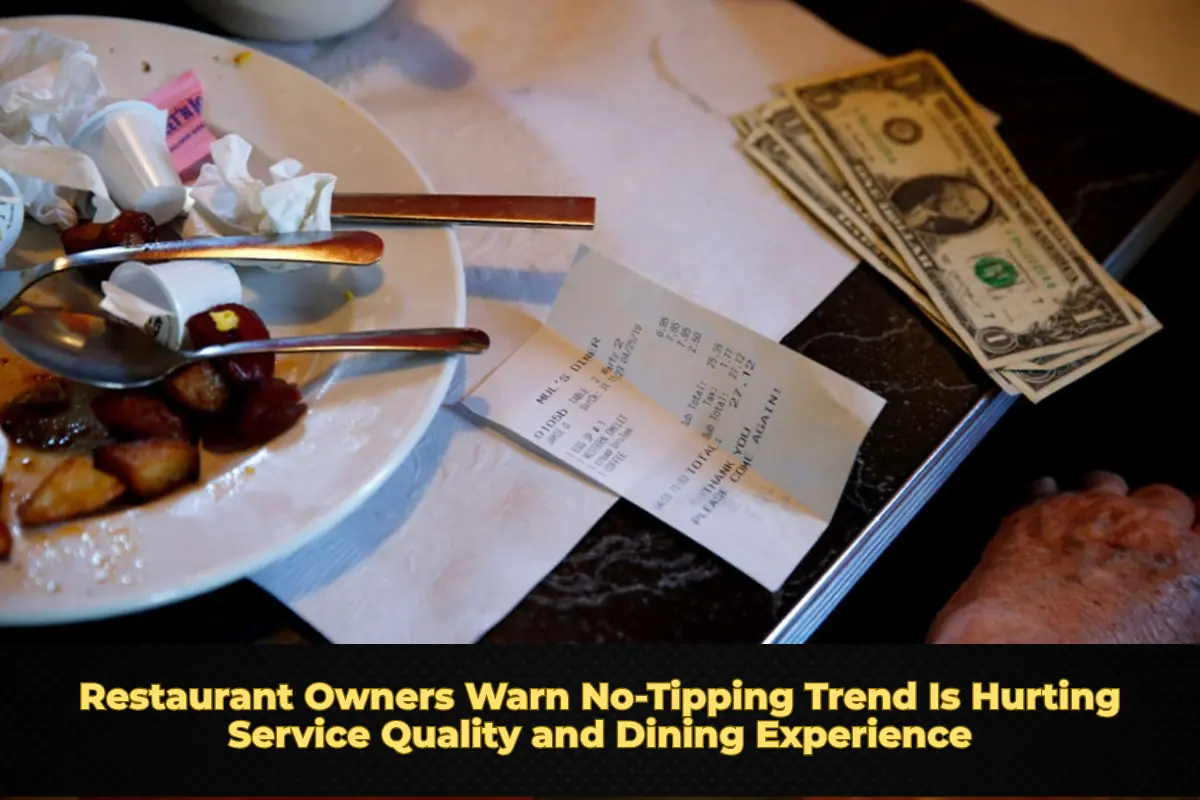
Restaurant Owners Warn No-Tipping Trend Is Hurting Service Quality and Dining Experience
Restaurant owners across the United States are raising concerns in 2026 that the growing no-tipping trend is negatively impacting service quality, employee motivation, and overall dining experiences. The shift, which replaces traditional tipping with fixed wages or service charges, is gaining traction in select markets as operators attempt to address wage disparities and simplify pricing structures.
However, industry stakeholders warn that the model may be creating unintended consequences, including reduced service incentives and customer dissatisfaction, as restaurants navigate evolving labor and compensation practices.
Shift Away from Traditional Tipping
The no-tipping model has emerged as part of broader efforts to reform compensation in the hospitality industry. Under this system, restaurants eliminate customer tipping and instead offer higher base wages or include service charges in menu pricing.
Proponents argue that the approach promotes income stability for employees and creates a more transparent pricing structure for customers. It also aims to address concerns about income inequality between front-of-house and back-of-house staff.
Despite these intentions, the transition has proven complex, with mixed reactions from both employees and diners.
Concerns Over Service Quality
Many restaurant owners report that eliminating tipping has led to a noticeable decline in service quality. Tipping has traditionally served as a direct incentive for servers to provide attentive and personalized service, with earnings tied to customer satisfaction.
Without this performance-based reward, some operators say staff may feel less motivated to go beyond basic service expectations. This shift can affect customer perceptions and reduce the overall dining experience.
In competitive markets, where service quality is a key differentiator, even small declines can have significant business implications.
Employee Perspectives and Challenges
The no-tipping model has generated varied responses among restaurant workers. While some employees appreciate the predictability of fixed wages, others—particularly experienced servers—express concerns about reduced earning potential.
High-performing staff who previously relied on tips to boost their income may find the new system less rewarding. This has led to challenges in retaining skilled workers, as some seek opportunities in establishments that continue to allow tipping.
Employee satisfaction and retention remain critical factors for operators implementing alternative compensation models.
Customer Reactions to Pricing Changes
Customers are also adjusting to the no-tipping model, which often involves higher menu prices or mandatory service charges. While some diners appreciate the simplicity of an all-inclusive price, others perceive the changes as more expensive or less flexible.
The absence of tipping can alter the traditional dining dynamic, where customers feel they have direct influence over service quality. This shift may lead to dissatisfaction among those accustomed to rewarding good service through gratuities.
Clear communication and transparency are essential to managing customer expectations under the new model.
Operational and Financial Implications
For restaurant operators, transitioning to a no-tipping system requires significant adjustments in pricing, payroll, and cost management. Higher base wages increase fixed costs, which must be balanced through menu pricing and operational efficiency.
Restaurants must also invest in staff training and performance management to maintain service standards without the incentive of tips. This can involve implementing new evaluation systems and fostering a strong service culture.
The financial viability of the model depends on careful planning and the ability to maintain customer loyalty.
Broader Industry Debate
The debate over tipping versus no-tipping reflects broader challenges within the hospitality industry, including labor shortages, rising costs, and changing consumer expectations. Operators are experimenting with different models to find sustainable solutions.
Some restaurants have adopted hybrid approaches, combining service charges with optional tipping, while others continue to rely on traditional systems. There is no one-size-fits-all solution, and outcomes vary based on location, concept, and customer demographics.
The ongoing discussion highlights the complexity of balancing fairness, profitability, and customer satisfaction.
Impact on Brand and Customer Experience
Service quality plays a central role in shaping a restaurant’s brand and reputation. Any perceived decline can affect customer loyalty and word-of-mouth recommendations, particularly in an era where online reviews significantly influence dining choices.
Operators adopting no-tipping models must ensure that service standards remain consistent to protect their brand image. This requires strong leadership, effective training, and a clear focus on customer experience.
Maintaining a positive dining environment is essential for long-term success in a competitive market.
Future Outlook for Compensation Models
The future of tipping in the restaurant industry remains uncertain, as operators continue to explore alternative compensation structures. Economic pressures and evolving labor dynamics are likely to drive further experimentation and innovation.
Technology may also play a role, with digital payment systems offering new ways to integrate service charges and customer feedback. At the same time, regulatory changes could influence how restaurants approach wages and gratuities.
Industry stakeholders are expected to closely monitor the outcomes of different models to determine best practices.
Conclusion
The growing no-tipping trend is reshaping the restaurant industry, but concerns over its impact on service quality and customer experience highlight the challenges operators face in balancing fairness, efficiency, and satisfaction in an evolving dining landscape.