Positive Attitude Simple Training in Front Office Management
Learn positive attitude training in front office management with SOP, guest handling techniques, and service standards to enhance hotel guest experience.
 Shah Vaibhavi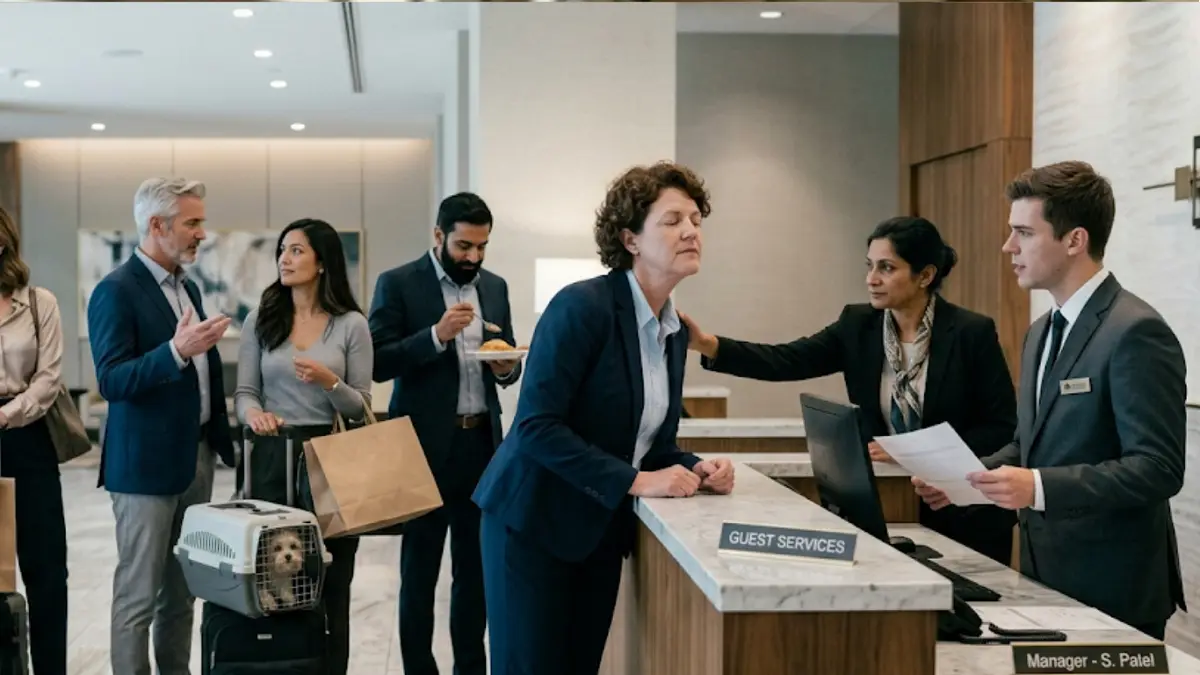
Talk behind the counter is simple, guests don’t remember your system speed, they remember your attitude. And that sticks longer than any upgrade.
Overview of Positive Attitude in Front Office Management
Positive attitude training front office management is about how you show up at the desk, every single time.
You’re handling check-ins, bookings, complaints, coordination. Pressure is constant.
But your attitude sets the tone for the whole interaction.
A flat or irritated tone? Guest feels it instantly.
A steady, positive approach? Guest relaxes, even if there’s a problem.
A strong attitude means:
-
Polite under pressure
-
Patient with questions
-
Ready to help, not avoid
Pro-tip: Guests don’t separate service from attitude, they judge both together.
SOP Procedure for Positive Attitude at Front Desk
Step 1: Professional Appearance
Clean uniform. Good grooming. Stand like you mean it.
Step 2: Warm Greeting
Smile + eye contact within 3 seconds. Every guest.
Step 3: Positive Language Use
Say what you can do. Not what you can’t.
Step 4: Active Listening
Let the guest finish. Don’t rush them.
Step 5: Maintain Calm Behavior
Even during complaints, no visible stress.
Step 6: Show Willingness to Help
Be proactive. Don’t wait to be asked twice.
Step 7: Avoid Negative Expressions
Face and tone matter as much as words.
Step 8: Provide Clear Communication
Simple. Polite. Accurate.
Step 9: Thank the Guest
Always close with appreciation.
Step 10: Follow-Up
Check if the service actually worked.
Pro-tip: Fake positivity is easy to spot. Keep it real but controlled.
Front Desk Workflow and Attitude Application
Pre-Shift Preparation
Start focused. Leave personal stress off the desk.
Check-in Process
Warm welcome + smooth handling. First impression locked here.
Reservation Handling
Stay patient. Guests may not understand systems.
During Stay Interaction
Energy stays steady, even on the 50th request.
Complaint Handling
Calm tone. Solution mindset. No defensiveness.
Peak Hour Management
Busy lobby = stronger attitude control.
Interdepartmental Coordination
Respectful communication with housekeeping, maintenance, F&B.
Check-out Process
Clean billing. Sincere thank you.
Pro-tip: Your attitude shouldn’t change based on the guest’s behavior.
Guest Interaction Process with Positive Attitude
Greeting Stage
Smile. Eye contact. Clear welcome.
Understanding Needs
Listen fully. Don’t assume.
Positive Communication Techniques
-
“Certainly, I’ll assist you.”
-
“Let me check that for you.”
-
Avoid: “No,” “Not possible,” “You can’t”
Handling Complaints
-
Listen → let them speak
-
Acknowledge → show you heard
-
Respond → stay positive
-
Resolve → act fast
-
Follow-Up → confirm satisfaction
Non-Verbal Behavior
-
Eye Contact: steady, not forced
-
Posture: open, not defensive
-
Facial Expression: calm, approachable
Closing Interaction
End with appreciation. Leave a good last impression.
Pro-tip: Tone can fix a delay. Attitude can fix a mistake.
Tools and Systems Supporting Positive Attitude
-
Property Management System (PMS): Know the guest before they speak
-
Guest Profile Database: Personalize the interaction
-
CRM Systems: Track guest relationships
-
Internal Communication Tools: Smooth team coordination
-
Feedback Systems: See how guests feel about service
-
Training Modules: Build consistency in behavior
Tools give you data. Attitude decides how you use it.
Service Standards and Performance Metrics
-
Greeting: Within 3 seconds, smile + eye contact
-
Communication: Clear, polite, positive
-
Behavior: No negative tone or expressions
-
Response Time: 5–10 minutes for requests
-
Complaint Handling: Calm and solution-focused
-
Guest Satisfaction: Positive feedback on attitude
-
Repeat Guests: Driven by service experience
If guests remember your name, it’s usually because of your attitude.
Evaluation and Training Assessment
-
Supervisor Observation: Real-time behavior check
-
Role Play Training: Practice real scenarios
-
Guest Feedback Analysis: Spot attitude gaps
-
Mystery Audits: Test consistency
-
Performance Reviews: Measure tone + behavior
-
Complaint Analysis: Track attitude issues
-
Continuous Training: Build stronger control and presence
In conclusion, attitude at the front desk isn’t optional it’s your daily tool. Same SOP, same pressure but the staff with the right attitude always deliver better service. And guests notice that every time.
Also read: Learn stress management training for front office receptionist with SOP