10 Industry Level Lost and Found Procedure: Complete Training Guide
Learn industry level lost and found procedure with hotel housekeeping SOP, guest property handling, documentation standards, security procedures.
 Altama khan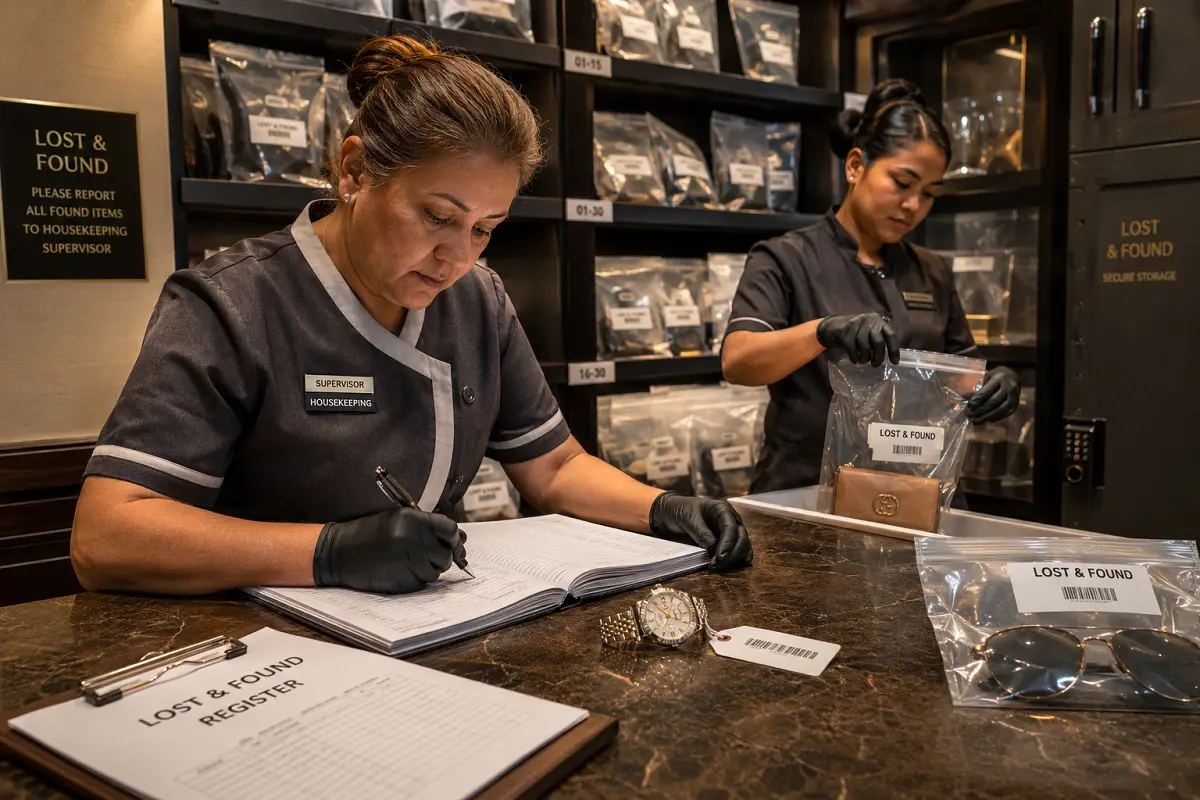
Industry Level Lost and Found Procedure
The lost and found cabinet tells a story every week chargers, passports, watches, and wallets left behind. One mistake here can turn into a guest complaint, a security issue, or worse. Handle every item like someone is coming back for it.
What Is a Lost and Found Procedure?
- Finding lost items
- Recording item details
- Secure storage
- Ownership verification
- Returning property
- Documentation management
- Final closure procedures
Professional handling protects guest property rights.
Importance of Lost and Found Management
- Protects guest belongings
- Builds guest confidence
- Enhances hotel reputation
- Improves operational accountability
- Prevents theft allegations
- Supports security standards
- Increases guest satisfaction
Types of Lost and Found Items
- Mobile phones
- Laptops
- Chargers
- Wallets
- Handbags
- Jewelry
- Watches
- Passports
- Clothing
- Room keys
Every item gets documented. No exceptions.
Step 1: Discovering a Lost Item
Discovery SOP
- Stop cleaning immediately
- Do not use the item
- Leave the item untouched initially
- Inform the supervisor promptly
Step 2: Notify the Supervisor
Supervisor Notification SOP
- Report location of discovery
- Report room number
- Describe the item
- Record discovery time
Step 3: Verify and Inspect the Item
Verification SOP
- Identify item type
- Check visible condition
- Record identifying features
- Avoid unnecessary handling
Step 4: Complete Lost and Found Documentation
Documentation SOP
- Item description
- Date found
- Time found
- Location found
- Room number
- Employee name
- Supervisor signature
Step 5: Tag and Label the Item
Tagging SOP
- Assign reference number
- Attach identification label
- Include discovery details
- Maintain traceability
Step 6: Secure Storage of Lost Items
Storage SOP
- Store valuable items in secure lockers
- Restrict access to authorized staff
- Maintain storage records
- Protect items from damage
Step 7: Contact the Guest
Guest Contact SOP
- Verify guest information
- Explain item details
- Confirm ownership
- Discuss return options
Step 8: Verify Ownership Before Release
Ownership Verification SOP
- Request identification
- Confirm item description
- Verify guest details
- Obtain authorization if necessary
Step 9: Return the Lost Item
Item Return SOP
- Obtain guest signature
- Record return date
- Update lost and found register
- Confirm successful handover
Step 10: Close the Lost and Found Record
Closure SOP
- Update records
- File documentation
- Archive completed reports
- Follow hotel retention policy
Retention Policy for Unclaimed Items
- Valuable items: Longer retention period
- Personal belongings: Standard retention period
- Perishable items: Immediate disposal according to policy
Always follow hotel regulations and local laws.
Common Mistakes in Lost and Found Procedures
- Poor documentation
- Delayed reporting
- Improper storage
- Missing ownership verification
- Incomplete records
Advantages of Industry Level Lost and Found Procedure
- Better guest satisfaction
- Increased guest trust
- Improved hotel reputation
- Stronger security standards
- Better documentation control
- Reduced operational risks
Industry Level Lost and Found Procedure SOP Checklist
| Task | Status |
|---|---|
| Item reported immediately | ✔ |
| Supervisor informed | ✔ |
| Documentation completed | ✔ |
| Item stored securely | ✔ |
| Ownership verified | ✔ |
| Record closed properly | ✔ |
Internal Links
- Handling Guest Requests
- Guest Room Inspection
- Room Status Report Handling
- Housekeeping Management Basics
- Coordination with Front Office
Outbound Links
- AHLEI Housekeeping Standards
- WHO Safety Guidelines
- OSHA Workplace Documentation Standards
FAQs About Industry Level Lost and Found Procedure
What is a lost and found procedure in housekeeping?
A lost and found procedure is a systematic process for handling, documenting, storing, and returning guest belongings found within hotel premises.
Why is lost and found management important?
It protects guest property, improves guest trust, supports security standards, and enhances hotel reputation.
Who is responsible for lost and found items?
Housekeeping staff, supervisors, security personnel, and hotel management may participate according to hotel policy.
How should found items be documented?
Items should be recorded with details such as description, date, location, room number, employee name, and supervisor approval.
What happens to unclaimed lost items?
Unclaimed items are retained according to hotel policy and local regulations before final disposal or other authorized action.