Chicken Manchurian: Crispy, and Better Than Any Takeaway You Had
Chicken Manchurian with crispy double-coated chicken, glossy Indo-Chinese sauce & wok technique. Dry and gravy versions ready in 40 mins.
 Tripti Srivastava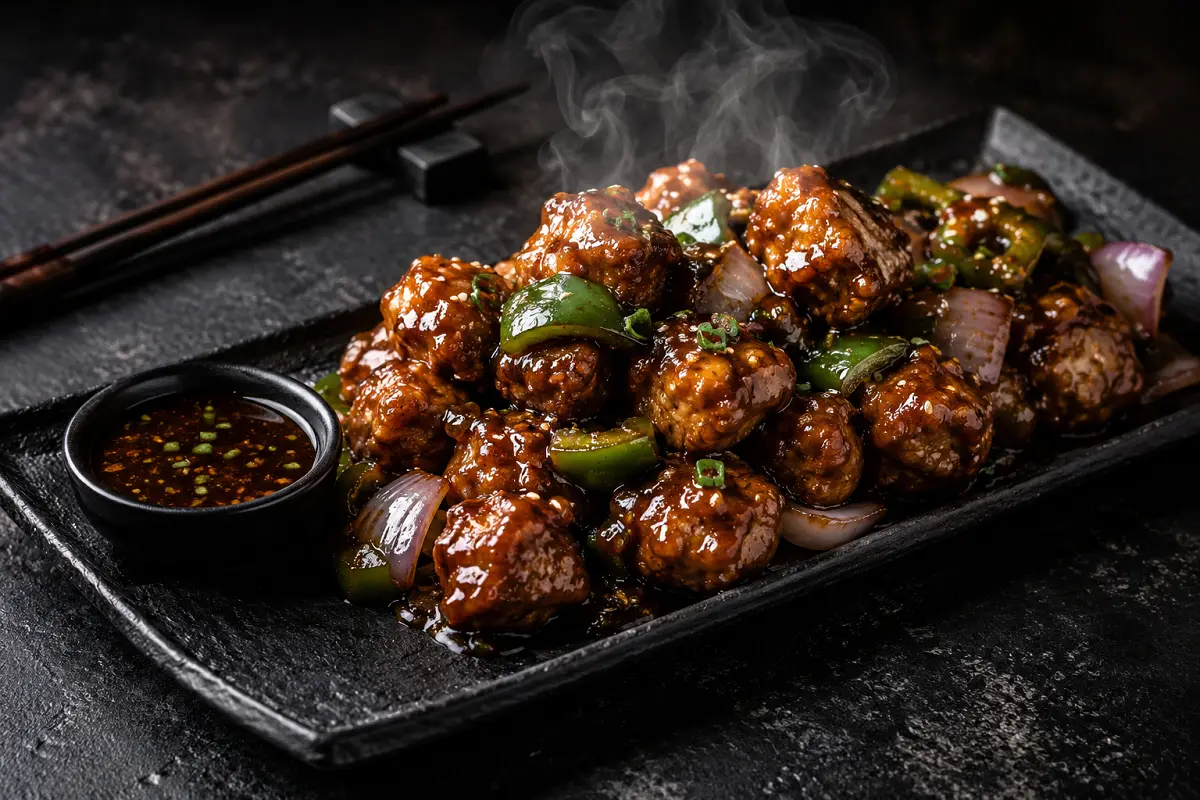
There is a specific moment that makes chicken Manchurian unforgettable when a piece of crispy fried chicken, golden and craggy from the cornflour batter, hits a wok full of glossy, hot Indo-Chinese sauce and the two come together in a sizzle that fills the kitchen with the smell of garlic, ginger, soy, and chilli all at once. That combination of textures the crunch of the battered chicken against the sticky, sweet-sour-spicy sauce is what makes this one of the most ordered dishes on every Indo-Chinese restaurant menu in the country. And it is, with the right technique, one of the most satisfying dishes you can make at home in under an hour on a weeknight.
Chicken Manchurian is not an authentic Chinese dish. It is something more interesting than that a fusion dish born in the Chinese communities of Kolkata, where Chinese immigrants of Hakka descent adapted their traditional cooking techniques to suit local Indian ingredients and palates, incorporating classic Chinese elements like soy sauce and stir-frying with aromatic Indian spices, garlic, ginger, and chilli. The result became a cuisine entirely its own Indo-Chinese food and Manchurian became its most iconic expression. The name does not refer to the Manchuria region of China. It refers to a style of sauce bold, glossy, and built from soy, chilli, vinegar, and ketchup in proportions that create a flavour that is simultaneously sweet, sour, hot, and savoury, and somehow perfectly balanced despite using ingredients that sound like they should fight each other.
This recipe gives you both versions of the dish dry (the starter format, where the sauce coats rather than pools) and gravy (the main course format, where the sauce is thinner and more abundant). Both use the same double-coated fried chicken and the same Manchurian sauce base. The only difference is the quantity of stock or water and the cornflour slurry ratio. Make it once and you will understand why this is one of those recipes that people make every single week.
What Makes This Chicken Manchurian Recipe Special
The gap between a restaurant chicken Manchurian and a home-cooked attempt is almost always explained by two specific failures a coating that goes soft and pasty the moment the sauce touches it, and a sauce that is watery and pools at the bottom of the bowl instead of clinging to every piece. This recipe is built around solving both.
- The double-coating method for a craggy, sauce-proof exterior. Most simple recipes coat the chicken in a single layer of flour or cornflour batter. This recipe uses a two-stage coating: a dry mixture of cornflour and plain flour first, then an egg and soy sauce wash, then back into the dry mixture for a second coat. This double-coating creates a thick, craggy, irregular crust that holds up to the sauce for far longer than a single coating the surface area of the irregular crust keeps parts of the chicken crispy even after 5 minutes in the sauce. If you have ever wondered why restaurant chicken Manchurian stays crunchier than yours, the double coat is why.
- Frying at the right temperature and twice. Frying the chicken once at 170°C until cooked through, then a second quick fry at 190°C for 60 seconds, produces a crust that is deeply golden, extremely crispy, and has a dry, non-greasy surface that the sauce can cling to rather than slide off of. The first fry cooks the chicken. The second fry drives the remaining surface moisture out of the coating and creates the craggy, slightly blistered exterior that is the visual signature of restaurant-quality Manchurian chicken.
- High-heat wok for the sauce every element added in sequence. The Manchurian sauce is built in a sequence that matters: oil first, then the aromatics (garlic, ginger, green chilli) for exactly 30 seconds, then the spring onion whites and capsicum for 1 minute, then the sauce liquids all at once, then the cornflour slurry to thicken. Each element goes in at the right moment and in the right order. Adding the cornflour slurry too early makes the sauce thick before it is properly seasoned. Adding the aromatics too late means they never bloom in the hot oil.
- The Manchurian sauce ratio. The sauce in this recipe uses a specific ratio of soy sauce, red chilli sauce, tomato ketchup, and white vinegar that produces the balanced sweet-sour-hot-savoury character of a proper Manchurian sauce. More ketchup makes it too sweet. More vinegar makes it too sharp. More soy sauce makes it too salty and dark. The ratio is explained in the ingredients section and once you have made it a few times, you will start to understand intuitively how to adjust it to your taste.
- Cornflour slurry for a glossy, clingy sauce. The sauce is thickened with a cornflour-water slurry rather than reducing it down. Reducing a soy-and-ketchup sauce makes it too thick, too salty (because the soy concentrates), and slightly sticky rather than glossy. A cornflour slurry added at the right moment thickens the sauce instantly to exactly the consistency you want glossy, flowing, and clinging to every piece of chicken without pooling at the bottom of the bowl.
Ingredients Overview
Start with boneless chicken thighs or breast, cut into 3 to 4 cm cubes. Chicken thighs are the better choice for Manchurian because they stay juicier during the double fry and the slightly higher fat content produces a more flavourful bite inside the crunchy coating. Breast pieces work well too but need careful attention during the first fry to prevent drying out. Pat the chicken dry with kitchen paper before marinating surface moisture dilutes the marinade and makes the coating paste slippery and uneven.
The coating system uses two dry ingredients: cornflour (cornstarch) and plain flour (maida) in equal proportions. Cornflour alone produces a very crispy but slightly fragile crust. Plain flour alone produces a thicker, doughier coating that absorbs oil more readily. Together in equal parts, they produce a crust that is crispy without being fragile and thick without being heavy. The egg in the middle of the double coat acts as a binder between the two dry layers it creates the irregular, craggy surface that makes chicken Manchurian look like it came from a restaurant kitchen. A tablespoon of soy sauce added to the egg wash seasons the coating from the inside out.
The Manchurian sauce is built from six key ingredients: dark soy sauce for umami and colour, red chilli sauce for heat and depth, tomato ketchup for sweetness and body, white vinegar for sharpness, sesame oil added off the heat for aroma, and sugar to balance the overall flavour. A tablespoon of oyster sauce (or vegetarian mushroom oyster sauce) is optional but adds a savoury depth that makes the Manchurian sauce taste noticeably richer. The aromatics garlic, ginger, green chilli, spring onion whites go in first and build the flavour base the sauce is cooked into. For the dry version, the chicken stock is kept to a minimum so the sauce is thick and sticky. For the gravy version, an additional half cup of chicken stock or water is added to create a flowing sauce.
For substitutions: use tamari instead of soy sauce for a gluten-free version (check the coating flour too). Replace red chilli sauce with schezwan sauce for a more fiery, garlicky Manchurian. Replace oyster sauce with hoisin sauce for a slightly sweeter variation. Green capsicum (bell pepper) adds colour and crunch to the sauce if you enjoy a vegetable element add it with the spring onion whites and cook for 1 minute before adding the sauce liquids.
Also Read: Veg Spring Roll Recipe
How to Make It
The recipe runs in two parallel tracks that come together at the end. Track one is the chicken: marinate briefly, double-coat in the flour mixture, deep fry twice. Track two is the sauce: bloom the aromatics in hot oil in a wok, add the sauce liquids in sequence, thicken with cornflour slurry. The two tracks merge when the double-fried chicken goes into the finished sauce and is tossed to coat on high heat for 60 seconds. That final 60-second toss is when the Manchurian comes together as a dish the sauce clings to every piece of chicken, the aroma fills the kitchen, and the whole preparation goes from components to something complete.
The whole process takes about 40 minutes from start to finish, including a 20-minute marination period. It is not a quick weeknight dish in the sense that it requires some active attention but every step is straightforward and the result is spectacular enough that it feels worth every minute. The full step-by-step directions are below.
Tips for Best Results
- Double fry the chicken do not skip the second fry. The second fry at higher temperature is what drives the remaining surface moisture out of the coating and creates the deeply golden, dry, craggy exterior that holds up to the sauce. A single fry produces a coating that is crispy for about 90 seconds in the sauce before going soft. The double-fried coating stays noticeably crisper for much longer and the visual difference is immediately apparent.
- Add the chicken to the sauce at the very last moment. Once the sauce is ready, it should be at peak temperature. Add the fried chicken, toss for exactly 60 seconds, and plate immediately. Every additional second the chicken spends in the hot sauce softens the coating further. The goal is a coating that still has crunch on the outside when it reaches the table not one that has sat in sauce for 5 minutes before serving.
- Pre-mix the sauce liquids in a bowl before cooking. The wok moves very fast once it is hot. Having the soy sauce, ketchup, chilli sauce, vinegar, oyster sauce, sugar, and stock already combined in a single bowl means you can add them all at once with a confident pour rather than measuring and adding them individually while the aromatics are in danger of burning.
- Make the cornflour slurry just before using it. Cornflour settles to the bottom of the water within a few minutes. Stir the slurry vigorously immediately before pouring it into the sauce if you pour settled slurry, you get a burst of thick starch hitting the sauce unevenly rather than a smooth thickening.
- Cook in a wok if you have one or the widest pan you own. The high, curved sides of a wok allow the tossing action that distributes the sauce evenly over the chicken in seconds. A small, deep pan traps steam and makes the sauce go flat and dull. The widest, flattest pan you have is the right choice if a wok is not available.
- Serve on a sizzler plate for the full experience. Heating a cast-iron sizzler plate in the oven at 220°C for 20 minutes, then placing the chicken Manchurian on it at the table, produces the signature sizzle and steam column that makes this dish feel restaurant-complete at home. It is entirely optional but genuinely spectacular and takes no additional cooking skill.
Serving Suggestions
Chicken Manchurian dry is the natural starter format served on its own on a plate with a small bowl of extra sauce and garnished with spring onion greens and a drizzle of chilli oil. The chicken pieces should be sticky, glossy, and just barely soft on the coating edges while the interior remains crisp. For the dry version as a starter, pair with a bowl of hot-and-sour soup and a plate of veg spring rolls for a complete Indo-Chinese starter spread.
Chicken Manchurian gravy is the main course format, and it pairs perfectly with veg fried rice or hakka noodles. The extra sauce from the gravy version soaks into the rice or noodles as you eat and turns every forkful into something deeply satisfying. For a more substantial spread, serve the gravy version alongside a bowl of chilli chicken or paneer Manchurian for a complete Indo-Chinese dinner at home.
Storage and Reheating
Fridge: Store cooked chicken Manchurian dry or gravy in an airtight container for up to 2 days in the refrigerator. The coating will soften overnight as the sauce moisture migrates into it. To restore some crunch, remove the chicken pieces from the sauce and reheat them in an air fryer at 190°C for 4 to 5 minutes before tossing back into the reheated sauce. For the gravy version, reheat the sauce separately on the stove on medium heat, adding a splash of water if it has thickened too much overnight, then add the chicken and serve.
Freezer: The double-coated fried chicken (before being sauced) freezes well for up to 3 weeks. Freeze the fried pieces on a parchment-lined tray until solid, then transfer to a zip-lock bag. When ready to serve, air fry at 190°C for 6 to 8 minutes from frozen to re-crisp, then toss in freshly made Manchurian sauce. The sauce itself does not freeze well always make it fresh.
Variations and Substitutions
- Schezwan Chicken Manchurian: Replace the red chilli sauce in the sauce mixture with 2 tablespoons of schezwan sauce. The garlic-forward, fiery character of schezwan sauce transforms the Manchurian into a bolder, more pungent version. Reduce the ketchup by half to prevent the sauce from becoming too sweet against the schezwan heat. This is one of the most popular variations at Indo-Chinese restaurants and handles well as both dry and gravy.
- Chicken Manchurian without Deep Frying: Toss the marinated chicken pieces in the cornflour-flour mixture and pan-fry in a shallow 1 cm depth of oil on medium-high heat for 4 to 5 minutes per side until golden and cooked through. The result is less dramatically craggy than the double-fried version but still develops a good crust that holds up to the sauce. Alternatively, air fry the coated chicken at 200°C for 14 to 16 minutes, turning once, before adding to the sauce.
- Chicken Manchurian Sizzler: Serve the completed dry Manchurian on a cast-iron sizzler plate that has been heated in the oven at 220°C for 20 minutes. Place a few cabbage leaves on the sizzler base, then spoon the chicken Manchurian over them, and bring to the table immediately. The cabbage protects the sizzler surface from direct contact with the sauce and produces the dramatic smoke and sizzle when it hits the heat.
- Honey Garlic Manchurian: Replace the sugar in the sauce with a tablespoon of honey and increase the garlic by 3 to 4 extra cloves, finely minced. The honey adds a floral sweetness that rounds the sharpness of the vinegar and produces a sauce that is slightly more glazed and aromatic than the standard Manchurian. Particularly good served as a starter with pickled cucumber and spring onion.
- Boneless Chicken Manchurian with Bell Peppers: Add 1 medium green capsicum and ½ red capsicum, cut into 2 cm squares, to the sauce along with the spring onion whites and cook for 90 seconds before adding the sauce liquids. The capsicum adds colour, crunch, and a faint sweetness that works particularly well in the gravy version served with fried rice.
Preparation Method
Begin by marinating the chicken: combine the chicken cubes with soy sauce, ginger-garlic paste, black pepper, and a pinch of salt in a bowl. Mix well and leave for 20 minutes. While the chicken marinates, pre-mix the Manchurian sauce in a small bowl soy sauce, red chilli sauce, ketchup, vinegar, oyster sauce, sugar, and stock or water and stir until combined. In a separate small bowl, mix the cornflour slurry: 1 tablespoon of cornflour with 2 tablespoons of cold water, stirred smooth. Set both at the side of the stove.
Set up the coating station: combine cornflour and plain flour with a pinch of salt in a wide bowl. Beat the egg with soy sauce in a shallow dish. Working in batches, toss the marinated chicken pieces in the dry flour mixture to coat evenly, dip each piece in the egg wash, then return to the flour mixture for a second coat, pressing firmly. Each piece should be completely coated with a thick, uneven crust. Heat oil for deep frying to 170°C and fry the coated chicken in batches for 4 to 5 minutes until golden and cooked through. Drain on a wire rack. Increase oil temperature to 190°C and fry all pieces again for 60 seconds until deeply golden and crispy. Drain again. Heat a wok on maximum heat, build the Manchurian sauce, add the fried chicken, toss for 60 seconds, and serve immediately.
Standard Operating Procedure (SOP)
For consistent, restaurant-quality chicken Manchurian every single time, follow this sequence: pat chicken dry → marinate 20 minutes → pre-mix sauce in bowl → make cornflour slurry → set up double-coating station (dry flour / egg wash / dry flour) → double coat all chicken pieces → first fry 170°C 4–5 minutes until cooked → drain on wire rack → second fry 190°C 60 seconds until deeply golden → drain on wire rack → heat wok on maximum heat → bloom aromatics in oil 30 seconds → add spring onion whites and capsicum 1 minute → add pre-mixed sauce all at once → bring to boil → stir cornflour slurry and add to sauce → stir until glossy → add double-fried chicken → toss 60 seconds → add sesame oil and spring onion greens → plate immediately → serve within 3 minutes. The three steps that most directly affect the final quality are the double fry (coating durability), pre-mixing the sauce (speed and balance), and adding the chicken at the very last moment (crunch preservation). These three together are what separate a chicken Manchurian that is crispy, glossy, and balanced from one that is soft, flat, and over-sauced.
For party and catering batches, the double-fried chicken can be prepared up to 2 hours ahead and kept on a wire rack at room temperature never covered or stacked. The Manchurian sauce can be made 30 minutes ahead and kept warm. Combine the two fresh to order in batches of 6 to 8 minutes per round. For the sizzler platter presentation at a party, heat the cast-iron plates in the oven during the final cooking round and bring them to the table before the chicken is plated the sizzle and smoke on arrival is the most memorable part of the service and sets the atmosphere for the entire meal.
Garnish and Presentation
The visual character of chicken Manchurian is defined by the contrast between the glossy, deep-red sauce coating and the visible crags of the golden battered chicken underneath. Every garnish choice should support that contrast rather than obscure it. Serve on a wide, flat plate or a dark ceramic bowl the sauce shows up brilliantly against both. Arrange the chicken pieces in a loose pile rather than a neat row a generous, slightly rough arrangement looks more abundant and appetising than a carefully stacked one.
For garnish, keep it classically Indo-Chinese: a generous scatter of thinly sliced spring onion greens over the entire dish, a few rings of fresh red chilli for colour, and a light drizzle of sesame oil or chilli oil over the top just before serving. A wedge of lime on the side for guests who want extra brightness. For a restaurant finish, scatter a small pinch of toasted sesame seeds over the spring onion greens the white seeds against the dark sauce and green onion create a clean, intentional visual. For the sizzler version, bring to the table on the hot cast-iron plate with the cabbage base sizzling underneath, garnished and steaming, for the full experience.
Plating and Serving Tips
Serve chicken Manchurian dry immediately after the final 60-second sauce toss within 2 to 3 minutes of plating. Every minute the chicken sits in the sauce softens the coating further. For individual portions at a dinner table, serve in a small, wide ceramic bowl so the sauce stays collected around the chicken rather than spreading flat on a plate and cooling quickly. For the sizzler presentation, the cast-iron surface keeps the sauce hot and sizzling at the table for several minutes, which is both practical and theatrical.
For a party sharing platter, pile the chicken Manchurian generously on a large oval plate or dark board. Place a small bowl of extra Manchurian sauce on the side for guests who want more. Scatter spring onion greens, sesame seeds, and red chilli rings over the top. Add lime wedges around the edge. Never cover the plate with cling film before serving the trapped steam destroys the coating texture within minutes. Serve open and immediately.
If you make this chicken Manchurian recipe, I genuinely want to hear every detail did you try the double fry, did you make the dry or gravy version, did the schezwan variation catch your eye, did you attempt the sizzler presentation? Leave a star rating below and drop a comment. Your notes help other readers get that glossy, crispy restaurant result at home and I read every single one. Save this to Pinterest now so it is always there for your next party spread, Friday night dinner, or the next time the Indo-Chinese craving hits and the takeaway does not seem worth the wait!
Ingredients
- 500g (1.1 lb) boneless chicken thighs or breast, cut into 3–4 cm cubes
- ½ teaspoon black pepper powder
- 1 tablespoon dark soy sauce
- 1 tablespoon ginger-garlic paste
- ¼ teaspoon salt
- ½ cup cornflour (cornstarch)
- ½ cup plain flour (maida / all-purpose flour)
- 1 large egg
- ½ teaspoon salt
- ¼ teaspoon white pepper powder
- 1 tablespoon dark soy sauce
- Neutral oil
- 1 tablespoon cornflour
- 2 tablespoons cold water
- 1 tablespoon water
Nutritional Information
- Calories: 310 kcal
- Protein: 26g
- Carbohydrates: 24g
- Fat: 12g
- Fiber: 1g
- Sodium: 820mg
- Sugar: 6g
Directions
1. MARINATE THE CHICKEN
Place the chicken cubes in a bowl. Add dark soy sauce, ginger-garlic paste,
black pepper, and salt. Mix thoroughly to coat every piece. Cover and leave
to marinate for 20 minutes at room temperature. While the chicken marinates,
pre-mix the Manchurian sauce ingredients in a small bowl, prepare the
cornflour slurry in a separate bowl, and set up the double-coating station.
2. SET UP THE DOUBLE-COATING STATION
In a wide, shallow bowl, combine the cornflour, plain flour, salt, and white
pepper. Mix well. In a separate shallow bowl, beat the egg with the soy sauce
and water until fully combined. Place both bowls side by side with a clean tray
at the end for the coated chicken.
3. DOUBLE-COAT THE CHICKEN
Working in batches, remove the chicken from the marinade (shaking off any
excess). Toss each piece in the dry flour mixture until completely coated —
press lightly to ensure the flour adheres on all surfaces. Dip the flour-coated
piece into the egg wash, turning to coat all sides fully. Return immediately
to the flour mixture and press firmly on all sides for a second coat — this
second layer should be thicker and more uneven than the first. The irregular,
craggy surface of the double coat is exactly what you want. Place on the clean
tray. Repeat until all chicken is double-coated. Do not let the coated pieces
sit for too long before frying — the coating becomes damp and pasty if it waits.
4. FIRST DEEP FRY (COOK THROUGH)
Heat neutral oil in a deep pan to 170°C (340°F). Test with a small piece of
batter — it should sizzle steadily and float to the surface within 5 seconds.
Fry the double-coated chicken in batches of 5 to 6 pieces at a time.
Do not crowd the pan — too many pieces drops the oil temperature and produces
a greasy, pale coating. Fry for 4 to 5 minutes per batch, turning once
at the halfway point, until the chicken is cooked through and the coating is
a light, even golden-yellow. The coating should be dry to the touch, not shiny.
Remove with a slotted spoon and drain on a wire rack — not kitchen paper.
Allow all batches to drain for 2 minutes.
5. SECOND DEEP FRY (CRISP AND COLOUR)
Increase the oil temperature to 190°C (374°F). Return all the chicken pieces
to the hot oil simultaneously (they are already cooked, so they can all go in
at once for this quick second fry). Fry for exactly 60 to 90 seconds, stirring
gently once, until the coating turns a deep golden-brown and the surface looks
dry, craggy, and slightly blistered. Remove immediately and drain on the wire
rack. This second fry is what creates the deeply golden exterior and drives out
the remaining surface moisture from the coating. The chicken should now look
and feel properly crispy.
6. BUILD THE MANCHURIAN SAUCE
Heat a wok or wide pan on the highest heat available for 2 full minutes until
smoking hot. Add 2 tablespoons of neutral oil. It should shimmer and move freely
immediately. Add the minced garlic, grated ginger, and sliced green chillies
all at once. Stir constantly for 30 seconds — the aroma should bloom intensely
and the garlic should turn just barely golden at the edges. Do not go beyond
30 seconds at this stage — garlic burns quickly in a very hot wok.
Add the spring onion whites and capsicum (if using). Toss for 60 seconds
until slightly softened at the edges but still crisp.
7. ADD THE SAUCE AND THICKEN
Give the pre-mixed Manchurian sauce bowl a quick stir and pour it all into the
wok at once. It will sizzle aggressively — stand back slightly and stir
immediately to prevent the bottom from catching. Bring the sauce to a boil on
high heat — this takes about 60 seconds. Taste the sauce at boiling point
and adjust salt, sugar, or vinegar to your preference.
Stir the cornflour slurry vigorously to re-combine any settled starch, then
pour it into the boiling sauce in a thin, steady stream while stirring
constantly. The sauce will thicken to a glossy, flowing consistency within
30 to 40 seconds of the slurry going in. It should coat a spoon and flow
smoothly — not pour like water and not be stiff like jelly. If too thick,
add a splash of water and stir. If too thin, mix a little more cornflour
with water and add in small amounts.
8. ADD THE CHICKEN AND FINISH
Add all the double-fried chicken pieces to the glossy sauce in the wok.
Toss vigorously for exactly 60 seconds on high heat so every piece is
completely coated in the sauce. The coating will soften very slightly at
the edges — this is correct. The interior of the coating should still have
a crunch. Remove from heat. Drizzle the sesame oil over everything and toss
once more. Add the spring onion greens and toss briefly to distribute.
9. PLATE AND SERVE IMMEDIATELY
Plate the chicken Manchurian on a wide, flat plate or dark ceramic bowl.
Scatter thinly sliced spring onion greens and red chilli rings over the top.
Add a drizzle of sesame or chilli oil, a sprinkle of toasted sesame seeds,
and a wedge of lime on the side.
Rate this Recipe
User Reviews
No reviews yet. Be the first to share your thoughts!