Sweet and Sour Vegetables: Glossy, and Ready in 30 Minutes Flat
Sweet and sour vegetables recipe with crisp stir-fried veggies, glossy tangy sauce & pineapple. Vegan, Indo-Chinese, ready in 30 mins. Get the full recipe now.
 Tripti Srivastava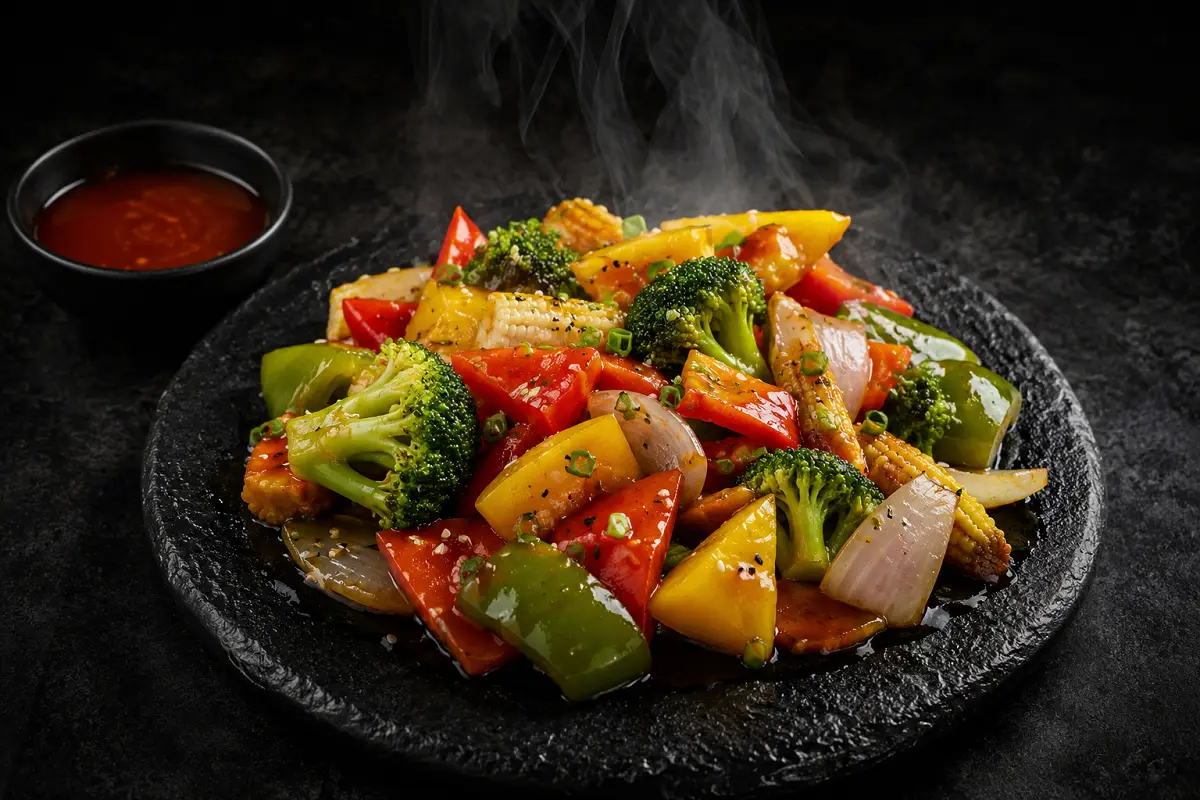
Some dishes earn their place on a regular dinner rotation simply by being reliable consistently good, quickly made, and pleasing to everyone at the table. Sweet and sour vegetables is one of those dishes, and it has been a staple on Indo-Chinese restaurant menus across India for decades for exactly that reason. A colourful mix of crunchy stir-fried vegetables capsicum, carrot, broccoli, cauliflower, baby corn, pineapple tossed in a glossy, tangy-sweet sauce that coats every piece in a shiny, sticky glaze. It is vibrant to look at, satisfying to eat, genuinely quick to make, and completely plant-based without any effort. Whether you are making it as a side dish alongside fried rice on a Friday evening, serving it as the centrepiece of a vegetarian Chinese spread for a party, or just making something bright and flavourful for a weeknight dinner that the whole family will finish this recipe delivers every time.
The sweet and sour combination is rooted in Cantonese cooking, where balancing contrasting flavours sweet against sour, soft against crunchy, warm against cool is a defining culinary principle. The vegetarian version of this dish is genuinely its own thing rather than a compromise version of the chicken or pork original. The vegetables hold up to the sauce in a way that makes the textures more varied and interesting than a single-protein dish, and the combination of colours the red of the capsicum, the orange of the carrot, the green of the broccoli, the pale gold of the pineapple makes this one of the most visually beautiful dishes in the entire Indo-Chinese repertoire.
This recipe gives you everything: the vegetable selection and prep guide, the high-heat stir-fry technique that keeps everything crunchy rather than limp, the sauce ratio that produces the right balance of sweet, sour, and savoury without going too far in either direction, the cornflour slurry technique for a glossy clingy sauce, and the full SOP and plating guide. Make it once and you will understand why this sits at the top of so many Indo-Chinese menus.
What Makes This Sweet and Sour Vegetables Recipe Special
Sweet and sour vegetables is simple in concept but easy to get wrong in a few specific ways limp overcooked vegetables, a sauce that is too sweet or too sharp, or a thin watery sauce that pools at the bottom of the bowl rather than coating the vegetables. This recipe is built around avoiding all of those outcomes specifically.
- High-heat stir-fry in batches for crunchy vegetables. The most common mistake with any vegetable stir-fry is adding too many vegetables to the pan at once on medium heat and letting them steam in their own moisture. This produces vegetables that are soft, slightly watery, and dull. The correct technique is maximum heat, small batches, constant tossing, and no more than 2 to 3 minutes of cooking per vegetable type. The goal is a slight char at the edges of each piece and a texture that is still clearly crunchy when bitten not fully raw but absolutely not soft.
- The sauce ratio equal parts sweet and sour, balanced by soy. The characteristic flavour of sweet and sour sauce is built on the tension between ketchup (sweet and slightly acidic), rice vinegar (sharp and clean), and sugar (balancing sweetness). This recipe uses a ratio that keeps the sauce clearly tangy without being aggressive, clearly sweet without being cloying, and clearly savoury from the soy sauce that rounds the whole thing out. Pineapple juice added to the sauce base provides natural fruit sweetness that reduces the amount of added sugar needed and adds a tropical note that lifts the whole dish.
- Cornflour slurry for a glossy, clingy sauce. The sauce is thickened at the end with a cornflour-water slurry rather than being reduced. Reducing a ketchup-and-vinegar sauce concentrates the salt and makes it stickier rather than glossier. A cornflour slurry added to a boiling sauce thickens it instantly to a smooth, flowing gloss that coats every vegetable piece rather than pooling beneath them. Adding the slurry in a thin stream while stirring produces an even, lump-free consistency.
- The vegetables are added in order of density. Dense root vegetables like carrot take longer to cook and go in first. Medium-density vegetables like cauliflower and broccoli go in second. Delicate vegetables like capsicum and baby corn go in last or even just after the sauce is added, so they keep their crunch completely intact. This sequencing is what produces a finished dish where every vegetable type is cooked correctly rather than some being overdone and some being underdone.
- Sesame oil added off the heat as a finishing element. Sesame oil has a low smoke point and loses its distinctive toasted aroma if cooked at high heat. Added as the very last step a teaspoon drizzled over the finished dish off the heat it adds the warm, nutty, faintly smoky character that makes the aroma of the finished dish instantly recognisable as Chinese-style cooking. It is a small step that makes a disproportionate difference to the flavour.
Ingredients Overview
The vegetable selection is the most customisable element of this recipe and the most important principle is variety of texture and colour. A bowl of sweet and sour vegetables where everything has the same texture (all soft, or all crunchy) is less interesting than one where you get crunch from the baby corn, softness from the cooked cauliflower, sweetness from the capsicum, and juiciness from the pineapple all in the same spoonful. The core combination that works reliably every time is cauliflower florets, carrot, green and red capsicum, baby corn, broccoli, and spring onion. Mushrooms add an earthy depth that works beautifully. Bok choy adds freshness. Celery adds a faint bitterness that balances the sweet sauce. All of these can be swapped or combined depending on what you have available.
For a more substantial dish, adding crispy fried tofu cubes or golden-fried paneer cubes turns this from a side dish into a main course. Coat the tofu or paneer in cornflour and fry until golden on all sides before adding to the sauce the crispy surface absorbs the glaze and adds a satisfying protein element without changing the fundamental character of the dish. Both tofu and paneer are excellent here the tofu version is completely vegan, the paneer version adds a richer, creamier contrast against the tangy sauce.
The sweet and sour sauce uses tomato ketchup, rice vinegar, pineapple juice, soy sauce, and sugar as its five core elements. Rice vinegar is essential it is mellow and clean-tasting compared to white vinegar, which is sharper and more aggressive. If pineapple juice is not available, replace it with a tablespoon of orange juice or an extra splash of rice vinegar plus a teaspoon of sugar. For a fully vegan version, confirm that your soy sauce and ketchup do not contain any animal derivatives most standard brands are vegan but it is worth checking. Use tamari instead of soy sauce for a gluten-free version.
For substitutions: replace the cornflour slurry with arrowroot powder for a slightly different but equally glossy result. Replace ketchup with a tablespoon of tomato paste and an extra teaspoon of sugar if ketchup is not available. Replace pineapple with mango chunks and mango juice for a tropical variation. Honey can replace sugar for a floral sweetness.
Also Read: Sweet and Sour Chicken Bites Recipe
How to Make It
The process is clean and fast: pre-mix the sauce, prepare and separate all vegetables by density, heat the wok to maximum temperature, stir-fry the vegetables in the correct order, add the pre-mixed sauce, thicken with the cornflour slurry, toss to coat everything in the glaze, and finish with sesame oil. The whole active cooking time is about 12 to 15 minutes once the wok is hot. Most of the time in this recipe is in the preparation the washing, cutting, and organising of the vegetables into the correct cooking order which takes about 15 minutes and sets the stir-fry up to be completed in a single fast sequence.
The most important mindset for making this well is to commit to maximum heat and constant motion during the stir-fry stage. The wok should be visibly smoking before anything goes in. Each vegetable batch should spend no more than 2 minutes in the pan before the next goes in. The sauce should be ready to pour in a single confident pour the moment the vegetables have been stir-fried. Speed and heat together produce the smokiness, the slight char, and the crunch that make this dish taste like it came from a restaurant kitchen rather than a slow home stir-fry.
Tips for Best Results
- Use the hottest heat your stove can produce. Wok cooking is high-heat cooking. The vegetables should sizzle loudly and continuously the moment they hit the pan. If the sizzle drops or becomes quiet, the heat is not high enough and the vegetables will steam in their own moisture rather than developing the slight char and dry surface that high heat produces. If you are using an electric stove, preheat the wok for an extra 2 minutes before adding oil electric stoves take longer to reach maximum temperature.
- Cut all vegetables uniformly same size, similar thickness. Pieces of the same density should be the same size so they cook at the same rate in the same amount of time. A mixture of thick and thin carrot pieces, for example, will produce some that are still raw and some that are overdone by the time the batch is done.
- Pre-mix the sauce before the wok goes on. The stir-fry stage moves very fast. Having the sauce already combined in a bowl with the cornflour slurry in a separate bowl means both can be added in a single confident pour without measuring or mixing while the vegetables are cooking.
- Do not skip the pineapple chunks. Pineapple is not a compulsory element of sweet and sour vegetables for everyone, but the contrast between the warm, tangy sauce and the cool, sweet burst of a pineapple chunk in a single spoonful is one of the most specifically pleasurable moments in the whole dish. Add it at the very end of cooking just before the sesame oil so it warms through without losing its texture or becoming mushy.
- Blanch dense vegetables for 60 seconds before stir-frying. If you want your cauliflower and carrot to be tender-crisp rather than still firm in the centre after the stir-fry, blanch them in boiling salted water for 60 seconds, drain, and pat completely dry before they go into the wok. This step is optional for those who prefer a crunchier result but essential if your vegetable pieces are cut thicker than 1 cm.
- Stir the cornflour slurry immediately before adding it. Cornflour settles to the bottom of the water within a minute or two. A slurry that is not re-stirred before being poured into the boiling sauce will deliver a burst of thick starch into the sauce unevenly rather than thickening it smoothly.
Serving Suggestions
Sweet and sour vegetables is one of the most naturally versatile dishes in the Indo-Chinese repertoire it works as a side dish, a main course, a sauce for rice noodles, and a filling for spring rolls. As a side dish, pair it with a bowl of steamed jasmine rice or veg fried rice for the definitive Chinese restaurant-at-home experience. The sauce from the vegetables soaks into the rice beautifully and turns every forkful into something deeply satisfying.
For a complete Indo-Chinese dinner spread, serve alongside veg spring rolls, hakka noodles, and a bowl of hot-and-sour soup. For a party, the sweet and sour vegetables served in a large sharing bowl alongside a bowl of vegetable Manchurian gravy and fried rice creates a generous, colourful centrepiece that handles a crowd effortlessly. As a main course for a smaller dinner, add fried tofu or paneer and serve over rice for a complete, balanced meal.
Storage and Reheating
Fridge: Store cooked sweet and sour vegetables in an airtight container for up to 2 days in the refrigerator. The sauce thickens further overnight and the vegetables soften slightly. To reheat, place in a wok or wide pan on medium heat with a splash of water or vegetable stock, stir gently until heated through, and adjust the sauce consistency by adding a little more water if it has become too thick. A few drops of fresh rice vinegar and a pinch of sugar stirred in just before serving restores the bright, balanced flavour that softens slightly in the refrigerator.
Freezer: The sauce freezes well for up to 4 weeks make a double batch, use half immediately, and freeze the rest for a quick weeknight meal. Do not freeze the cooked vegetables they become limp and watery on thawing. Instead, freeze the sauce and stir-fry fresh vegetables when you are ready to serve.
Variations and Substitutions
- Sweet and Sour Vegetables with Crispy Fried Cauliflower: This is the version that most closely mirrors the texture and satisfaction of the chicken or paneer version. Break cauliflower into small florets, coat in a thin batter of cornflour, plain flour, salt, and water, and deep fry at 175°C for 3 to 4 minutes until golden and crispy. Drain on a wire rack and add to the sauce at the final tossing stage. The crispy battered cauliflower absorbs the sweet and sour glaze while retaining its crunchy coating it is one of the most satisfying plant-based versions of this dish.
- Sweet and Sour Tofu and Vegetables: Press firm tofu for 15 minutes to remove excess water. Cut into 2.5 cm cubes, toss in cornflour, and pan-fry or air fry at 200°C for 12 to 14 minutes until golden and slightly crispy. Add to the sauce with the vegetables for a high-protein, fully vegan main course version.
- Sweet and Sour Paneer and Vegetables: Cut paneer into 2.5 cm cubes and pan-fry in a tablespoon of oil for 2 minutes per side until golden. Add to the sauce alongside the stir-fried vegetables. The paneer absorbs the sweet-sour glaze and adds a rich, milky contrast against the tangy sauce that is one of the best vegetarian flavour pairings in Indo-Chinese cooking.
- Dry Version (No Gravy): Reduce the water in the sauce from half a cup to two tablespoons and increase the cornflour slurry to 2 tablespoons of cornflour. The result is a very thick, sticky coating rather than a flowing sauce perfect as a starter or party snack served with toothpicks rather than as a side dish for rice.
- Mango Sweet and Sour Vegetables: Replace the pineapple chunks with cubed ripe mango and the pineapple juice with fresh mango juice or puree. Add at the end of cooking. The mango adds a floral, tropical sweetness that produces a slightly different but equally beautiful sauce colour and flavour.
- Spicy Sweet and Sour Vegetables: Add a tablespoon of schezwan sauce to the pre-mixed sauce alongside the ketchup and vinegar. The garlic-forward, fiery character of schezwan transforms the dish into a bolder, more aromatic version with a noticeably different heat profile. Reduce the sugar by half to prevent the sauce from becoming too sweet against the schezwan.
Preparation Method
Begin by pre-mixing the sauce: combine ketchup, rice vinegar, pineapple juice, soy sauce, sugar, and water in a small bowl. Stir until the sugar dissolves completely. Taste and adjust balance it should be pleasantly tangy, mildly sweet, and well-seasoned. Prepare the cornflour slurry in a separate small bowl: 1 tablespoon of cornflour with 2 tablespoons of cold water, stirred smooth. Set both bowls beside the stove within easy reach.
Prepare the vegetables: cut each type uniformly and separate into three groups by density dense (carrot, cauliflower), medium (broccoli, baby corn, mushrooms), and delicate (capsicum, spring onion, bok choy). Blanch the dense vegetables for 60 seconds in boiling water if you prefer a tender-crisp result, then drain and pat dry. Heat a wok on the highest heat for 2 minutes until smoking. Add oil and begin stir-frying in sequence, starting with dense vegetables and finishing with delicate ones, 90 seconds per group, tossing constantly. Pour in the sauce, bring to a boil, add the slurry, stir to a glossy consistency, add pineapple chunks, toss to coat, drizzle sesame oil off the heat, and serve immediately.
Standard Operating Procedure (SOP)
For consistent, restaurant-quality sweet and sour vegetables every single time, follow this sequence: pre-mix sauce in bowl → prepare cornflour slurry → cut and group vegetables by density → blanch dense vegetables 60 seconds if desired → pat all vegetables completely dry → heat wok on maximum heat 2 minutes until smoking → add oil → stir-fry dense vegetables 90 seconds on maximum heat → add medium-density vegetables, stir-fry 90 seconds → add delicate vegetables, toss 60 seconds → pour pre-mixed sauce all at once → bring to full boil → stir slurry and add in thin stream → stir until glossy and clingy → add pineapple chunks → toss everything to coat → remove from heat → drizzle sesame oil → scatter spring onion greens → plate immediately → serve within 3 minutes. The four decisions that most directly affect the result are maximum heat throughout (crunch and char), pre-mixing the sauce (speed and balance), grouping vegetables by density (even cooking), and adding sesame oil off the heat (aroma preservation). These four practices together produce a dish that looks like a restaurant plate, smells like a wok kitchen, and tastes exactly as it should.
For party and catering batches, the sauce can be made up to 24 hours ahead and refrigerated. All vegetables can be cut and grouped up to 4 hours ahead. The stir-fry must be done fresh it takes 12 to 15 minutes per batch and produces enough for 6 to 8 people. For large gatherings, cook in two or three batches, keeping the completed batches warm in a covered serving bowl. Do not reheat the finished dish on high heat it overcooks the vegetables. Warm gently on medium heat with a splash of water just before serving.
Garnish and Presentation
Sweet and sour vegetables is one of the most naturally beautiful dishes in Indo-Chinese cooking the glossy amber-red sauce, the vivid colours of the capsicum and pineapple, the deep green of the broccoli and spring onion it looks like a painting in a bowl without any additional garnish. Serve in a wide, dark ceramic bowl or on a dark flat plate so the colours of the vegetables and the sheen of the sauce are immediately visible. Arrange the vegetables so different colours are distributed across the surface rather than grouped a piece of red capsicum next to a floret of green broccoli next to a round of pale carrot creates a visual variety that looks generous and considered at the same time.
For garnish: a generous scatter of thinly sliced spring onion greens over the entire dish is the primary garnish bright green against the amber-red sauce is visually striking and immediately signals fresh cooking. A light sprinkle of toasted sesame seeds (white, or a mix of white and black) over the spring onion greens adds visual texture and a faint crunch. A few rings of fresh red chilli for colour and a gentle heat signal, and a wedge of lime or lemon on the side complete the plate. For a dinner party centrepiece, drizzle a tablespoon of warm sauce directly over the arranged vegetables just before bringing to the table the sauce catches the light and creates a glossy finish that looks freshly made and immediately appetising.
Plating and Serving Tips
Serve sweet and sour vegetables immediately after the sesame oil is added within 3 to 4 minutes of the final toss. The vegetables continue to soften slightly in the warm sauce even off the heat, and the window of perfect crunch is relatively short. For individual plating, serve in a wide, shallow ceramic bowl with the sauce pooling naturally around the base of the vegetable pile and the spring onion and sesame seed garnish visibly fresh on top. For a rice bowl presentation, place the sweet and sour vegetables on one side of a bowl of steamed jasmine rice with the sauce running over the edge of the vegetable portion onto the rice this is how it is presented in traditional Chinese-style teahouses and it looks both practical and beautiful.
For a buffet or party spread, serve the sweet and sour vegetables in a wide, shallow serving bowl that allows guests to see the full composition of the dish from above. Place a serving spoon that reaches the bottom of the bowl so guests can get a mix of sauce, vegetables, and pineapple in each serving. Keep a small bowl of extra sauce on the side for guests who want more there will always be guests who want more.
If you make this sweet and sour vegetables recipe, I genuinely want to hear every detail which vegetables did you use, did you add tofu or paneer, did you try the crispy cauliflower version, did you try the schezwan spicy variation? Leave a star rating below and drop a comment. Your notes help other readers get that glossy, crunchy, better-than-takeaway result at home and I read every single one. Save this to Pinterest now so it is always there for your next party spread, vegetarian dinner night, Diwali celebration, or the next time you want something bright and satisfying on the table in 30 minutes!
Ingredients
- 1 medium carrot (about 150g), peeled and cut into thin diagonal rounds or batons
- 1 cup cauliflower florets (about 150g)
- ½ cup broccoli florets, cut into bite-sized pieces
- ½ cup baby corn (halved lengthwise if large)
- 2 stalks celery, sliced thin on diagonal
- 200g paneer, cut into 2.5 cm cubes, pan-fried until golden
- 3 spring onions whites sliced, greens reserved for garnish
- 1 medium onion, cut into thick petals
- ½ medium red capsicum, cut into 2–3 cm squares
- 6–8 button mushrooms, quartered (or shiitake, stems removed)
- 1 medium green capsicum (bell pepper), cut into 2–3 cm squares
- 200g firm tofu, pressed dry and cut into 2.5 cm cubes, fried golden in cornflour
- 3 tablespoons pineapple juice
- 3 tablespoons tomato ketchup
- 2½ tablespoons rice vinegar
Nutritional Information
- Calories: 165 kcal
- Protein: 3g
- Carbohydrates: 28g
- Fat: 5g
- Fiber: 4g
- Sodium: 520mg
- Sugar: 16g
Directions
1. PRE-MIX THE SAUCE AND PREPARE THE SLURRY
Combine the tomato ketchup, rice vinegar, pineapple juice, soy sauce, sugar,
and water in a small bowl. Stir until the sugar dissolves completely. Taste
the sauce — it should be pleasantly tangy, mildly sweet, and well-seasoned.
Adjust the vinegar for more sharpness or the sugar for more sweetness if needed.
Set aside beside the stove within easy reach. In a separate small bowl, combine
the cornflour and cold water, stir until completely smooth. Set beside the sauce bowl.
2. PREPARE THE VEGETABLES
Wash all vegetables and cut each type according to its density group. Keep the
groups separate on the cutting board or in three small bowls — dense, medium,
and delicate. Cut everything as uniformly as possible within each group.
For cauliflower and carrot: if you prefer a tender-crisp result rather than
fully crunchy, blanch them in a pot of boiling salted water for exactly 60
seconds. Drain immediately and spread on a clean kitchen towel. Pat completely
dry with kitchen paper — any surface moisture will cause the wok temperature to
drop when they hit the pan.
3. PREPARE ANY PROTEIN ADDITIONS
If adding tofu: pat the pressed tofu cubes dry on all sides. Toss lightly in
cornflour. Heat 2 tablespoons of oil in a pan over medium-high heat and fry
for 2 to 3 minutes per side until golden and slightly crispy. Drain on a wire
rack. Set aside.
If adding paneer: cut into 2.5 cm cubes. Heat 1 tablespoon of oil in a non-stick
pan over medium-high heat. Fry for 1 to 2 minutes per side until golden. Set aside.
4. HEAT THE WOK
Place a wok or wide heavy pan on the highest heat available. Leave to heat for
2 full minutes until the pan is visibly smoking. This pre-heating step is not
optional — a smoking-hot wok is the foundation of every successful stir-fry.
Add 2 tablespoons of neutral oil and swirl to coat the surface. The oil should
shimmer and move freely immediately.
5. STIR-FRY THE VEGETABLES IN SEQUENCE
Add the garlic, ginger, and green chillies. Stir for 20 to 30 seconds until
fragrant — the aromatics should bloom immediately in the hot oil. Do not let
the garlic brown beyond light golden.
Add the DENSE vegetables (carrot, cauliflower, broccoli) to the wok. Toss and
stir continuously on maximum heat for 90 seconds. The vegetables should develop
slight char marks at the edges while remaining clearly crunchy. The wok should
produce a consistent, vigorous sizzle throughout.
Add the MEDIUM-DENSITY vegetables (baby corn, mushrooms, celery). Toss for
60 to 90 seconds on maximum heat.
Add the DELICATE vegetables (capsicum, onion petals, spring onion whites).
Toss for 60 seconds only — this group must stay crunchy and brightly coloured.
6. ADD THE SAUCE AND THICKEN
Give the pre-mixed sauce a quick stir and pour the entire contents into the
wok at once. The sauce will sizzle aggressively — stir immediately to prevent
any catching at the base. Bring to a full boil on high heat — this takes about
60 seconds. Taste the sauce at boiling point and make any final adjustments.
Stir the cornflour slurry vigorously to re-combine any settled starch, then pour
into the boiling sauce in a thin, steady stream while stirring constantly.
The sauce will thicken to a glossy, flowing consistency within 30 to 40 seconds.
It should coat a spoon and flow steadily — not watery, not stiff. If too thick,
add a splash of water. If still too thin, mix a little more slurry and add slowly.
7. ADD PINEAPPLE AND PROTEIN, COAT AND FINISH
Add the pineapple chunks to the wok. Stir gently to warm them through —
about 20 seconds. Add the fried tofu or paneer if using, and toss once
or twice gently to coat without breaking the pieces.
Toss all the vegetables in the glossy sauce until every piece is completely
coated — about 30 seconds. Remove from heat.
Drizzle the toasted sesame oil over the entire dish. Toss once to distribute.
Scatter the spring onion greens over the top.
8. PLATE AND SERVE IMMEDIATELY
Transfer to a wide serving bowl or plate. Scatter thinly sliced spring onion
greens, sesame seeds, and red chilli rings over the top. Add a wedge of lime
or lemon on the side. Serve immediately alongside steamed jasmine rice or
veg fried rice, while the vegetables are at their crunchiest and the sauce
is at peak temperature and gloss.
Rate this Recipe
User Reviews
No reviews yet. Be the first to share your thoughts!