ASL Airlines Australia Secures Pilot Training Through 2028
ASL Airlines Australia has secured Boeing 737 pilot training through 2028 as its growing freighter fleet creates a bigger need for qualified crews.
 Jishan Khan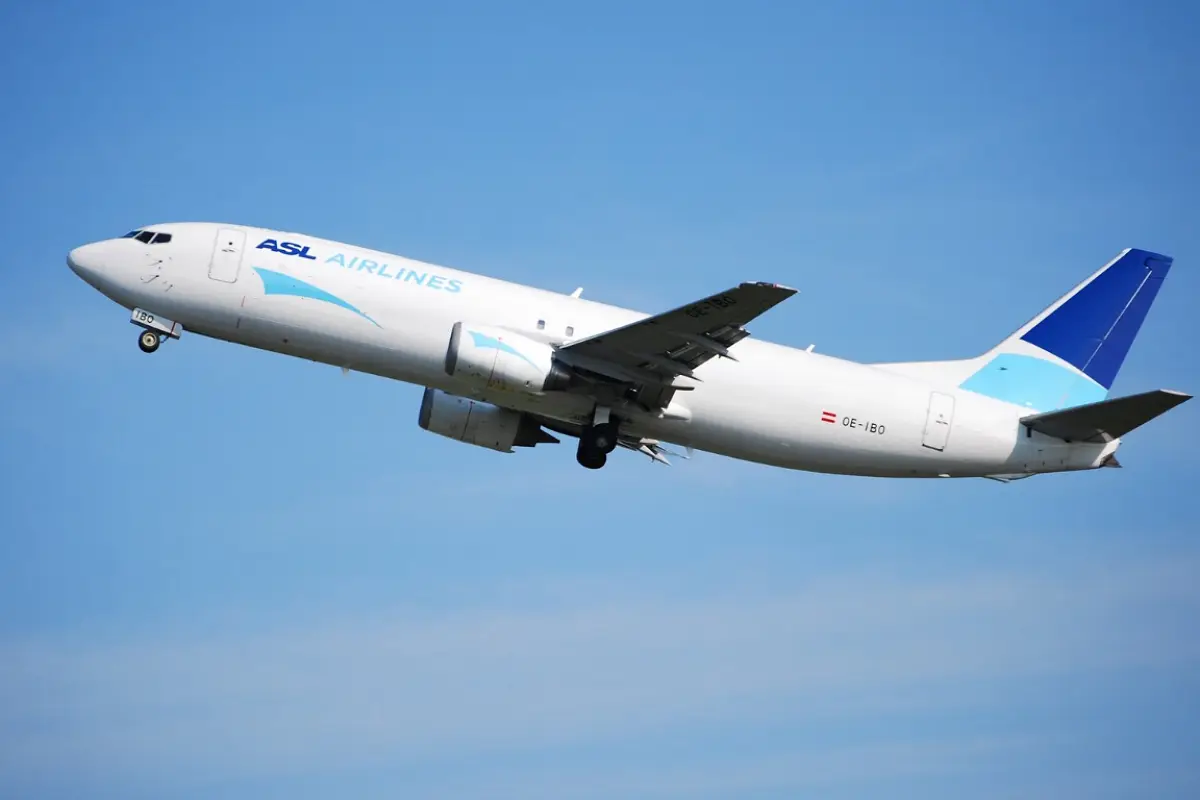
Why a Freight Airline Chose to Lock In Pilot Training Three Years in Advance, the Answer Is in ASL's Acquisition Trail, Not the Training Contract Itself
Acron Aviation's Commercial Training Solutions division signed a preferred supplier agreement with ASL Airlines Australia to deliver Boeing 737 Type Rating and APS MCC training through the end of 2028, building on a successful training run delivered to ASL Australia pilots in London during the first half of 2026. Captain Nathan Burkitt, ASL Australia's Head of Training and Checking, praised the returning trainees' "manual handling, automation management and generic Boeing knowledge" as "very good," noting they arrived at operator conversion training "well prepared" with "a solid foundation." That is a satisfied customer renewing a working relationship. The more interesting question is why ASL Australia needs a multi-year pilot pipeline agreement at all, and the answer sits entirely in the airline's own fleet history over the past eighteen months.
An Airline That Went From Zero 737s to a Fleet Acquisition Spree in Under Two Years
ASL Airlines Australia, formerly Pionair Australia, and part of the ASL Aviation Holdings group that already operates roughly 160 aircraft across carriers in Europe, Thailand, India and South Africa, added its first Boeing 737-800 Boeing Converted Freighter in December 2024, one of 40 conversion slots secured under ASL's group-wide fleet renewal programme with Boeing. A second BCF followed in July 2025. By May 2026, the airline had gone further still, signing a sale-and-purchase agreement to take over the New Zealand and Australia freight business of troubled operator Airwork, an acquisition still subject to final due diligence at the time it was announced, but one that would materially expand ASL Australia's operational footprint across both countries if completed.
That trajectory, from an airline whose fleet was previously dominated by ageing BAe 146-200QT and -300 aircraft to one actively converting and acquiring Boeing 737 freighter capacity, while simultaneously pursuing a competitor's book of business, is precisely the kind of rapid fleet transition that creates a genuine, structural pilot training bottleneck. Every BAe 146 pilot ASL Australia carries forward from its legacy fleet, and every new hire brought on to crew the expanding 737BCF fleet, needs type-specific certification on an aircraft the airline was not flying at all before December 2024. A training relationship locked in through 2028 is not a routine renewal, it is ASL Australia securing guaranteed simulator slots and instructor capacity for a multi-year pilot conversion pipeline running in direct parallel with a fleet expansion that shows no sign of slowing.
Why ASL Airlines Australia Pilot Training Is Being Tailored to ASL Australia's Own SOPs
The agreement's inclusion of ASL Australia's own Standard Operating Procedures within the Acron-delivered type rating course is a detail worth taking seriously rather than treating as boilerplate. ASL Australia operates as a charter and ACMI (Aircraft, Crew, Maintenance and Insurance) carrier, meaning its aircraft and crews are frequently deployed to fly under other airlines' branding and operational requirements, on contract, rather than running a single, consistent scheduled network under its own livery. That operating model places a premium on pilots who can transition seamlessly between different customer contracts and operational contexts without each transition requiring extensive additional retraining, which makes embedding the airline's own SOPs directly into the foundational type rating course, rather than treating SOP familiarisation as a separate step bolted onto generic training afterward, a genuinely practical efficiency gain rather than a marketing flourish.
Burkitt's specific praise that trainees "arrived at their Operator Initial Conversion training well prepared" reflects exactly that design intent working as planned, reducing the gap between generic Boeing 737 knowledge and ASL-specific line operations shortens the total time from a new pilot's type rating completion to their readiness for revenue-generating ACMI or charter flying, a meaningful commercial consideration for an airline whose entire business model depends on flexible, rapid crew deployment across variable contracts.
Why Airlines Broadly Are Moving Toward Exactly This Kind of Locked-In Training Relationship
ASL Australia's multi-year Acron agreement sits inside a broader pattern this feed has tracked extensively across 2026, airlines increasingly treating pilot training capacity as a resource to be secured years in advance rather than sourced reactively as needs arise. CAE's October 2025 agreement to deliver a new Boeing 737MAX full-flight simulator to Malaysia Airlines' MAB Academy training arm cited CAE's own 2025 Aviation Talent Forecast projecting a need for 98,000 new commercial pilots across the Asia Pacific region over the next decade alone, a regional shortage figure that dwarfs any single airline's individual hiring needs and explains why training providers and airlines alike are moving toward longer-term capacity commitments rather than one-off course bookings.
flynas's SAR 200 million Riyadh training centre, covered in this feed's earlier reporting, reflects the same underlying pressure from a different angle, an airline choosing to build its own in-house training infrastructure specifically because relying entirely on external, ad hoc training bookings became commercially untenable against its own aggressive 235-aircraft fleet expansion. ASL Australia's approach is the intermediate model between those two extremes: rather than building proprietary training infrastructure the way flynas has, or booking training reactively contract by contract, it has secured guaranteed, tailored access to an established third-party provider's capacity for a fixed multi-year term, locking in both price certainty and priority scheduling access at exactly the moment its own fleet expansion makes pilot supply the binding constraint on how quickly new 737 capacity can actually generate revenue.
What the Through-2028 Timeline Actually Signals
The specific end date matters. Running the agreement through the end of 2028 gives ASL Australia training capacity certainty across almost the entire remaining term of its 40-aircraft group-wide BCF conversion programme, and comfortably spans whatever integration timeline the pending Airwork acquisition eventually requires if it completes. For a charter and ACMI operator whose commercial value proposition to customers rests substantially on its ability to deploy qualified crews flexibly and rapidly, a training pipeline that removes pilot-supply uncertainty as a variable for the next two-and-a-half years is not a minor operational detail, it is one of the load-bearing pieces of infrastructure underneath an airline that has, in under two years, transformed itself from a BAe 146 charter operator into an increasingly serious Boeing 737 freighter platform across the Australasian market.