Mission Aviation Fellowship Opens Academy at Cranfield
Mission Aviation Fellowship opened its Mission Aviation Academy at Cranfield, combining pilot and engineer training pathways to build its future humanitarian aviation workforce.
 Jishan Khan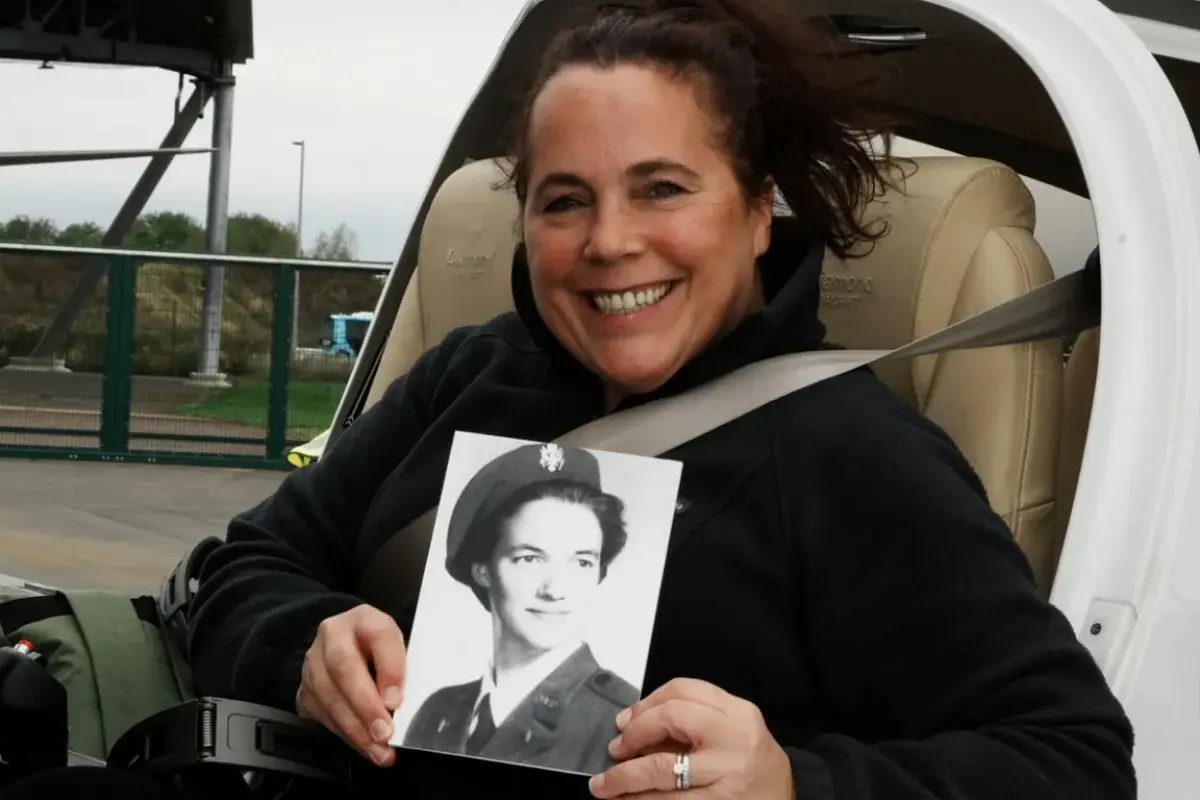
A 1930s Biplane and a Modern Twin-Engine Trainer Both Flew at Cranfield the Same Day, One Honoured Where This Charity Came From, the Other Signalled Where It's Going
Mission Aviation Fellowship formally opened its new Mission Aviation Academy at Cranfield Airport in Bedfordshire on September 19, 2026, timed deliberately to coincide with Girls in Aviation Day. Dr Jo Salter, Britain's first female fast jet pilot, who flew Tornado ground-attack aircraft operationally with 617 Squadron in the 1990s, marked the occasion twice over. First, she took the controls of a 1930s De Havilland Dragon Rapide, the same biplane type MAF's founding female pilot Betty Greene once flew across 4,000 miles from Sudan to London in seven days with no GPS and no digital avionics. Then she flew the academy's own modern Diamond DA42 Twin Star to formally open the new training facility. Two aircraft, six decades apart, both flown by the same pilot on the same afternoon, a deliberate structural choice, not a coincidence of scheduling.
Why MAF Built a Single Academy Out of Three Separate Pathways That Already Existed
The Mission Aviation Academy is not, strictly speaking, an entirely new programme, it is a consolidation of three training routes MAF UK was already running separately, now unified under one institutional framework: the Future Pilot Programme for candidates with zero prior flying experience, the Pilot Progression Pathway for those who already hold at least a Private Pilot's Licence, and the Engineer Training Scheme for prospective aircraft maintenance personnel. MAF UK's own 2025 annual report identified formally launching this consolidated academy as an explicit 2026 organisational priority, specifically aimed at increasing recruitment into MAF's overseas humanitarian roles, a detail that reframes the September 19 opening less as the birth of a brand-new initiative and more as the public unveiling of a structural reform MAF had been planning and building toward for at least a year.
That distinction matters because it explains the scale of ambition behind an announcement that, on paper, sounds modest. During 2025, before the academy's formal consolidation, MAF UK added just two trainees to its Future Pilot Programme and two to its Engineer Training Scheme, a genuinely small annual intake for an organisation warning about a global shortfall measured in the millions. Bringing three separate, smaller pathways together into one branded academy, with a single Cranfield base and a coordinated public launch, is MAF's attempt to convert what has been a slow, low-visibility trickle of new trainees into a more structured, more visible, and hopefully more scalable talent pipeline.
Why "No Previous Flying Experience Required" Is the Detail That Actually Distinguishes This From a Conventional Flight School
Most commercial pilot training pathways function as pure fee-for-service education, a prospective airline pilot pays for flight hours, accumulates a licence, and then independently seeks employment wherever it becomes available, with no obligation connecting the training provider to any specific future employer. MAF's Future Pilot Programme inverts that model entirely. Candidates need no prior flying background at all, but successful applicants commit to at least six years of overseas service with MAF specifically once trained, meaning MAF is not simply teaching people to fly and hoping some of them eventually choose humanitarian aviation as a career. It is building a closed-loop pipeline where the training investment and the future employment commitment are bound together from the very first day of enrolment.
That structure is a genuinely different response to a talent shortage than most of the aviation industry has pursued. This feed has covered flynas building a SAR 200 million training centre in Riyadh specifically to reduce a fast-growing airline's dependency on external pilot supply, and ASL Australia locking in a multi-year Acron training partnership to guarantee simulator access against its own fleet expansion, both cases of commercial airlines investing directly in training infrastructure because the open market could not reliably supply pilots at the pace their growth required. MAF's academy applies the identical underlying logic to humanitarian aviation specifically: rather than competing with commercial airlines for pilots already qualified and already weighing multiple job offers, MAF is recruiting people who have never flown before and training them specifically for MAF's own mission, with the six-year commitment functioning as the mechanism that guarantees the training investment actually converts into deployed overseas capacity rather than simply feeding graduates into the broader commercial pilot market MAF cannot compete with on salary.
Why MAF's Own Operational Scale Explains the Urgency Behind This Launch
MAF describes one of its aircraft taking off or landing somewhere across the developing countries where it operates, on average, once every six minutes, a genuinely striking operational tempo for an organisation running more than 115 aircraft across 25 programmes in over 25 countries. CEO Donovan Palmer's own framing of why the academy matters now specifically ties that operational scale directly to worsening global conditions: "[our] services are needed now more than ever to reach vulnerable, cut-off communities facing the devastating impacts of climate change, poverty and war." That is not generic charity messaging, it reflects the genuine structural reality that humanitarian aviation demand tends to rise precisely during the periods when broader global instability makes recruiting and training new pilots and engineers hardest, creating exactly the kind of supply-demand mismatch a dedicated, self-contained training pipeline is designed to insulate against.
Why 1.4 Million by 2034 Is a Number Big Enough to Make a Faith-Based Charity's Recruitment Problem Everyone's Problem
MAF's stated concern, a global aviation industry shortfall of roughly 1.4 million professionals by 2034, situates this single academy launch inside a considerably larger structural crisis this feed has documented repeatedly throughout 2026: CAE's own Aviation Talent Forecast projecting a need for 98,000 new commercial pilots across the Asia Pacific region alone over the next decade, and the broader pattern of airlines worldwide, from flynas's Riyadh training centre to EGYPTAIR's expanding Cairo simulator capacity, treating pilot and engineer supply as an existential operational constraint rather than a routine HR function. MAF's academy is a genuinely small contribution against a shortfall measured in the millions, but it targets a specific, narrower niche within that broader crisis: humanitarian and mission aviation roles that commercial airlines' own training pipelines have no incentive to fill, because MAF's overseas positions, by design, cannot compete on salary with commercial carriers desperate for the same qualified personnel.
Why the Gender Framing Is Structural, Not Symbolic
Salter's own message at the launch, "the hardest thing we've got to do is get over ourselves; don't ever let anyone tell you what you can and can't do" sits alongside a genuinely deliberate historical throughline MAF built into the launch event itself. Betty Greene co-founded MAF in 1946 and flew more than 4,600 missionary and humanitarian flights across some of the world's most remote and difficult terrain, becoming, in MAF's own institutional memory, the organisation's founding proof that women belonged in mission aviation from its very first year of existence. Choosing to fly the same aircraft type Greene once flew, on the same day the academy opened, and pairing that tribute flight with Salter, Britain's own history-making first female fast jet pilot, piloting the academy's actual modern training aircraft, was not incidental programming around a ribbon-cutting. It was MAF deliberately constructing a visible, symbolic lineage connecting its founding female pilot eight decades ago to the female-led public launch of its newest recruitment pipeline, aimed specifically at addressing an industry-wide gender imbalance that persists across both commercial and humanitarian aviation despite decades of individual pioneers like Greene and Salter proving the barrier was never genuinely about capability.
What Actually Determines Whether This Academy Meaningfully Moves the Needle
The honest measure of this launch's success will not be visible for years, it depends on how many candidates the Future Pilot Programme, Pilot Progression Pathway and Engineer Training Scheme collectively recruit annually now that they operate under one consolidated, more visible institutional banner, against a 2025 baseline of just four total new trainees across the separate pathways that preceded it. A six-year overseas service commitment is a genuinely significant ask for any young person considering a first career, and MAF's ability to convert Girls in Aviation Day publicity and Salter's own compelling personal story into a sustained, meaningfully larger pipeline of both women and men willing to make that commitment, rather than a single well-covered launch event that generates media attention without translating into durable recruitment growth, is the actual test this academy now faces, running quietly at Cranfield long after the vintage biplane and the Diamond DA42 have both returned to their hangars.