EUROCONTROL Pursues $1.4M Claim Against Air Albania
EUROCONTROL is pursuing a $1.4 million claim against Air Albania, which stopped flying in December 2025 and still remains legally active.
 Jishan Khan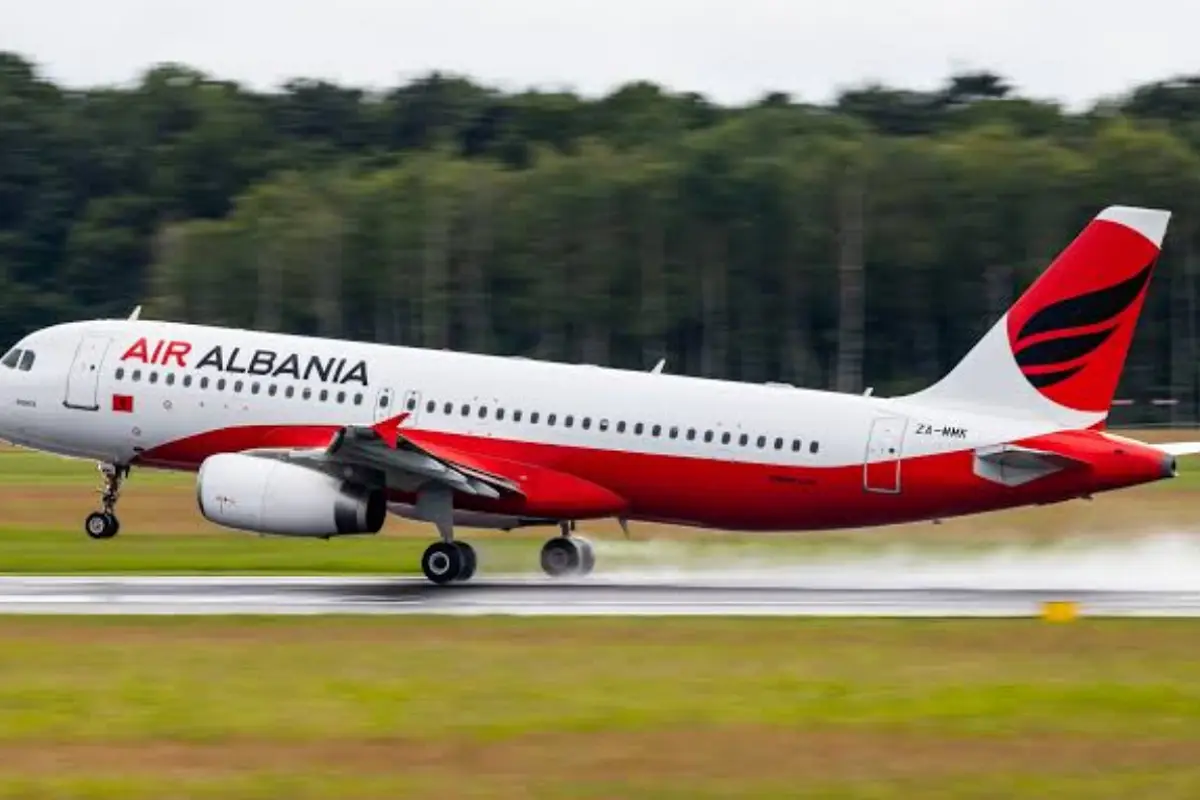
EUROCONTROL Wants $1.4 Million From an Airline That Hasn't Flown a Single Route in Nine Months
EUROCONTROL is pursuing a USD 1.4 million (roughly €1.2 million) claim against Air Albania, according to ch-aviation, a debt collection effort aimed at a carrier that ceased all flight operations on December 7, 2025, and has not resumed since. The claim is not a fresh financial shock. It is simply the latest name to join a queue of international creditors already estimated to be owed around €100 million by an airline that has effectively ceased to exist as an operating business, even though it remains listed as "active" in Albania's National Business Centre.
How an Airline Stops Flying but Never Officially Dies
Air Albania's collapse did not happen in a single dramatic moment, it unwound in stages over roughly six weeks in late 2025. Turkish Airlines, which held a 49.12% stake and had been the carrier's dominant commercial partner since its founding in 2018, announced on November 19-20, 2025 that its board had approved the sale of its entire shareholding. Within days, Turkish Airlines stopped selling transit tickets through Air Albania entirely, triggering a wave of flight cancellations that continued until operations fully stopped in December. On December 15, Albania's Civil Aviation Authority suspended the carrier's operating licence outright for non-compliance with civil aviation regulations, a suspension the regulator has never publicly detailed, though the timing makes the connection to Air Albania's financial collapse difficult to read any other way. By December 7, the airline had formally surrendered its Air Operator Certificate.
Yet Air Albania remains a registered, "active" legal entity. That distinction, operationally dead but legally alive, is precisely why claims like EUROCONTROL's keep surfacing individually rather than being resolved through a single bankruptcy proceeding. Creditors are pursuing the company one debt at a time because no formal liquidation process has yet closed the door on all of them simultaneously.
Why the Albanian Government Is Paying Off a Company It Owns Only 10% Of
The most striking element of this entire saga is the mismatch between Albania's ownership stake and its financial exposure. The state, through Albcontrol, held just 10% of Air Albania, with Turkish Airlines at 49% and Sinan Idrizi's MDN Investment at 41% controlling the overwhelming majority. Under any conventional reading of corporate liability, Turkish Airlines and MDN Investment should bear the primary responsibility for the company's roughly €100 million in accumulated liabilities. Instead, Albania's government structured a €35 million bailout, paid directly from the state budget, specifically to satisfy the most pressing claims from foreign contractual partners and head off a wave of international legal proceedings.
The mechanism is unusual enough that financial analysts covering the story have openly questioned its viability: the €35 million is structured as a loan from the state to the now-defunct company, with Sinan Idrizi and Turkish Airlines reportedly committing to repay Albania over a period of up to 50 years. Given that Air Albania has ceased operations entirely and holds no significant assets, that repayment structure is widely regarded as more symbolic than realistic, a way of giving the bailout a legal veneer of eventual cost-recovery, without any credible mechanism to actually enforce it against a company with nothing left to seize.
Why the Government Moved to Formalise Its Position in January
At the end of January 2026, Albania's Council of Ministers transferred the state's 10% capital quota in Air Albania from Albcontrol to the Ministry of Economy and Innovation, administrative housekeeping that nonetheless signals the government treating its Air Albania exposure as a matter requiring direct ministerial oversight rather than leaving it with the state air navigation agency that happened to hold the original stake. That April 2026 transfer is, per Albanian reporting, the last recorded corporate action taken with the company in the National Business Centre, meaning nothing of substance has changed in Air Albania's legal status since, even as individual creditor claims like EUROCONTROL's continue to surface publicly, one after another, throughout the year.
Why EUROCONTROL's Claim Specifically Matters
EUROCONTROL is not an ordinary trade creditor chasing an unpaid invoice, it is the pan-European organisation responsible for air navigation charges across the continent, and airlines that fail to pay EUROCONTROL route charges can face enforcement mechanisms including the withholding of overflight clearances for their aircraft in European airspace. For an airline still theoretically capable of resuming operations at some point, an unresolved EUROCONTROL debt is a genuine operational threat, not simply a balance sheet liability, any future Air Albania successor or restructured entity attempting to fly European routes would need this specific claim resolved first, making it one of the more consequential items in the company's outstanding debt pile regardless of its comparatively modest size against the full €100 million total.
What Happens to a "National Airline" With No Buyer in Sight
Turkish Airlines' exit left Air Albania not just financially exposed, but strategically orphaned. In January 2026, Turkish Airlines confirmed it would launch its own direct flights from Tirana to both Istanbul Airport and Sabiha Gökçen, followed by AJet, the group's low-cost arm, adding further Tirana-Istanbul and Tirana-Ankara services. That is Turkish Airlines not simply divesting a struggling investment, but actively absorbing the exact commercial routes Air Albania had built its business around, using its own metal instead. It leaves the question of what "national airline" status even means for an entity with no aircraft, no operating certificate, no functioning ownership resolution and a shrinking market share, Air Albania closed 2025 with just 2.33% of the Albanian market, already the fifth-largest operator in a country it was originally created to represent as the flag carrier.
Albania has now lived through the collapse of two national airlines in fifteen years, Albanian Airlines in 2011, and Air Albania's operational death in December 2025, just seven years after it was created explicitly to fill that gap. Whether the government's €35 million bailout succeeds in fending off further international legal action, or whether claims like EUROCONTROL's simply keep arriving one at a time until the full €100 million liability is publicly itemised claim by claim, the underlying question the Albanian public is left with is unresolved, whether a state holding only 10% of a failed company should be the one footing the bill for its collapse at all.