TAP Air Portugal Nears New Airline Partner Decision
Portugal is choosing between Air France-KLM and Lufthansa for a 44.9% stake in TAP Air Portugal, with Lisbon's South Atlantic network at stake.
 Jishan Khan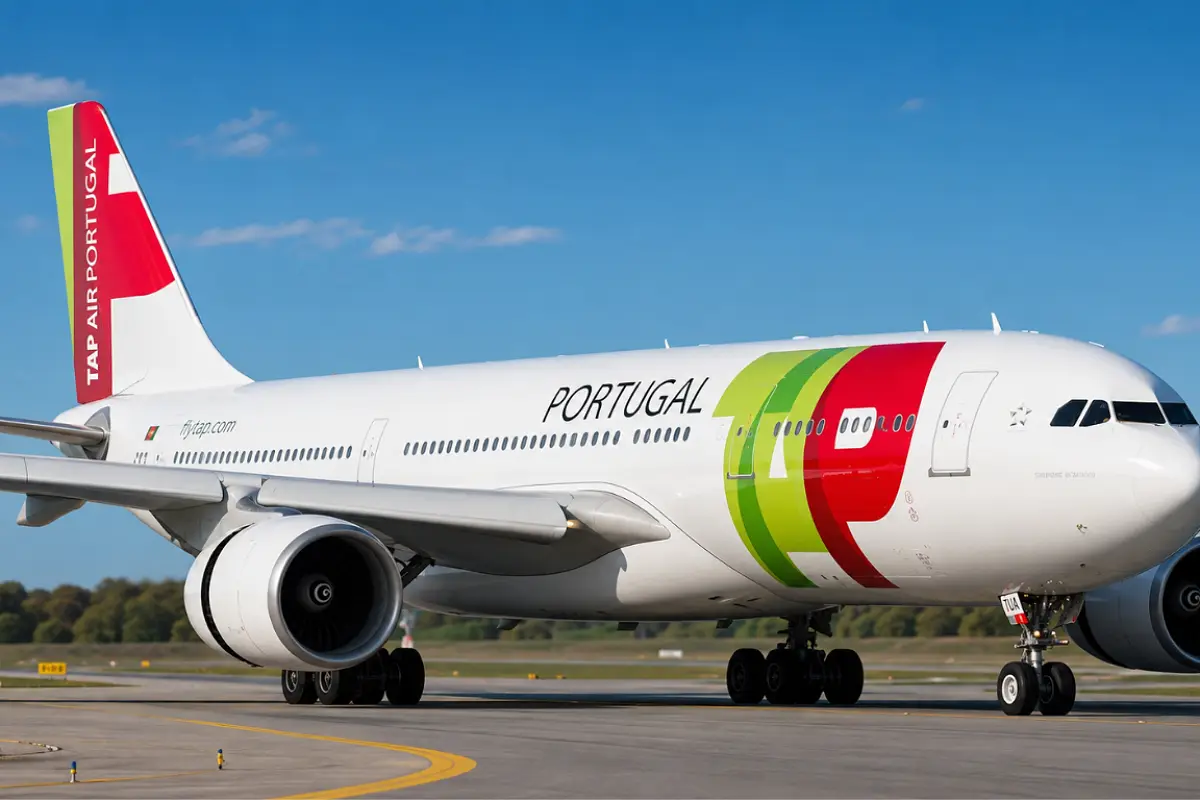
Lisbon Is About to Become Someone Else's Southern European Hub, the Only Question Left Is Whose
Portugal's government is expected to announce its choice between Air France-KLM and Lufthansa Group for a 44.9% stake in TAP Air Portugal between late August and early September 2026, following binding offers submitted by both groups on July 29. Whichever wins gets more than a minority stake in a mid-sized European flag carrier, it gets exclusive control of the only serious European gateway to Brazil, Portuguese-speaking Africa and the broader South Atlantic that neither rival's existing network can replicate.
This is the fourth time in three decades Portugal has tried to privatize TAP. The first three attempts all collapsed, unwound, or were reversed by nationalization. This is the one that is actually reaching a signature.
Why Air France-KLM and Lufthansa Are Fighting Over TAP Air Portugal After Its Near-Bankruptcy
TAP's appeal has almost nothing to do with its current size and almost everything to do with geography that cannot be replicated. Lisbon sits at what both bidders have independently described in nearly identical language as Europe's natural bridge to the Americas, TAP operates what industry analysts call the Lusophone corridor, a network connecting Europe with Brazil and Portuguese-speaking African nations including Angola and Mozambique that no other major European carrier has built with comparable depth. Air France-KLM CEO Ben Smith made the strategic logic explicit, Lisbon would become the group's "unique Southern European hub, offering extensive connectivity notably to the Americas, including Brazil, a key market for both TAP and Air France-KLM, as well as Africa."
That single sentence explains why this privatization attracted serious bidders where the three previous attempts largely did not. For any of Europe's major airline groups, controlling TAP is not primarily about acquiring TAP's existing fleet or passenger volume, those are comparatively modest by continental standards. It is about acquiring exclusive access to a transatlantic and trans-African route network that would take a decade or more to build from scratch, and that blocking a rival group from acquiring instead protects an entire competitor's southern flank.
The Structure That Makes TAP Air Portugal Privatization Different From a Normal Airline Acquisition
Portugal's government designed this privatization specifically to avoid ceding control outright, the state retains a minimum 50.1% stake, selling 44.9% to a strategic partner with a further 5% reserved for TAP employees. That structure is deliberate and reflects lessons from TAP's own turbulent ownership history. The airline was fully privatized in 2015 under a consortium led by David Neeleman, the JetBlue and Azul founder, and Humberto Pedrosa, only for the incoming Costa government to claw back majority state control within a year. When the pandemic hit, Portugal renationalized TAP entirely and injected €3.2 billion in emergency state aid to keep it flying, a rescue that came with strict EU conditions requiring job cuts and a comprehensive restructuring that has only recently concluded.
That history is precisely why Portugal's current approach retains majority government control even while inviting a strategic foreign partner, the state wants the operational expertise and network integration benefits a major airline group brings, without repeating a full loss of sovereign control that could be reversed again by a future change of government, as happened in 2016.
Why the Air France-KLM TAP Pitch Is Landing Better With TAP's Own Workforce
The clearest signal of how this contest may resolve is coming not from Lisbon's finance ministry, but from TAP's own pilots. Reports indicate TAP pilots have publicly favored a deal with Air France-KLM specifically, citing Lufthansa Group's fraught labor relations record as a warning sign. Lufthansa has spent recent years locked in repeated, high-profile industrial disputes across its subsidiary airlines, Austrian Airlines, Brussels Airlines and Swiss have all experienced significant strike action and contentious labor negotiations under Lufthansa Group ownership, a pattern TAP's workforce is watching closely given how directly it could affect their own working conditions, pay structures and job security under new ownership.
Smith has been notably direct in leaning into that contrast, emphasizing that an Air France-KLM deal would be "more likely to result in labor peace", a pointed characterization clearly designed to exploit exactly the anxiety TAP's unions have expressed about the alternative. Whether Portugal's government weighs labor sentiment as heavily as commercial and financial terms in its final decision is one of the genuine uncertainties heading into the announcement, but a privatization that immediately triggers strikes or workforce unrest would undermine the entire stated purpose of bringing in a strategic partner to stabilize and grow the airline.
What Portugal Actually Wants Beyond the TAP Air Portugal Sale Price
Portugal's finance ministry has been explicit that revenue generation is a secondary objective, the government has set a floor value around €700 million to €818 million for the 44.9% stake, but Infrastructure Minister Miguel Pinto Luz has framed the privatization as central to a much broader national aviation vision extending well beyond TAP itself, including a new Lisbon airport, expansion of the existing gateway, and investment in Portugal's air traffic control infrastructure. Portugal is not simply selling a minority stake to raise cash, it is trying to select a partner whose own strategic interests align with building Lisbon into a genuinely major European hub over the next decade, since neither Air France-KLM nor Lufthansa would commit serious capital and network integration to TAP unless Lisbon's underlying infrastructure could actually support the growth both groups are promising.
The Evaluation Process Now Running Behind Closed Doors
Parpública, the state body managing Portugal's shareholding interests, is now drafting a formal evaluation report through August comparing the two binding offers across price, industrial strategy and long-term commitments to TAP's network and workforce, ahead of a Council of Ministers decision expected between late August and early September. That timeline places the announcement imminent by the time this piece publishes, meaning Portugal's decades-long privatization saga, which has survived multiple governments, a pandemic-driven renationalization and three previous failed attempts, is genuinely close to a resolution that finally sticks.
Whichever group wins, the immediate strategic consequence is straightforward: one of Europe's two largest airline alliance groups gains exclusive access to a transatlantic and African network the other cannot easily replicate, while TAP itself gains the capital, fleet integration and route development resources that four years of state-only ownership since the pandemic rescue have not been able to provide alone. The losing bidder, meanwhile, is left watching a rival lock down precisely the kind of strategic geographic asset that airline alliance warfare in the 2020s has increasingly come down to, not simply who flies the most routes, but who controls the routes nobody else can build.