Fly Jinnah’s Moscow Route Still Pending Since June
Fly Jinnah's proposed Islamabad-Moscow route missed its July launch target and remains pending, highlighting the regulatory hurdles behind a new Pakistan-Russia air link.
 Jishan Khan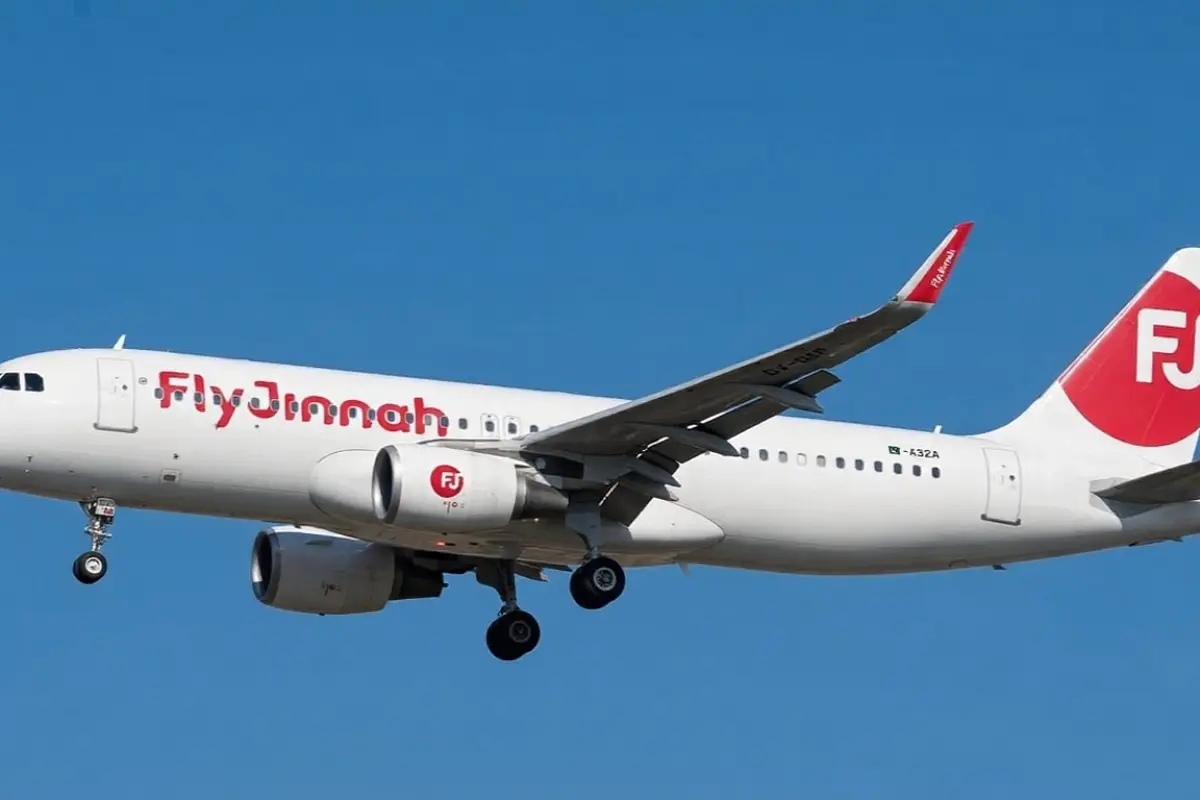
Fly Jinnah's Moscow Bet Isn't About Karachi at All, and the Route Has Been Stuck at "Pending" Since June
Fly Jinnah has applied for airport slots at Moscow's Domodedovo Airport for a proposed nonstop Islamabad-Moscow service, targeting a tentative July 27, 2026 launch, a date that has already come and gone without the route entering scheduled service, based on the airline's own published network, which still lists no Russia destination among its current routes. The Pakistani low-cost carrier, a joint venture between the Lakson Group and UAE-based Air Arabia, is seeking to become the first airline offering a genuine nonstop air bridge between Pakistan and Russia, a market currently forcing every traveler through Istanbul, Doha or Dubai, adding six to ten hours to what could otherwise be a direct nine-hour flight.
Why Islamabad, Not Karachi, Is the Logical Choice for This Specific Route
Fly Jinnah's fleet is entirely composed of Airbus A320-family aircraft, the same single-aisle workhorse used across its existing Gulf network to Jeddah, Riyadh, Dammam, Bahrain, Sharjah and Dubai. An approximately nine-hour flight time to Moscow sits at the outer edge, but within range, of what a well-configured A320neo can operate nonstop, particularly with a lighter passenger and cargo load calibrated specifically for the distance. Islamabad's selection as the origin point, rather than Karachi, Pakistan's larger and more commercially significant city, likely reflects Domodedovo's own scheduling and slot-coordination requirements on the Russian side, alongside Islamabad's role as Pakistan's political and diplomatic capital, which may carry more weight for a bilaterally-sensitive new international air corridor than pure passenger volume alone would suggest.
A Route That Has Been "About to Launch" for Three Months
The timeline here is worth being honest about, because it undercuts any framing of this as fresh, breaking news. Fly Jinnah's slot request became public in early June 2026, with industry trackers noting flights had appeared in Domodedovo's own scheduling system under a tentative July 27 start date. Coverage at the time was notably optimistic, with one analysis describing the timeline as "ambitious but not unrealistic" given that international regulatory approvals typically take four to eight weeks from formal slot confirmation. More than two months past that original target date, Fly Jinnah's own website, which actively promotes recent route launches to Riyadh, Multan, Faisalabad and Sialkot, contains no mention of Moscow at all, strongly suggesting the route remains stuck in the bilateral approval process between Pakistani and Russian aviation authorities.
That stall is not necessarily unusual for a genuinely new bilateral air corridor between two countries with no recent history of direct commercial aviation links, but it does mean the "nonstop Karachi-Moscow" framing circulating in some coverage appears to conflate an unconfirmed, unlaunched route concept with the actual, publicly documented Islamabad application that has been sitting in regulatory limbo since June.
Why This Route Matters Regardless of Which City Ultimately Gets It
The strategic logic behind Fly Jinnah's ambition is sound independent of the specific origin airport. No airline currently offers nonstop service between Pakistan and Russia, and demand exists across at least three distinct passenger categories: a genuine, if underserved, Pakistani diaspora and business community with ties to Russia, leisure travelers currently priced out of premium one-stop itineraries through Gulf or Turkish hubs, and most interestingly, a broader geopolitical dimension, given Russia's own aviation isolation since 2022 has left it increasingly dependent on new bilateral partnerships with countries willing to maintain or expand direct air links despite the diplomatic complexity that entails.
That last point connects directly to this feed's earlier coverage of Turkish Airlines' now-twice-cancelled Havana restart, which would have restored the only practical air bridge between Russia and Cuba via Istanbul, evidence of just how thin Russia's remaining international connectivity options have become, and how much strategic weight a new, willing partner country can carry even through a modestly sized low-cost carrier's single new route. Fly Jinnah positioning itself as a first-mover on Pakistan-Russia connectivity, at a moment when few other carriers are willing or able to make the same bet, could establish a genuinely durable competitive advantage on a corridor with essentially no existing direct competition to erode it.
Why Fly Jinnah's Business Model Makes This a Calculated Risk, Not a Reckless One
Fly Jinnah's parent partnership with Air Arabia is directly relevant here, Air Arabia has spent two decades building exactly this kind of first-mover, underserved-market playbook across the Middle East and North Africa, entering routes larger competitors considered too thin or too politically complex to bother with, and using low operating costs to make those routes commercially viable at lower load factors than a full-service carrier would require. Fly Jinnah's own network strategy already reflects that same DNA, its recent domestic expansion into Multan, Faisalabad and Sialkot, and its rapid build-out of GCC connectivity from three separate Pakistani hubs, shows a carrier willing to open thinner, less obvious routes ahead of confirming overwhelming demand, betting instead that being first to market on an underserved corridor generates enough loyal, repeat traffic to sustain the route long-term.
That approach makes an Islamabad-Moscow route a logical extension of Fly Jinnah's existing strategy rather than an outlier gamble but the two-plus months of regulatory silence since the original July target date is a reminder that this particular route depends on more than just Fly Jinnah's own commercial appetite. It depends on two governments' aviation authorities actually finalizing a bilateral arrangement neither side has had strong recent reason to prioritize, and until that clears, every account of Fly Jinnah "launching" Pakistan-Russia service, whichever city ends up on the ticket, remains a plan, not yet a flight.