Hong Kong Airlines Ends Urumqi Route Before Winter
Hong Kong Airlines has launched a limited Urumqi service through October, testing seasonal demand against Cathay Pacific and China Southern.
 Jishan Khan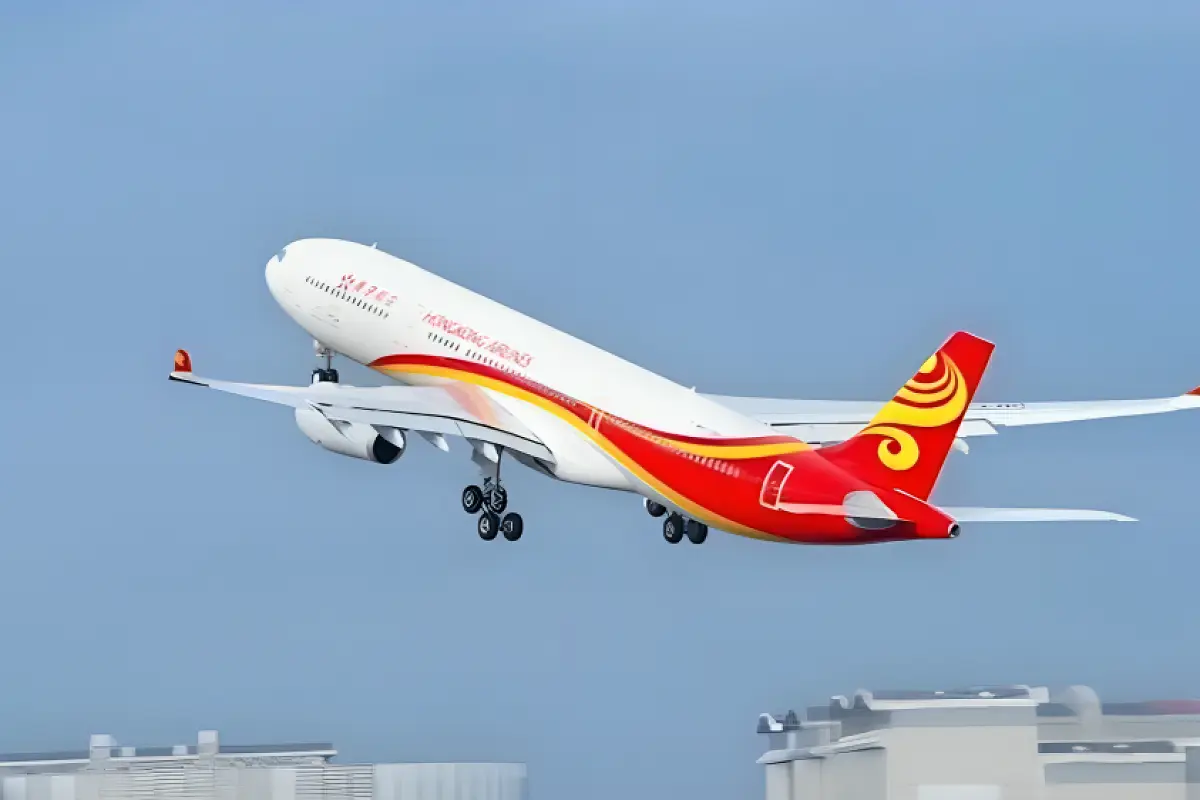
Hong Kong Airlines New Urumqi Route Is Scheduled to End Before Winter Even Starts, That Timing Tells You What This Flight Is Actually For
Hong Kong Airlines launched its first nonstop Hong Kong-Urumqi service on August 29, 2026, operating twice-weekly Airbus A330-300 flights that AeroRoutes schedule data confirms run only through October 21, a limited eight-week season timed explicitly to peak late-summer and early-autumn Xinjiang tourism demand, not a year-round commitment. That detail matters more than any of the Central Asia framing in the airline's own press materials, because it tells you plainly what Hong Kong Airlines is actually testing here before it commits to anything larger.
The Route Nobody Mentions Already Exists, Just Not From Hong Kong Airlines
Every glowing description of this launch as opening "a new gateway to Central Asia" omits a fairly important fact buried in the trade press, Cathay Pacific and China Southern already operate nonstop Hong Kong-Urumqi service, meaning Hong Kong Airlines is not creating new connectivity between these two cities at all, it is adding a third competitor to an existing city pair. What Hong Kong Airlines is actually doing is diversifying which Hong Kong-based carrier captures a specific slice of that demand, not pioneering a route that did not exist. That reframing matters because "we launched our first-ever service on an established route already flown by two competitors" is a meaningfully less dramatic story than "gateway to Central Asia," even though both descriptions are technically accurate depending on which fact you emphasize.
Why the Individual Visit Scheme Detail Is the Actual News Here
Hong Kong Airlines President Jeff Sun's own quote contains the specific policy hook that explains the launch's real commercial timing: the route "responds to the nation's policy of expanding the Individual Visit Scheme for mainland residents traveling to Hong Kong and Macao." That scheme is China's mechanism allowing residents of specific mainland cities to travel to Hong Kong and Macao on an individual tourist visa basis, rather than through more restrictive group-tour arrangements, and Beijing has been progressively expanding which mainland cities qualify for this scheme as part of broader efforts to boost Hong Kong's tourism recovery, a recovery this feed has documented facing genuine pressure amid continued questions about the city's post-2019, post-pandemic visitor volumes relative to regional competitors like Singapore and Bangkok.
If Urumqi or broader Xinjiang has recently been added to, or is being considered for, expanded Individual Visit Scheme eligibility, that is the actual regulatory tailwind driving this route's commercial logic, a policy-enabled inbound tourism flow from a newly eligible mainland population centre into Hong Kong, rather than primarily an outbound corridor for Hong Kong-based travelers heading toward Xinjiang's Silk Road attractions. Sun's own framing supports that reading directly: he describes the route's purpose as helping "attract more visitors from Xinjiang and Northwest China to Hong Kong" first, with onward connections to Southeast Asia, Australia and North America mentioned as a secondary benefit for those same inbound Xinjiang travelers, not the primary use case.
The Central Asia Framing Requires Squinting Considerably
Every piece of coverage this week has repeated some version of the claim that this route strengthens Hong Kong's links to Central Asia, but the actual mechanism connecting Hong Kong to Kazakhstan, Kyrgyzstan or Uzbekistan through this service is entirely indirect. Urumqi functions as a genuine transport and rail hub with overland connections extending toward Central Asian states along the historic Silk Road Economic Belt, that geographic fact is accurate and well-established. But Hong Kong Airlines' own stated connectivity offering from Urumqi is explicitly an "intra-Xinjiang interline network" to Kashgar, Yining and Altay, three cities entirely within China's own Xinjiang region, not international connections into Kazakhstan, Kyrgyzstan or any other Central Asian country.
In other words, the "gateway to Central Asia" framing describes Urumqi's broader geographic and historical significance as a Silk Road hub generally, not any specific onward flight product Hong Kong Airlines is actually selling on this route today. A traveler wanting to continue from Urumqi into Kazakhstan or Kyrgyzstan would need to book a separate service with a different carrier entirely, this feed's own recent coverage of the China Southern-Air Astana codeshare expansion and the proposed Urumqi Air-Kazakhstan joint regional carrier discussed in this same reporting period covers the airlines actually building that specific China-to-Central Asia connectivity. Hong Kong Airlines' Urumqi route is adjacent to that broader trend geographically, but it is not itself a Central Asia product in any operationally meaningful sense yet.
Why the Overnight Schedule Is Built for Bellyhold Cargo, Not Just Passengers
The flight timing itself reveals a commercial priority beyond passenger tourism. HX456 departs Hong Kong in the early evening and arrives in Urumqi shortly after midnight; the return HX457 departs Urumqi in the small hours of the morning. That overnight structure is a classic cargo-supportive schedule, it allows same-day onward passenger connections at Hong Kong in both directions while also positioning the aircraft's belly hold for overnight freight movement, and one route-tracking report specifically confirms the Hong Kong-Urumqi sector is being supported as a passenger-operated service used for bellyhold freight. Xinjiang has developed significant export industries, including textiles, agricultural products and, notably, solar panel and photovoltaic component manufacturing, that benefit from air freight connectivity into Hong Kong's international cargo network, a detail that fits Hong Kong's broader established identity as one of the world's busiest cargo hubs independent of any Central Asia narrative.
What an Eight-Week Season Actually Signals About Hong Kong Airlines' Confidence
The most honest read of this launch, stripped of the more expansive geopolitical framing circulating in trade press this week, is that Hong Kong Airlines is running a deliberately bounded, seasonal test of demand on an already-served route, timed to a specific tourism peak and a specific mainland visa policy tailwind, using widebody A330 equipment that gives it flexibility to reallocate the aircraft elsewhere in its network once the October 21 end date arrives. If the route performs well against Cathay Pacific and China Southern's existing competing services during this eight-week window, Hong Kong Airlines has the option to extend, expand frequency, or convert it to a year-round route in a future scheduling cycle, this feed has documented similar seasonal-to-permanent conversion patterns across multiple carriers this year, including Air Anka's charter ambitions and Condor's Münster winter base commitment.
If it does not perform, the airline has committed to nothing beyond a single autumn season on a route where two established competitors already carry the bulk of existing demand, a far more measured, far less dramatic commercial decision than "opening a new gateway to Central Asia" suggests, even if that geographic framing is not entirely wrong about where Urumqi itself sits on the map.