Singapore Airlines Expands Japan Network Without New Routes
Singapore Airlines and ANA won Australian approval for a joint venture, expanding Australia-Japan connectivity without adding direct routes.
 Jishan Khan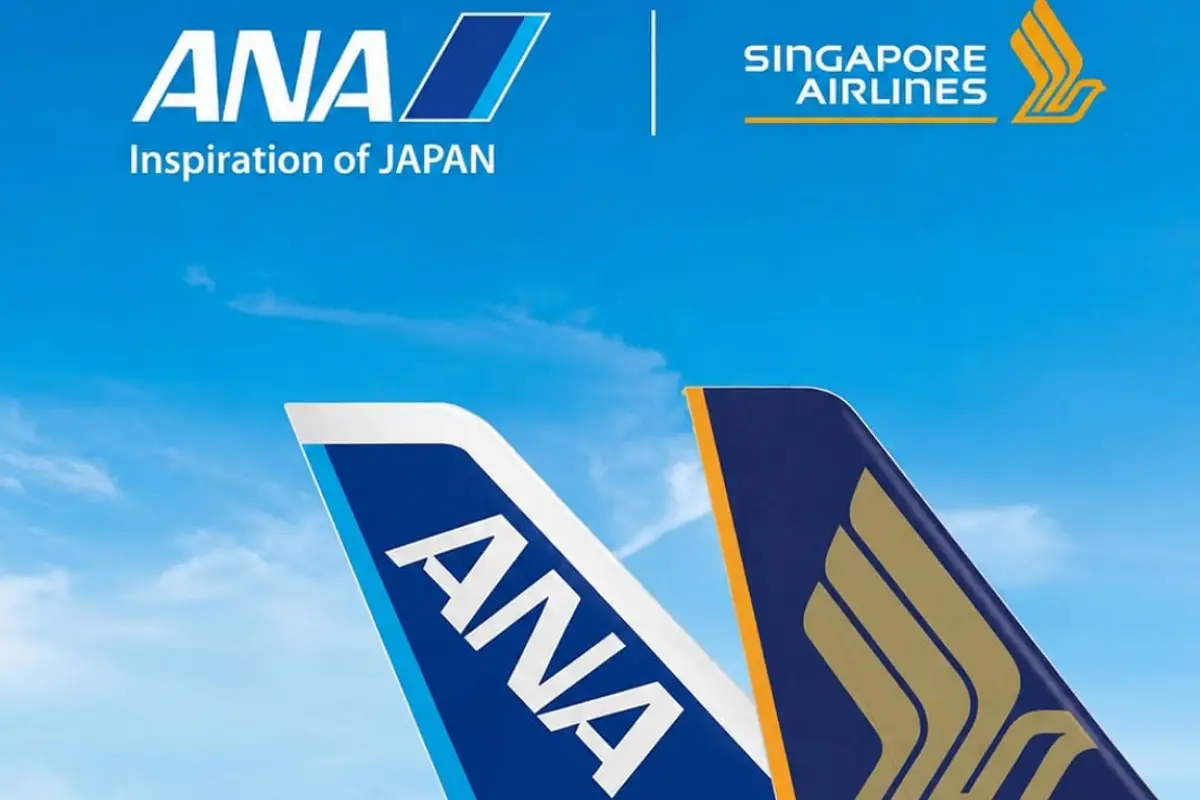
Singapore Airlines Cannot Fly Nonstop to Japan From Australia, Its New Deal With ANA Just Made That Irrelevant
Australia's competition regulator confirmed on August 19, 2026 that it will authorise the Singapore Airlines-ANA joint venture through September 10, 2031, allowing the two carriers to share revenue and coordinate fares, schedules, sales, marketing, airport operations and IT on selected Australia-Japan services. The approval takes effect September 10, 2026, unless challenged before the Australian Competition Tribunal. It caps off a six-year global rollout that began with a single Singapore-Tokyo route and has now reached five countries across Asia and the Pacific.
The most important sentence in the entire ACCC filing is the one describing what Singapore Airlines actually flies between Australia and Japan, nothing direct at all.
Why a Carrier With No Direct Route Needed This Deal Most
Singapore Airlines does not fly nonstop between Australia and Japan. It carries passengers over Singapore Changi Airport, linking Adelaide, Brisbane, Cairns, Darwin, Melbourne, Perth and Sydney with its Japan network. ANA, by contrast, operates nonstop service from Sydney to Tokyo Haneda daily, and a seasonal Perth-Narita route that the regulator notes is scheduled to move from three weekly flights to daily service from December 2026.
That structural asymmetry is the entire commercial logic of this joint venture. Singapore Airlines has one of the densest Australian networks of any foreign carrier, seven Australian cities feeding into Changi, but every one of those passengers travelling onward to Japan has to make a connection. ANA has the nonstop Japan access that Singapore Airlines lacks, but limited reach into secondary Australian markets beyond Sydney. Revenue sharing turns what were previously two separate, competing products into a single coordinated network, SIA's Australian feed plus ANA's Japan reach, sold and priced as though they were one airline rather than two.
What the ACCC Actually Decided Not to Worry About
On the Sydney-Tokyo corridor, the regulator noted that ANA's nonstop competitors remain Qantas and Japan Airlines. On Perth-Tokyo, the ACCC considers a nonstop flight materially more convenient than a one-stop itinerary, and therefore does not treat Singapore Airlines' connecting service through Changi as a close substitute for ANA's direct route. That finding is the crux of why the ACCC concluded competitive harm was unlikely, the regulator does not view SIA and ANA as genuine substitutes for each other on the routes where ANA flies direct, meaning the joint venture is judged as bringing previously non-competing capacity together, not eliminating a rivalry that actually existed on equal terms.
The ACCC's broader assessment was that rival carriers would continue to constrain the market, Qantas and Japan Airlines both remain fully independent competitors on the core Sydney-Tokyo route, meaning passengers still have real alternatives even after SIA and ANA coordinate pricing and scheduling with each other.
A Six-Year Rollout That Started With One Route
SIA and ANA first signed their commercial joint venture agreement in January 2020, focused initially and narrowly on Singapore-Japan services. Revenue-sharing flights between Singapore and Japan began in September 2025, with the two carriers already expanding customer access dramatically, ANA passengers gained access to 25 SIA destinations, up from 12, while SIA passengers gained access to 34 ANA destinations including 30 domestic Japanese cities, up from just nine previously. The Australian authorisation is not a new partnership. It is the deliberate, market-by-market expansion of a five-year-old alliance into the next jurisdiction on a pre-planned list that explicitly named Australia, India, Indonesia and Malaysia as target markets from the earliest public announcements.
The ACCC filing confirms the same "Approved Markets" framework, Japan alongside Singapore, Australia, India, Indonesia and Malaysia, with a further tier of "Priority Markets" across other parts of Asia and Africa where the airlines are pursuing lighter-touch commercial cooperation short of full revenue sharing. Australia is simply the latest domino, arriving after Singapore's own regulator, CCCS, granted conditional approval and after years of the airlines building the operational infrastructure, aligned baggage policies, shared IT systems, combined frequent flyer benefits, needed to make coordination function seamlessly once each country's regulator signs off.
Why Qantas and Japan Airlines Should Be Watching Regional Cities, Not Sydney
The competitive pressure this joint venture creates is not really aimed at Sydney-Tokyo, where Qantas and JAL both operate strong nonstop services and the ACCC has already concluded meaningful competition survives. It is aimed at everywhere else. A leisure traveller booking Adelaide to Fukuoka, or Cairns to Sapporo, has historically faced a genuinely inconvenient itinerary, connecting through Singapore on SIA, then transferring again in Tokyo or Osaka onto a domestic ANA sector, often with separate bookings, separate baggage handling and no coordinated pricing.
The joint venture converts that fragmented experience into a single ticket, coordinated connection times, and, critically, a combined fare that can be priced to compete directly with the one-stop options Qantas and JAL currently offer through their own partner networks. ANA's own CEO made the strategic logic explicit: ANA has limited reach into Global South markets, while Singapore serves as a key transit hub to regions like ASEAN and India, meaning the alliance is not just about Australia-Japan traffic in isolation, but about using that corridor as one link in a much longer chain connecting Japanese regional cities all the way through to South and Southeast Asian markets that neither airline could serve as competitively alone.
What Five Years of Authorisation Actually Buys the Alliance
The ACCC's decision to run authorisation through September 2031, a full five years from the September 2026 implementation date, gives Singapore Airlines and ANA the kind of long-term regulatory certainty that airline joint ventures rarely enjoy this early in their lifecycle. That runway matters because revenue-sharing partnerships require both airlines to make coordinated capacity and scheduling investments, precisely the kind of multi-year fleet and network commitments that are difficult to justify against a shorter authorisation window that might not survive to see the investment pay off.
Qantas has built its Asian connectivity strategy around its own partnerships, including with Japan Airlines directly. What the SIA-ANA joint venture does, market by market, is quietly assemble an alternative network spanning Australia, Japan, Singapore, India, Indonesia and Malaysia that increasingly does not need Qantas at all for a passenger trying to get from a secondary Australian city to a secondary Japanese one. Sydney to Tokyo remains genuinely contested. Everything else on the map is where this joint venture is actually built to win.