India's Airlines Miss AirlineRatings 2026 List
India sees all its airlines excluded from AirlineRatings 2026 World's Safest Airlines rankings despite being the third-largest aviation market.
 Jishan Khan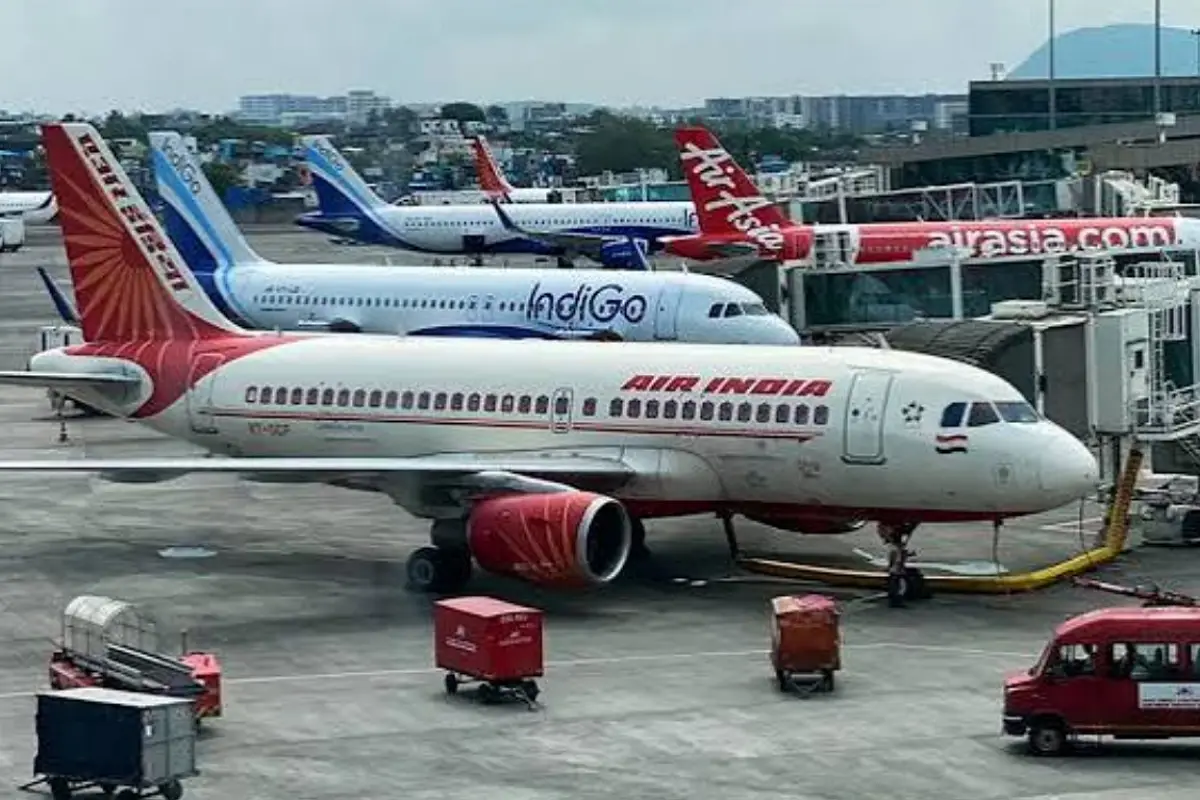
India Carries More Passengers Than Almost Any Country on Earth, and Still Has No Airline Among the World's Safest
AirlineRatings 2026 safety rankings assessed 320 airlines worldwide, naming the top 25 safest full-service and top 25 safest low-cost carriers. No Indian airline appeared on either list. The rankings were topped by Etihad Airways, the first Gulf carrier to take the number one spot, with Cathay Pacific, Qantas, Qatar Airways and Emirates completing the top five.
Vietnam Airlines made the full-service top 25. Spring Airlines became the first Chinese carrier to crack the low-cost list. India, the world's third-largest aviation market by passenger volume, was absent from both.
What the Rankings Actually Measure
AirlineRatings evaluates carriers across incident and accident rates adjusted for total flights, fleet age, pilot training standards, participation in international safety audits including IATA's IOSA programme, turbulence prevention measures, and transparency in safety reporting. The 2026 edition introduced greater weight on turbulence prevention specifically, considering participation in the IATA Turbulence Aware programme and independent onboard safety audits, following a turbulence-related incident that had excluded Singapore Airlines from the 2025 rankings.
The CEO of AirlineRatings, Sharon Petersen, was clear about what the methodology rewards: "Transparency from airlines is also critical to this process." That last criterion, transparency. is worth noting. Ranking well requires not just performing safely, but actively opening operations to external audit and scrutiny.
The Gap Between Growth and Standards
India's aviation market handled over 153 million domestic passengers in 2025, the third-largest domestic aviation market globally after the United States and China. IndiGo alone operates over 2,000 daily flights. The growth numbers are extraordinary. The safety infrastructure required to sustain that growth at globally recognised standards is a different conversation entirely.
India's DGCA has historically struggled with the pace of oversight relative to industry expansion. Between 2022 and 2024, the FAA placed India's aviation regulator at Category 2 status, a rating that limits Indian carriers from adding new services to the United States, before India regained Category 1 in 2024 after implementing required regulatory reforms. The FAA downgrade did not ground any flights. But it was a formal international assessment that India's regulatory framework was not meeting global benchmarks at a time when its airlines were expanding faster than almost any other country.
Fleet age compounds the problem. The average age of Indian carriers' aircraft fleets sits significantly above the global average for top-ranked safety airlines, many of which operate fleets under five years old. IndiGo has been accelerating neo-family deliveries, Air India is mid-fleet overhaul under Tata ownership, and Akasa's fleet is entirely 737 MAX 8, young and modern. But fleet renewal at the scale India requires takes years, and in the interim older aircraft require more intensive maintenance oversight to meet the same standards.
The Transparency Gap That Matters Most
The AirlineRatings methodology penalises airlines that do not participate in external safety audits or that resist transparency in incident reporting. India's carriers have not historically been known for proactive engagement with these programmes. IOSA certification, the international safety audit that underpins almost every top-25 ranking, requires airlines to voluntarily submit to rigorous external scrutiny of their operational procedures. IndiGo and Air India both hold IOSA certification, but certification alone does not guarantee ranking. The depth of engagement with the programme, the transparency of reporting, and the track record of addressing findings all factor into where an airline sits relative to global peers.
Starlux Airlines, a Taiwanese carrier that only launched in 2020, debuted in the 2026 top 25 after AirlineRatings noted that other leading airlines spoke highly of its approach to safety and transparency. An airline six years old outranking carriers that have operated for decades is not an anomaly. It is a signal about what the rankings actually reward.
India's airlines are not unsafe. The DGCA's own data shows a fatal accident rate that has declined significantly over the past decade, and Indian carriers have operated for years without a major fatal hull loss. But being statistically improving and being globally ranked are different standards, and the fastest-growing aviation market in the world has not yet closed that gap.