SAS Extends 11 Ranking Punctuality Streak With 87% On-Time Rate
SAS recorded an 87% on-time rate in August 2026, extending its Cirium streak to 11 rankings and raising questions about its turnaround.
 Jishan Khan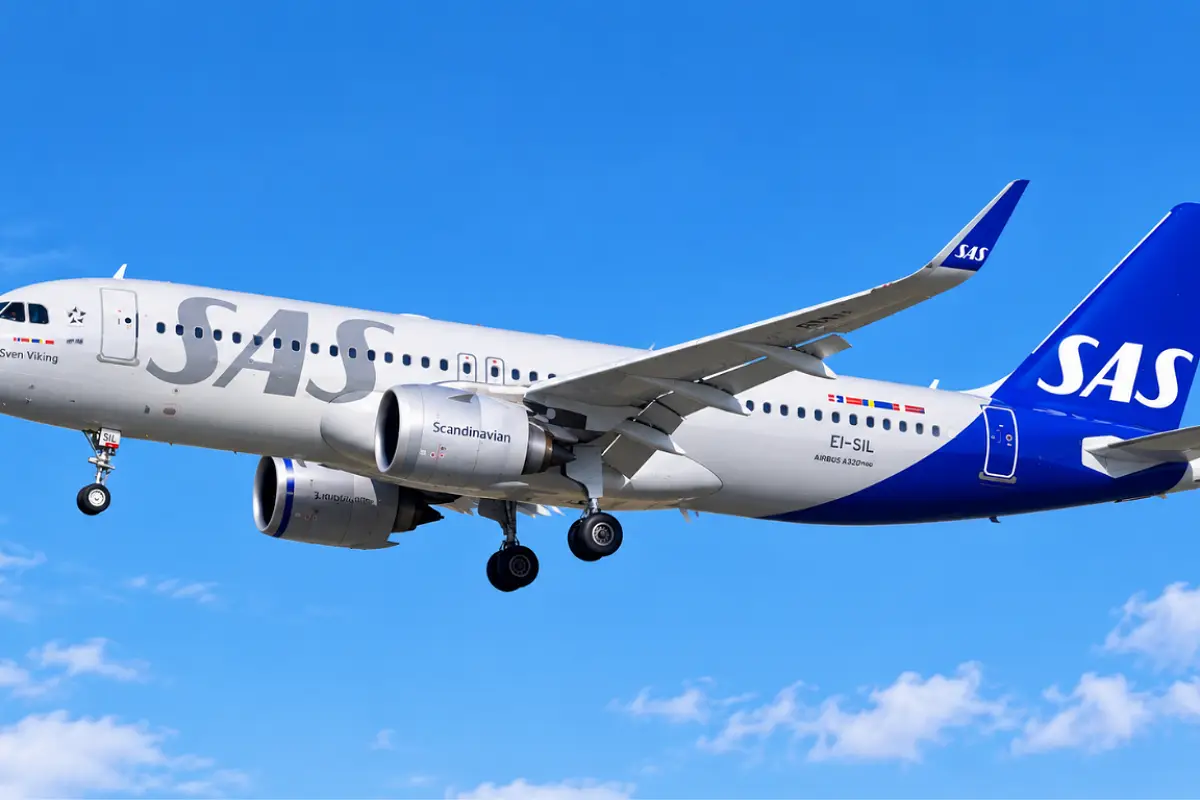
87% Sounds Impressive Until You Learn Cirium's Bar Is Just "Within 15 Minutes", SAS's Real Achievement Is Doing It Eleven Times
SAS recorded an 87% on-time arrival rate in Cirium's August 2026 On-Time Performance report, retaining its position as Europe's most punctual airline, a result Cirium's own global report summary independently confirms, noting "WestJet, SAS and FlySafair retained their respective regional leadership positions" for North America, Europe and Africa respectively. It is SAS's 11th number-one SAS Cirium ranking, spanning European and global categories, across the past two years. The more interesting number sits inside that streak: SAS topped both the global and European rankings simultaneously in April 2026, at 89.53%, a combination Cirium's own Chief Industry Officer Mike Malik called "the rarest combination in monthly OTP data." This consistency is what makes SAS on-time performance more interesting than a single monthly ranking.
Understanding why an airline keeps hitting that combination requires looking past the headline percentage and into what SAS has actually changed operationally, because the answer is notably unglamorous.
Why SAS On-Time Performance Is Doing More Work Than "Turnaround Processes" Sounds Like It Should
Every SAS statement accompanying this now-familiar monthly announcement repeats the same three-part explanation almost verbatim: tighter turnaround processes, more structured daily planning, and closer coordination across departments. That repetition across multiple press releases, spanning March, April and August 2026, is itself informative, SAS is not describing a series of separate initiatives rolled out month by month, but a single, sustained operational discipline being applied consistently across an entire summer of European aviation's most demanding traffic conditions.
Aircraft turnaround, the window between an inbound flight's arrival at the gate and that same aircraft's next scheduled departure, is one of the few genuinely controllable variables in an airline's punctuality equation. Weather, air traffic control congestion and airport infrastructure constraints sit largely outside any single carrier's influence. How efficiently ground crews, cleaning teams, catering, baggage handlers and the flight crew itself coordinate during a 35-to-45-minute turnaround window is not. A delay accumulated during one turnaround compounds across an aircraft's entire rotation for the rest of the day, meaning small, consistent improvements in that single operational moment produce outsized effects on an airline's system-wide on-time performance by the time evening arrives.
Why August Specifically Is the Month That Actually Tests SAS Punctuality
SAS's own materials are explicit that August represents one of European aviation's most operationally hostile months, high passenger volumes, congested hubs and crowded airspace across the continent simultaneously. That framing is not marketing spin; this feed has documented exactly this seasonal pressure repeatedly throughout 2026, from Edinburgh Airport's record-breaking July passenger day prompting new baggage-service partnerships, to the broader European airport capacity strain driving Turkish Airlines and AJet's own record-breaking August passenger volumes. Every major European carrier is fighting the same August conditions, the difference is that most of them are not simultaneously topping continental punctuality rankings while doing it.
That context is precisely why SAS Chief Commercial Officer Paul Verhagen's framing of punctuality as "one of the clearest ways an airline can deliver value to customers" carries more weight than it might in a quieter month. Reliability that holds during the easiest operating conditions of the year proves comparatively little. Reliability that holds during August, when every structural stress in European aviation is running at its peak simultaneously, is a genuinely different claim about the underlying operational discipline behind it.
Why the Three-Hub Structure Is the Advantage SAS's Own Press Releases Never Mention
One structural detail largely absent from SAS's own official framing, but flagged independently by outside analysts covering the August result, deserves more attention than it has received: SAS operates a distributed hub structure across Copenhagen, Stockholm Arlanda and Oslo Gardermoen, rather than concentrating its network through a single mega-hub the way many European flag carriers do. That structure gives SAS a genuine operational flexibility competitors with a single dominant hub cannot easily replicate, when one airport experiences a localised disruption, whether from weather, air traffic control staffing (the same kind of controller shortage this feed documented crippling Sydney Airport earlier this year) or ground handling constraints, SAS can in some cases redistribute aircraft rotations and crew scheduling across its other two hubs to contain the disruption's spread, rather than watching a single point of failure cascade through its entire network.
That built-in redundancy does not show up in SAS's own turnaround-and-planning narrative, but it is plausibly a meaningful structural contributor to why the airline's SAS punctuality performance has proven durable across multiple consecutive months rather than appearing as a single lucky quarter.
Why This SAS Cirium Ranking Streak Is Explicitly Framed as a Turnaround Story, Not Just an Operations Story
SAS's own May 2025 announcement, when it first claimed the world's most punctual airline title, described the achievement as "a defining milestone in the company's ongoing transformation", language that ties punctuality directly to SAS's broader corporate recovery narrative following its 2022-2023 Chapter 11 restructuring and subsequent ownership changes. Framing an on-time performance ranking as evidence of a company-wide turnaround, rather than simply a scheduling achievement, signals that SAS's leadership views operational reliability as a proxy metric for the health of the entire restructured organisation, proof that the discipline instilled during a painful financial reorganisation has translated into measurably better day-to-day execution, not merely a cleaner balance sheet.
That framing also explains the timing sensitivity around CEO Anko van der Werff's announced departure at the beginning of 2027, referenced in SAS's own July 2026 punctuality release. A leadership transition landing squarely in the middle of what the company is positioning as its strongest operational stretch in years creates an obvious continuity question: whether the turnaround processes, planning discipline and cross-functional coordination driving this eleven-ranking streak are now embedded deeply enough in SAS's operational culture to survive a change at the top, or whether they remain closely tied to the specific leadership that implemented them.
Whether SAS Punctuality Actually Moves Passengers' Booking Decisions
The genuinely open strategic question is whether this kind of operational consistency converts into commercial advantage at the rate SAS's messaging implies. Verhagen's own comments lean specifically on business travellers and connecting passengers as the audience most likely to value punctuality directly, a reasonable target, since leisure travellers booking primarily on price are considerably less likely to shift airline choice based on a monthly Cirium ranking they may never see, while corporate travel managers and frequent business flyers plausibly do track exactly this kind of data when making airline preference decisions.
The Nordic tourism industry angle surfaced in coverage of this announcement adds a further, less obvious commercial dimension: tour operators building multi-destination Nordic itineraries depend on connecting flights and transfers working reliably in a way individual leisure travellers booking single point-to-point trips do not. For that specific booking channel, SAS's punctuality streak functions less as a marketing statistic and more as a genuine operational credential, evidence to a tour operator building a complex, multi-leg Scandinavian package that the connecting flights underpinning that itinerary are statistically likely to actually connect as planned.
What Eleven SAS Cirium Rankings in Two Years Actually Prove, and What They Do Not
Independent analysis accompanying the August result made a fair, tempering point worth taking seriously: SAS is competing in a genuinely crowded field where European punctuality rankings shift month to month, and the airline had already been placing among the top three most punctual major European carriers as far back as 2024's annual Cirium review, alongside Iberia group carriers and various regional operators. That context reframes the achievement slightly, this is not SAS suddenly leaping from mediocrity to dominance in a single year, but an airline that was already operationally competitive steadily consolidating and extending that position into outright, repeated leadership across an increasingly demanding stretch of months.
Whether SAS can sustain this streak once van der Werff departs, once the 80th-anniversary marketing campaign concludes, and once whatever specific operational changes drove this improvement face their first genuinely difficult winter European travel season, the point at which weather, rather than August's crowded skies, becomes the primary disruptive force, is the real test still ahead. Eleven rankings across two years is a genuinely strong track record. It is not yet proof that SAS has permanently solved a problem every European airline continues to struggle with in its own way.