Syrianair Receives First Two A320s in Fleet Upgrade
Syrianair has received its first two A320s under a fleet programme linked to the redevelopment of Damascus International Airport.
 Jishan Khan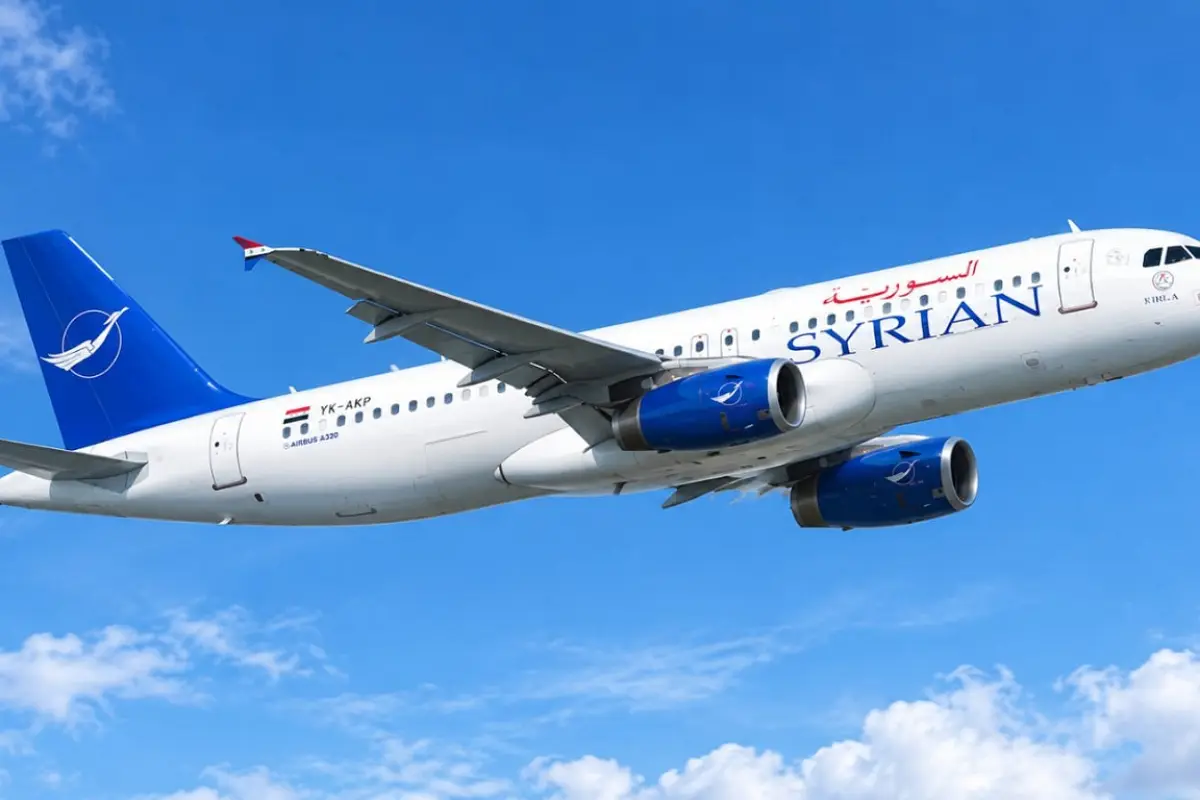
A Runway Contractor, Not an Airline Deal, Is Why Syrianair Just Got Its First New Jets in Years
Syrianair took delivery of its first two Airbus A320s, registered YK-AKI and YK-AKJ, at Damascus on August 29-30, 2026, the opening instalment of eight Airbus A320-family aircraft the state carrier plans to add under a fleet modernisation programme. Both are pre-owned, 156-seat aircraft (12 business, 144 economy) sourced on the international market after technical inspection, a 2009-built A320-214 and a 2012-built A320-232, the latter having spent time flying for SilkAir before passing through Lithuanian lessor Heston Airlines and a leasing arrangement with Azerbaijan Airlines before finally being ferried from storage in Baku to Damascus. Six more A320-family jets are due in stages.
The detail almost every outlet buried is the one that actually explains why this is happening now: Syria's own General Authority of Civil Aviation and Air Transport confirmed the fleet programme "forms part of commitments linked to the Damascus International Airport development project with Urbacon Holding, which includes support for and modernisation of the Syrian national carrier's fleet." This is not simply an airline buying planes. It is an airport infrastructure contract with an aircraft-fleet clause attached, and the arrival of these Syrianair A320s marks the first physical step in that process.
Why an Airport Developer Is Funding an Airline's Aircraft
Urbacon Holding is the Qatari-linked construction and infrastructure group contracted to redevelop Damascus International Airport, part of the broader post-Assad reconstruction push this feed has documented across multiple related stories, including French President Macron's July delegation to Damascus that produced President al-Sharaa's own on-air announcement of a separate eight-Airbus order, and the roughly $250 million A320 fleet renewal framework first reported back in August 2025 under a financing structure involving Qatar's UCC Holding, US firm Assets Investments USA, and Turkish company TAV Tepe Akfen. The arrangement makes the Damascus airport redevelopment more than a runway and terminal project, with fleet modernisation tied directly into the wider infrastructure package.
Bundling airline fleet support into an airport development contract is not standard commercial airline procurement, it is the kind of structure typically seen when a country's aviation sector is being rebuilt as a single integrated package by a small number of foreign investors and construction groups with broader strategic and commercial interests in the country's reconstruction, rather than an airline independently negotiating its own aircraft financing with lessors or manufacturers on standard commercial terms. Syrianair, in other words, is not simply buying planes. It is receiving planes as a downstream benefit of a much larger foreign-funded infrastructure deal, a distinction that matters enormously for understanding both how fast this Syrianair fleet renewal can move, and how contingent it remains on the broader reconstruction financing holding together.
Why Damascus-Moscow Is the Route That Actually Tests Whether This Works
Syrianair's weekly Damascus-Moscow/Sheremetyevo service resumed on August 16, 2026, after being suspended since December 2024, meaning the route restarted roughly two weeks before the first new A320s even arrived. That sequencing matters: Syrianair reopened a genuinely difficult, high-visibility international route using its existing, ageing fleet before the modernisation programme had delivered a single new aircraft, then began receiving the new jets specifically to sustain and expand exactly that kind of route once it had already proven the demand and diplomatic viability existed.
Russia's relationship with Syria's post-Assad government carries obvious complexity, Moscow was Assad's most significant military backer throughout the civil war, and restoring a direct Damascus-Moscow air link under the new administration is as much a diplomatic signal as a commercial route decision. That the connection was reinstated at all, before the fleet renewal even delivered its first aircraft, suggests Syria's new government sees maintaining functional ties with Russia as a priority independent of, and running ahead of, the broader Western-aligned reconstruction narrative built around the Macron visit, the EU's suspension of restrictive measures, and the Airbus order announced on French television.
Fourteen Aircraft Officially Registered, a Fraction Actually Flying
Wikipedia's own current entry for Syrian Air lists a fleet size of 14 aircraft across 20 destinations, but that figure almost certainly overstates genuinely airworthy, revenue-generating capacity after fourteen years of civil war, sanctions and a collapsed maintenance ecosystem. This feed's earlier coverage of Syrianair Director General Anwar Akkad's own public comments captured the airline's stated ambition to stand "completely on its own feet," a phrase that only makes sense against the backdrop of a fleet that has spent over a decade unable to access Western spare parts, certified maintenance providers, or the kind of routine fleet renewal every other national carrier in the region has undertaken multiple times over the same period.
Against that baseline, eight newly acquired A320s, even second-hand, mid-life aircraft rather than new-build jets, represents a genuinely transformational injection of reliable capacity. The two aircraft that arrived this week were specifically selected, per Syria's civil aviation authority, "on the basis of their technical condition, maintenance records, operational history and readiness for service," language suggesting a deliberate emphasis on immediate operational reliability over cost minimisation, likely reflecting how urgently Syrianair needs aircraft it can actually dispatch reliably rather than jets requiring extensive rework before entering service. That makes these Syrianair new aircraft important not because they are factory-fresh, but because they give the carrier something it has lacked for years: usable, supportable capacity.
Why This Sits Inside a Much Larger, Still-Unresolved Syrian Aviation Story
This fleet delivery is one confirmed, physical milestone inside a Syrian aviation reconstruction narrative this feed has tracked as considerably larger and messier than any single airline order. The Macron-visit-era announcement of a separate eight-Airbus commitment, made by President al-Sharaa directly on French television without a signed contract in hand, remains unconfirmed as a completed transaction. The earlier $250 million, up-to-ten-aircraft framework reported in August 2025, involving the Qatari-Turkish-American financing consortium, appears to be the actual mechanism now delivering aircraft, twelve months after it was first disclosed, a genuinely long lead time between financing announcement and physical delivery that underscores how complicated executing even a comparatively modest fleet renewal remains in Syria's current environment. And Damascus International Airport itself is simultaneously being rebuilt as part of a roughly $4 billion infrastructure package, with the fleet support programme representing just one line item inside that broader Damascus airport redevelopment.
Twelve international carriers are now flying scheduled service to Damascus, including Qatar Airways, Turkish Airlines, Emirates, Etihad and flynas, this feed's earlier coverage noted Damascus International Airport surpassed 148,000 monthly passengers in May 2026, evidence that international confidence in flying into Syria has genuinely returned faster than Syrianair's own fleet has been able to modernise to match it. That gap, foreign carriers already back in force, Syria's own flag carrier still assembling a reliable fleet two aircraft at a time from the secondary market, is the real state of Syrian aviation's recovery right now: international connectivity rebuilding from the outside in, while the national airline itself works to catch up using financing structures borrowed from a runway construction contract rather than a conventional aircraft purchase agreement.