Complete Guide to Airport Ground Worker Compensation After an Injury
A Montreal ramp worker died after an A350 pushback accident. Learn how airport ground worker compensation supports injured workers and their families in Quebec.
 Jishan Khan
A Montreal Ramp Worker Died Doing the Job Millions of Passengers Never Think About and the Aircraft That Killed Him Wasn't Even Supposed to Be There That Night
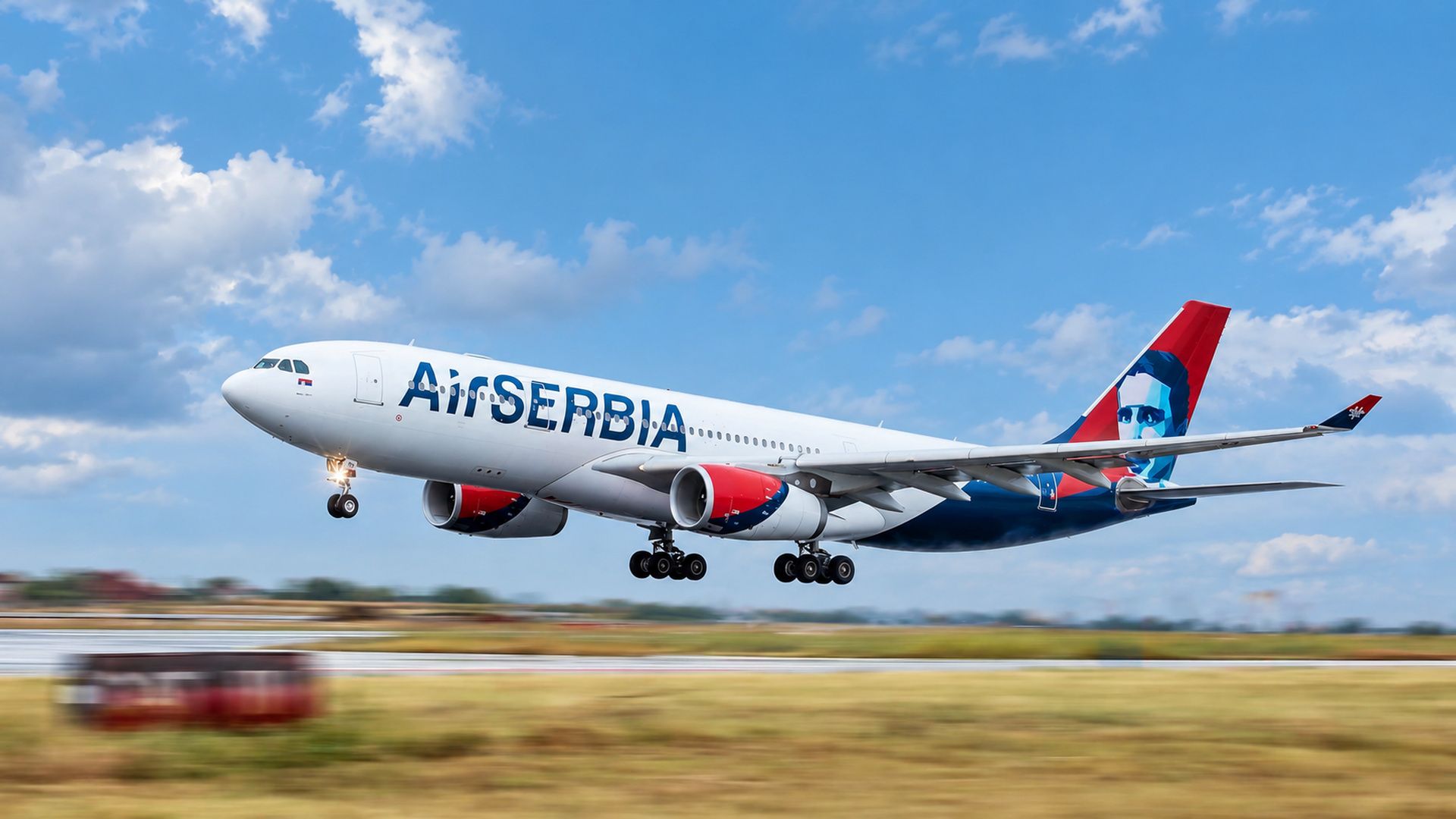
A ground handling worker died after being struck by a French Bee Airbus A350-900 during pushback at Montréal-Trudeau International Airport on the evening of August 24, 2026. The employee, 39-year-old Oscar Robayo, worked for Samsic, the French ground-handling contractor that provides ramp agents and signallers for airlines operating at YUL without their own ground crews. He was working as a signaller, the role responsible for visually guiding an aircraft on and off its parking stand, when he tripped and fell into the aircraft's path as it moved. He was taken to hospital in critical condition and died from his injuries.
Millions of passengers see ramp workers every time they board an aircraft, waving marshalling wands, hauling bags, guiding tugs, but almost nobody thinks about what happens when one of those workers is seriously injured or killed doing that job. It is one of the most physically dangerous roles in commercial aviation, performed largely by contracted staff working around machines that weigh more than a hundred tonnes and cannot stop or swerve.
So who actually pays when it goes wrong? Who replaces the worker's income? What happens if they can never return to the job? And what happens to their family if the worker dies? That is the system Robayo's death, however tragic, puts into motion, and it is worth understanding on its own terms, separate from the specifics of any single accident. That is also where airport ground worker compensation becomes important.
How Rare This Actually Is, Industry-Wide
Before getting into the compensation mechanics, it is worth establishing how statistically unusual a fatal ground-handling accident actually is at the global level. IATA's most recent ground-handling safety data recorded no fatal ground-handling accidents and just one serious injury in 2025, across nearly 40 million flights worldwide. That is the industry's own benchmark for what "normal" looks like, a system that, by design and by outcome, is supposed to make fatalities on the ramp genuinely exceptional events rather than a routine cost of doing business.
Montreal's incident is a reminder that "rare" is not the same as "never," and that behind every one of those rare cases sits a real compensation and support system that has to activate quickly, whether or not anyone outside the industry is watching. The Montreal ramp worker death also shows why these systems matter.
The First 14 Days Are Different Under Quebec Workers Compensation
In Quebec, where the Montreal incident occurred, the system governing what happens next is administered by the CNESST, the Commission des normes, de l'équité, de la santé et de la sécurité du travail, the province's combined workplace standards and workers' compensation authority. This is the foundation of Quebec workers compensation for workplace injuries and fatalities.
The mechanics are more specific than most people realize. When a worker cannot work because of an employment injury, the employer generally pays 90% of the worker's net income for the days they would normally have worked during the first 14 days following the accident, excluding the day of the accident itself. From the 15th day onward, CNESST generally takes over and pays the income replacement indemnity directly, rather than the employer continuing to carry that cost.
For 2026, CNESST increased the maximum annual insurable earnings to C$103,000, up from C$98,000 in 2025, a figure that caps how much of a higher earner's income the system will replace, regardless of their actual salary above that threshold.
| 2026 Quebec System | Amount |
|---|---|
| Income replacement rate | 90% of net income |
| Maximum annual insurable earnings | C$103,000 |
| Maximum weekly insurable earnings | C$1,975.45 |
| First 14 days | Generally paid by employer |
| From day 15 onward | Generally paid by CNESST |
That structure matters because it splits financial responsibility between the employer, in this case, ground-handling contractor Samsic, not the airline whose aircraft was involved and the provincial insurance system, rather than leaving either party to absorb the full cost alone.
What If the Worker Cannot Return to the Ramp?
Ramp work carries a specific injury profile that differs from most other airport jobs, precisely because it involves close, repeated proximity to moving aircraft, heavy ground equipment, and awkward physical loads. A serious ramp accident can mean broken bones, crush injuries, amputation, spinal injuries, traumatic brain injuries, or permanent mobility problems, categories of harm that do not necessarily resolve on a fixed timeline the way a routine workplace injury might.
That raises a harder question than simple wage replacement during recovery: what happens when the worker survives, but cannot do the same job anymore?
CNESST can continue income-replacement payments while the worker remains unable to perform their job, subject to the system's own rules and case-by-case determinations. But the more complex piece is what comes after that return-to-work programs and the concept of "suitable employment." This matters specifically because a ramp worker's job is extremely physical in a way that is not easily substituted. Someone recovering from a serious injury may be medically cleared to perform some kind of work, while genuinely no longer being able to safely execute pushback duties, lift baggage repeatedly, or stand in an aircraft's blind spot marshalling a 145-tonne jet. The system has to assess not just "can this person work," but "can this person safely do this specific, physically demanding job", and if not, whether a comparable alternative role exists, either with the same employer or elsewhere.
What Happens When the Worker Dies?
This is the part of the system most people never think about until they have no choice and it is the financial and emotional centre of what Robayo's death actually triggers. The case involving Oscar Robayo puts a real human example behind the airport worker death benefits that the system provides.
CNESST death benefits can be paid to the spouse and dependants of a worker whose death results from a work accident or occupational disease. The figures for 2026 are specific and substantial. These CNESST death benefits are designed to provide financial support after a workplace fatality.
Surviving spouse:
- Minimum lump-sum benefit: C$136,021
- Maximum lump-sum benefit: C$309,000
The actual amount within that range depends on two variables, the deceased worker's gross annual employment income, and the surviving spouse's age category at the time of the claim.
Minor children:
- C$681 per month, paid until the child reaches the age of majority
A child who continues full-time studies after reaching the age of majority may also qualify for an additional C$24,489 lump-sum payment, subject to the applicable conditions.
Funeral expenses:
- Reimbursed up to C$6,612 in 2026
Laid out this plainly, the numbers give some concrete shape to what "the family is compensated" actually means in practice, a lump sum calibrated to the worker's income and the spouse's age, ongoing monthly support for dependent children until adulthood, and a capped reimbursement toward funeral costs. None of it undoes the loss. All of it is legally defined, calculated and, unlike a private settlement, largely non-negotiable in structure. In a case like this, that is the core of ramp worker compensation after a fatal workplace accident.
Why Airport Ground Worker Compensation Is Not Simply a Government Handout
It would be easy to read all of this and assume a cheque simply arrives once an accident is reported. It does not work that way, and understanding why matters for anyone trying to make sense of how these cases are actually resolved.
CNESST is Quebec's statutory workers' compensation system, a mandatory, employer-funded insurance scheme, not a discretionary welfare payment. Every claim, including a death benefit, has to be formally assessed and accepted as a genuine employment injury or work-related death before any payment is made. For death benefits specifically, CNESST states that the beneficiary's claim is analyzed for admissibility, meaning the relationship between the death and the workplace has to be established, the claimant's eligibility (spouse, dependent child) has to be confirmed, and the case has to fit within the framework the legislation defines.
That distinction is not a bureaucratic technicality, it is the difference between an automatic entitlement and a claims process that can, in principle, be contested, delayed, or in rare cases denied if the circumstances fall outside what the system covers. A worker or their family does not simply receive a payment because an accident happened at an airport. The incident has to be confirmed as arising out of and in the course of employment, and processed through the same administrative machinery that handles every other workplace injury claim in the province, whether it occurred on an aircraft ramp or a construction site.
Why the Airline Itself Is Often Legally Once-Removed From Airport Worker Death Benefits
One detail that surprises people encountering this system for the first time: in cases like Montreal's, the worker is typically not a direct employee of the airline whose aircraft was involved at all. Robayo worked for Samsic, a third-party ground-handling contractor that supplies ramp agents and signallers to airlines, including French Bee, that choose not to run their own ground operations. This outsourced-labour model is standard practice across most major airports worldwide, used by full-service and low-cost carriers alike.
That structure means the compensation obligations described above flow primarily through the employment relationship with the ground-handling contractor and the relevant provincial or national workers' compensation system, rather than directly through the airline. It does not necessarily eliminate the airline's broader civil liability if an investigation finds fault in how the aircraft was operated or how ground procedures were followed that is a separate legal question courts and regulators can examine independently but for the immediate, no-fault compensation system that activates automatically after a workplace injury or death, the contractor and the provincial insurance scheme, not the airline, are typically the first and primary source of support.
Which Countries Offer the Strongest Compensation for Injured Airport Workers?
There is no single country that simply “pays the most.” The better question is what a worker receives when the injury becomes permanent, how long income replacement continues, whether medical treatment is fully covered and what the family receives after a fatality.
For example, Australia is particularly interesting because its workers compensation systems can provide weekly income replacement, medical and rehabilitation costs, permanent-impairment lump sums and death benefits.
Australia also gives you some very strong numbers. In New South Wales, for example, workers can receive weekly payments for extended periods depending on their capacity for work and degree of permanent impairment, while permanent impairment can trigger an additional lump-sum payment.
You could structure the section like this:
| Country | What to compare |
|---|---|
| 🇨🇦 Canada | Wage replacement, medical care, permanent disability, survivor benefits |
| 🇦🇺 Australia | Weekly payments + medical costs + permanent impairment lump sum |
| 🇺🇸 United States | State-by-state workers' compensation, medical care and wage replacement |
| 🇩🇪 Germany | Statutory accident insurance, rehabilitation and long-term support |
| 🇬🇧 UK | Employer liability + state benefits + industrial injury support |
What the System Is Actually Designed to Do
Strip away the specific numbers, and the underlying design is consistent across most developed aviation markets, even where the exact figures and agency names differ: a no-fault, employer-funded insurance system that pays out relatively quickly and predictably, without requiring an injured worker or a grieving family to prove negligence in court before receiving support. That trade-off, guaranteed, defined benefits in exchange for giving up the right to sue an employer directly in most circumstances, is the foundational logic of workers' compensation systems generally, not something unique to Quebec or to aviation.
What Montreal's case illustrates is how that system actually looks in the specific, high-risk context of airport ramp operations, a job category IATA's own data shows produces exceptionally few fatalities globally, precisely because the industry has built layered physical safety procedures around exactly the kind of blind-spot, heavy-machinery risk that killed Oscar Robayo. When those layers fail, despite the rarity, a defined, legally structured financial and medical support system is what is supposed to be waiting on the other side, not a discretionary gesture of goodwill, but a statutory entitlement that Robayo's family, and Samsic's other employees performing the same job every day, are owed by design.