The Largest Quadjet's Successors Reshape Airline Networks
As the superjumbo retires, discover how aircraft replacing the largest quadjet are reshaping airline networks and the future of long-haul travel.
 Shahnazavira Kanahaya Putri Humairo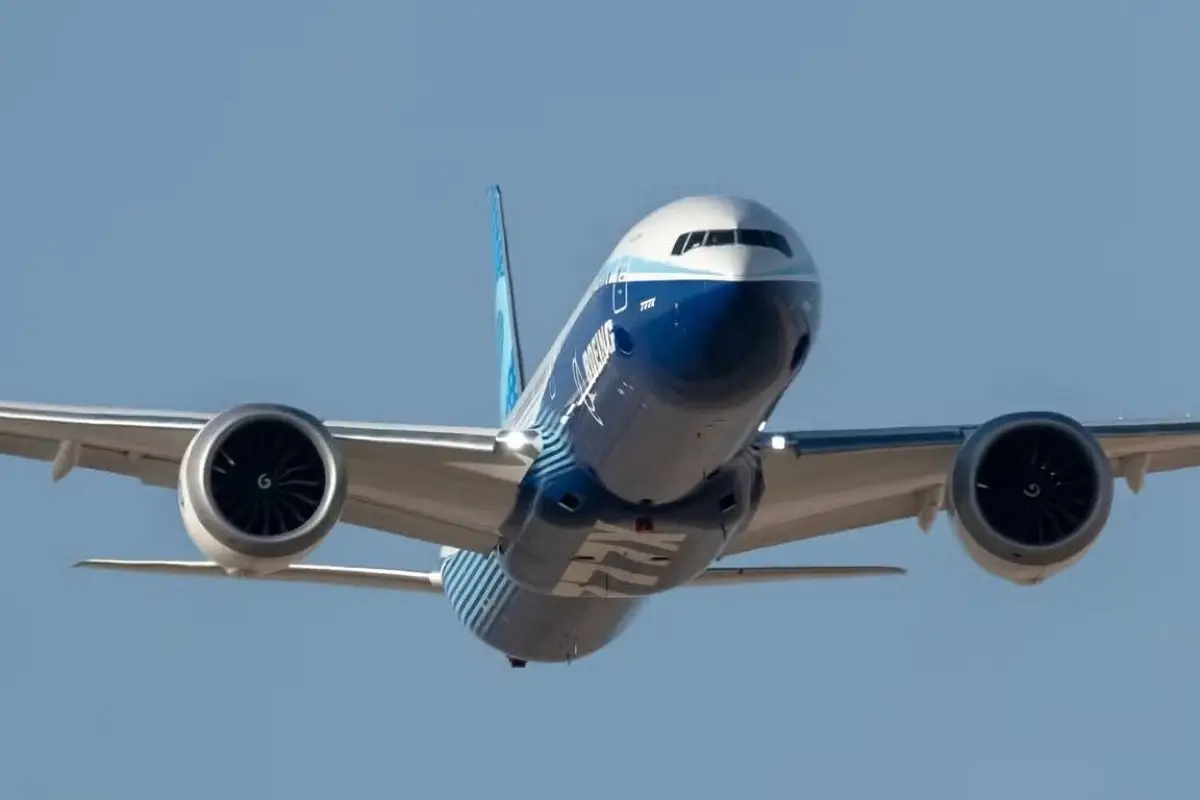
What Replaces the Largest Quadjet? New Era for Long-Haul Travel
In October 2007, Singapore Airlines became the first carrier to operate the Airbus A380. A double-deck giant that promised to redefine long-haul travel through sheer scale.
Airports invested millions in new infrastructure. Airlines reconfigured entire networks around their 500-seat capacity. For a brief moment, bigger really did seem like the future.
What followed was nearly two decades of shifting economics, rising fuel costs, and a quiet industry reckoning with whether the superjumbo model ever truly made sense.
The A380 went from a symbol of ambition to a cautionary tale. And now, as its passenger phase winds down, aviation is left asking a pointed question: what actually replaces the world's largest quadjet?
The short answer is that nothing does.
The Quadjet Era That Redefined Long-Haul Travel
Airbus officially launched the A380 program in 2000. The aircraft entered commercial service with Singapore Airlines in 2007. Throughout its production run, 251 units were delivered to 14 airlines worldwide before production ceased in 2021.
Emirates accounted for more than half of all deliveries. Qantas, Lufthansa, Air France, and Singapore Airlines are among the remaining operators of the iconic superjumbo.
Given the circumstances, the numbers behind the largest quadjet are staggering. Its wingspan stretches nearly 263 feet. It can carry more than 800 passengers in a full economy-class layout—a capacity no commercial aircraft has matched since.
However, size has two drawbacks. The A380 requires specialized airport infrastructure. Its double-deck fuselage limits which airports can accommodate it. As twin-engine jets become more efficient, airlines are increasingly redesigning airline networks and prioritizing flexibility over capacity on long-haul travel routes, reducing the appeal of operating a large quadjet like the A380.
The A350: Airbus's Answer to the Superjumbo Gap
Inside Airbus's own portfolio, the A350 is the most direct successor to the superjumbo throne, though it is considerably smaller. Constructed largely from composite materials, the A350 burns far less fuel per seat than the four-engine quadjet it follows.
Seating 300 to 350 passengers, the A350-900 comfortably accommodates a standard three-class layout. Slightly larger, the A350-1000 carries between 350 and 410—roughly 100 to 200 fewer than a typical A380 configuration.
Explicitly, Airbus marketing head Stan Shparberg confirmed the A350-1000 is fully capable of replacing both the A380 and the 777-300ER for most customers. Rumors of a stretched A350-2000 have been put to rest. That decision, according to Airbus, is final.
Already moving in this direction, Qantas is retiring its superjumbo fleet and transitioning to A350-1000s by the early 2030s. Frequency and margin now matter more than raw seat count inside modern airline networks.
Boeing 777X: The Quadjet's Closest Rival in Capacity
No single aircraft has narrowed the capacity gap left by the largest quadjets more than the Boeing 777X. The 777-9 variant actually has a capacity of 400 to 425 passengers in the standard configuration.
With a maximum capacity approaching 500 seats, that's still less than the A380. But one fact that might confuse some is that no other twin-engine jet in production today comes close.
The 777X combines high capacity with true efficiency. Its GE9X engines and composite construction significantly reduce fuel consumption per seat. Foldable wingtips that extend to 235 feet allow it to fit through standard airport gates.
Emirates has ordered more than 205 Boeing 777X aircraft. As the world's largest A380 operator, Emirates is effectively rebuilding its long-haul network in anticipation of this transition. Passengers on many former A380 routes will soon board the 777X instead.
How the 787 Dreamliner Is Reshaping Airline Networks
The Boeing 787 cannot replace the A380 on high-density mainline routes. Given that its seating capacity ranges from 240 to 330 passengers, depending on the variant, it simply lacks sufficient volume.
While it is not a superjumbo replacement, the 787 has played a key role in reshaping airline networks and expanding long-haul travel options.
The 787-9 has a capacity of around 280 passengers. It operates routes like New York to Cape Town and San Francisco to Adelaide. These are long-haul, low-density routes that no airline would risk with a 500-seat quadjet. The Dreamliner makes these routes viable.
By enabling direct flights, the 787 reduces the reliance on dense hub connections for which the A380 was built. It doesn't replace the superjumbo directly. However, it does make the superjumbo model less necessary overall.
Will Any Aircraft Truly Replace the Largest Quadjet?
At least in the near future, it's highly unlikely.
The Boeing 747-8, another double-decker wide-body airliner, has also ended production. No manufacturer is building a new superjumbo. The idea of the A380neo has indeed surfaced repeatedly, most forcefully pushed by Emirates President Tim Clark.
The proposal included new engines, an updated composite fuselage, and folding wingtips similar to the 777X. However, Airbus rejected the concept entirely.
But the A380 itself isn't gone. Emirates has committed to flying its quadjet fleet until the 2040s. Qatar Airways returned its A380s to service after the pandemic, when surging demand and delayed 777X deliveries created a capacity gap.
But the direction is already set. The A350, 777X, and 787 Dreamliner will collectively absorb what the largest quadjets once handled alone. No single aircraft will fill that space. Three aircraft will divide it, each covering a different part of the long-haul travel map once completely dominated by the superjumbo.