3 Airline CEOs React to Heathrow Chaos
 Abhishek Mukherjee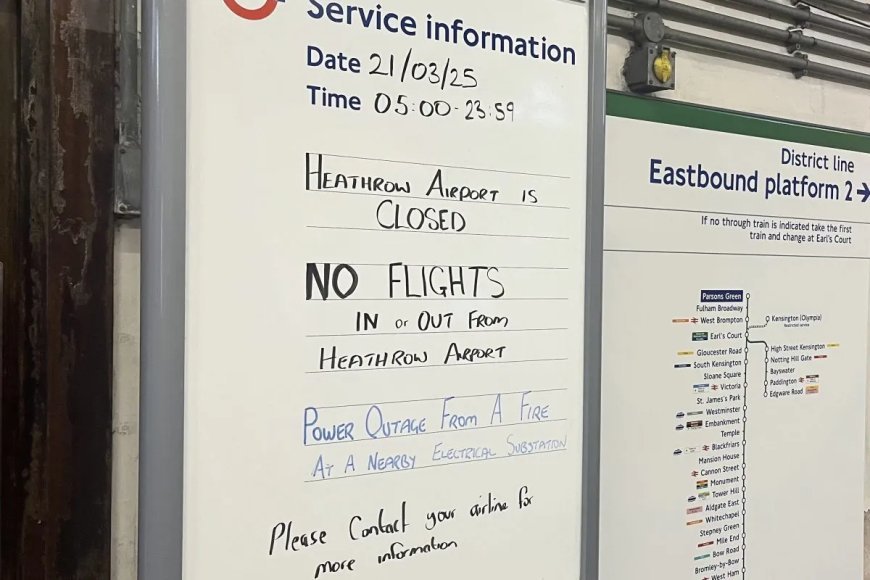
The planes and passengers are back in the sky, but the fallout from last Friday’s shutdown at Heathrow is rumbling on. A “significant power outage” at a nearby electrical substation resulted in the complete closure of the West London airport.
Operations returned to normal the following day, but not before 1,300 flights were canceled and the travel plans of more than 200,000 passengers disrupted.
Speaking on Thursday in some of his first public comments on the incident, Luis Gallego, CEO of airline group IAG, shared his perspective on the chaos: “I received a phone call that we needed to cancel all the flights. I was surprised to be honest that Heathrow didn’t have resilience for a situation like this, but they said it was impossible to operate.
"In some ways, it was easier to manage, because when you know you cannot operate, you know what you have to do."
IAG – the parent company of British Airways – operates around half of all flights in and out of the complex. Despite the airport being operated independently, many passengers took to social media to complain directly to airlines about its handling of the incident.
Looking beyond the direct and indirect reputational damage, Gallego said a precise financial impact was still being calculated. He did however confirm that it will be in “the tens of millions, for sure.”
Ensuring Paris or Amsterdam Isn’t Next
Air France-KLM has a relatively modest operation at Heathrow that feeds its main long-haul hubs in Paris and Amsterdam. However, Ben Smith, the group’s CEO, said there would be lessons for the entire industry: “It was very surprising to us that something like that could happen at the busiest airport in Europe with no backup plan.”
Asked if he had quietly contacted key airport operators in the Air France-KLM network for assurance following the incident, Smith replied, “Yes, but not quietly. It was a wake-up call, for them, for us. They [airports] are just as interested as we are in ensuring that they don’t have a blow-up to their brand and their operation.”
Speaking at the Airlines for Europe Summit in Brussels, the final airline CEO to chime in on the meltdown was Ryanair Group CEO Michael O’Leary. The budget carrier does not operate from Heathrow, but it does serve almost all of London’s other major airports.
O’Leary confirmed that the company took around 10,000 extra bookings in the hours following the shutdown. This included eight additional flights between Dublin and London, as well as higher occupancy on existing services.
Cross-Industry Praise
In a rare offering of praise for British Airways, O’Leary commended its speedy operational bounceback. BA offered almost a full schedule of flights the day after the meltdown. However, he was far less positive about what it said about broader industry resilience and regulation.
“It’s just another example of a Great British f**k up," O’Leary said. "You look at the regulatory environment of airports in the U.K. – they spent [billions] on Heathrow Terminal 5 and they couldn’t stick in a couple of backup generators? It’s nonsense.”
O’Leary revealed that Ryanair has written to all of its key airports, including Dublin, Brussels Charleroi, and London Stansted. He said he has received assurances from all of them that they have backup generators.
Given Heathrow uses as much energy as a small city, it remains unclear if greater use of backup systems would have kept the airport running.
The Financial Impact
Asked who should foot the bill for the disruption, O’Leary said it should be the operators of Heathrow, but cautioned that even this wouldn’t be straightforward.
“The problem is, if Heathrow pays the bill, the first thing they do is put it in their op-ex [operating expenses] for next year. They send it back into the regulator… and it all comes back to us [airlines] no matter what. It shows how fundamentally broken the regulatory system is.”
Heathrow wasn’t represented at the event, however, in earlier comments, the airport said its teams worked tirelessly to get flights operating again. The airport was open and fully operational just over 24 hours after the substation fire took hold.
Heathrow CEO Thomas Woldbye told BBC News that the airport would look at what it could do better, however, he was "proud" of its response to the incident.