Israel Hotel Occupancy 2026 Shows Eilat Booming, Jerusalem Low
Israel hotel occupancy 2026 data shows Eilat leading at 88% while Jerusalem trails at 34%, as overall rates fall amid reduced tourism and regional conflict.
 RUKAIYA KADIWAL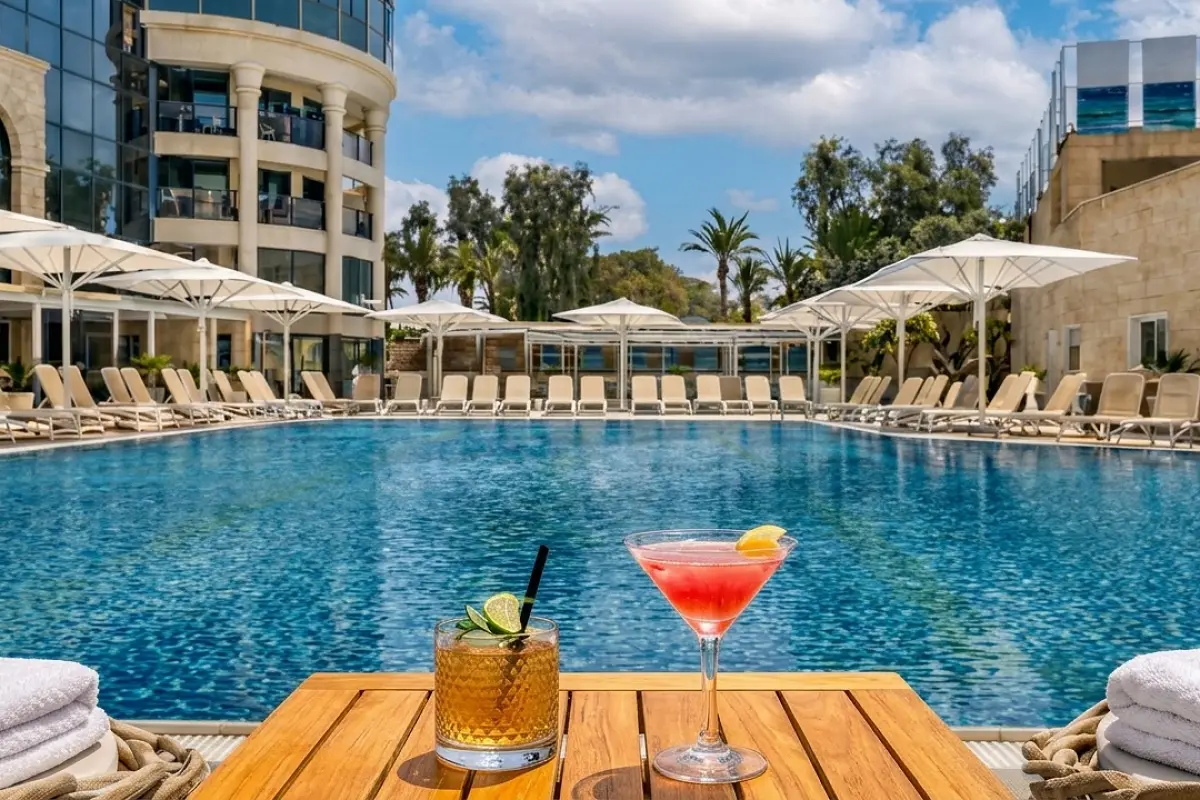
Along Eilat's waterfront, sun loungers fill early most mornings, cocktail glasses catching the light beside a pool that rarely sits still. A few hours north in Jerusalem, hotel corridors tell a quieter story, rooms often empty, lobbies less crowded than the city's historic weight might suggest. That contrast sits at the center of new Israel hotel occupancy 2026 data, showing a national industry still working to recover even as one destination pulls decisively ahead of the rest.
A National Picture Still in Decline
Figures published by Israel's Central Bureau of Statistics show average hotel room occupancy nationwide at just 47 percent between January and July 2026, a 4 percent decline compared to the same period in 2025. That drop occurred against a backdrop of falling international tourist arrivals and a decrease in the number of evacuees still housed in hotels across conflict affected areas in the south and north.
Fewer Stays, a Shifting Guest Base
Tourist hotels logged 10.6 million overnight stays between January and July, down from 11.4 million during the same period in 2025. Israelis accounted for roughly 9 million of those stays, representing 84 percent of all overnights, a slight drop from 87 percent the previous year. International tourist stays, meanwhile, totaled 1.7 million, making up 16 percent of the total, actually up from 13 percent a year earlier, even as absolute domestic numbers fell.
What Drove the Sharpest Declines
The most significant disruption traced back to Operation Roaring Lion, a 40 day military operation that effectively halted the arrival of most tourists to Israel. That pause echoed a familiar pattern the CBS has tracked across recent years, sharp pandemic era drops in 2020 and 2021, a 2023 recovery interrupted by the October 2023 outbreak of Operation Swords of Iron, and a further sharp decline following the June 2025 launch of Operation Rising Lion and the closure of Israeli airspace.
A Widening Regional Gap
Regional breakdowns from January through July reveal considerable variation, the South leading at 63 percent occupancy, followed by the Central district at 47.9 percent, Tel Aviv at 47.1 percent, Haifa at 44.4 percent, Jerusalem at 34.2 percent, and the North trailing at 32.1 percent. For context on how these figures compare against broader hospitality industry trends elsewhere, the disparity within a single country of this size is notable, suggesting security perception and destination type matter as much as national tourism policy in shaping where travellers actually book rooms.
Eilat's Consistent Advantage
July's figures sharpened that contrast further. Tourist hotels recorded 2.2 million overnight stays that month, 1.8 million by Israelis and roughly 395,000 by international visitors. By municipality, Eilat topped the list with an 88 percent occupancy rate, followed by Tel Aviv at 51 percent and Haifa at 44 percent, while Jerusalem sat at the bottom with just 34 percent.
What the Numbers Suggest Going Forward
As of June 2026, Israel counted 443 active tourist hotels with approximately 52,000 rooms, only marginally more than the roughly 51,000 rooms available a year earlier, indicating the industry has largely held its physical capacity steady even as demand has fluctuated sharply beneath it.
Two Cities, Two Very Different Recoveries
What these numbers ultimately describe is not a single national hospitality story but several overlapping ones, a Red Sea resort town continuing to draw visitors regardless of broader regional tension, and a historic capital whose hotel rooms sit quiet for reasons that have little to do with the quality of what they offer.
More information is available on the official website at cbs.gov.il.