UK Hotel Prices: Why Glasgow and Manchester Now Rival London
Weekend hotel rates in Glasgow and Manchester are matching London's and pricing out the travellers who once made these cities affordable.
 RUKAIYA KADIWAL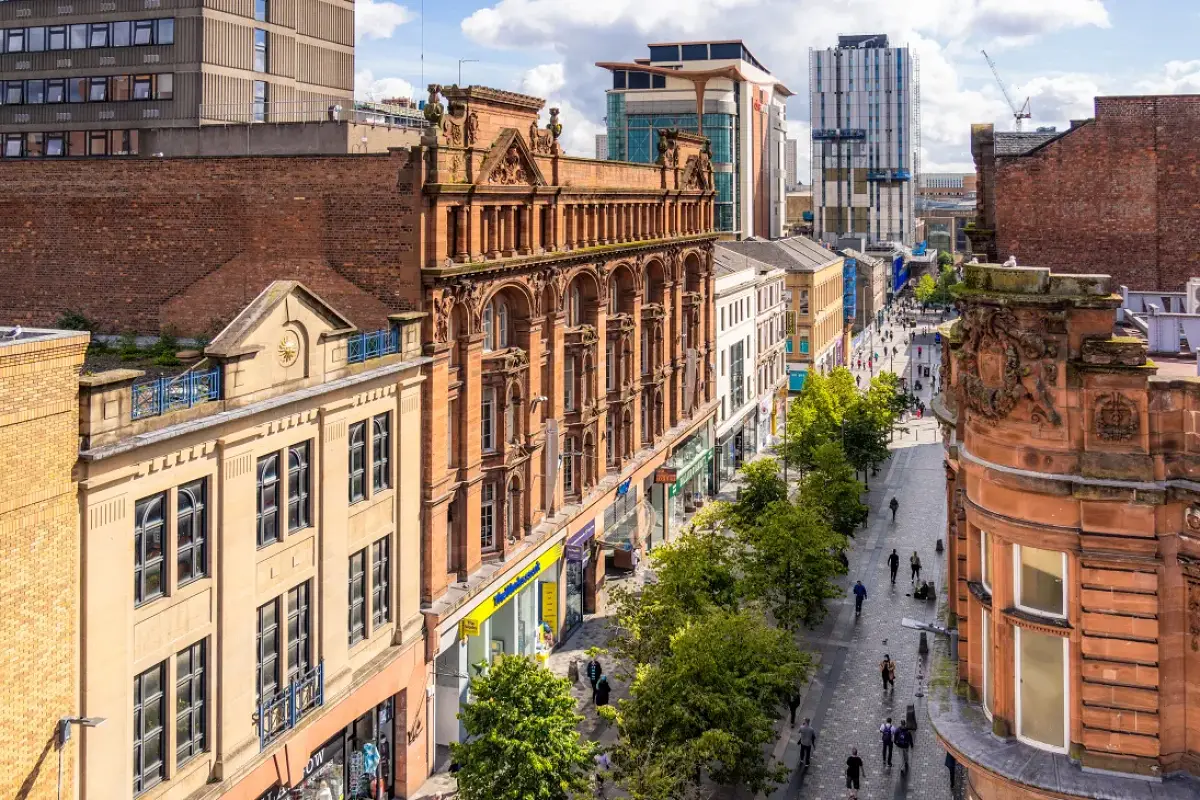
The Booking That Didn't Add Up
It is a small thing, at first, a cursor hovering over a date on a hotel booking page. Thursday, September 10. A wedding in Glasgow the following weekend. The room in question has no windows. It is, by design, a box: a bed, a wall, a door. The kind of room built for people who plan to spend their waking hours somewhere else entirely.
The price for that single, lightless night: £481.
For Huw Oliver, the travel writer who found himself staring at that figure while planning a trip north for a friend's wedding, the number was less a shock than a symptom. "Call me weird, but I'm not a windowless hotel room kind of guy," he wrote of the moment. "I like to know whether the sun has risen when I wake up." The room, at Arthouse Glasgow's newly refurbished townhouse property, had started life in the hotel's marketing as one of its most accessible offerings, a "pocket" room from £99, booked far enough ahead. By the weekend Oliver actually needed it, the same room was quoted at £280 a night. Move the date to that Thursday in September, and it nearly doubled again.
A City Behind the Number
Glasgow does not, on the surface, look like a city that should be out pricing London. Sauchiehall Street on a Saturday afternoon is Victorian sandstone and red brick, trams turned buses rattling past charity shops and coffee chains, a skyline more industrial heritage than glass tower. It has none of the postcode cachet that inflates a Mayfair hotel bill. And yet, according to Oliver's own price checking, a weekend night in the city now regularly rivals, and sometimes exceeds, comparable stays in the capital.
The explanation, when it comes, is almost mundane: nightlife. Glasgow's reputation for pubs, clubs, and arena gigs draws visitors from smaller towns across Scotland every weekend, and hotels have noticed. Arthouse Glasgow describes its compact rooms as "perfect for those who come to Glasgow to be out in it," a line that, read one way, is an honest pitch to a specific kind of guest, and read another, raises an uncomfortable question. If a guest is barely in the room, does that justify charging more for it, not less?
Dynamic Pricing, Democratized
None of this is new in principle. Airlines have priced by demand for decades; hotels followed. What has changed, Oliver's reporting suggests, is the reach of the practice, down from flagship city hotels into budget and mid market properties that once competed largely on being cheap. "Everyone has experienced a hotel quoting one figure the first time you look, another, off puttingly high, one the next, simply because they've sold a few extra rooms," he noted. The difference now is how sharply that swing lands in cities that built their tourism appeal on affordability relative to London.
Manchester tells a similar story. Despite a wave of high profile openings, Mollie's, Soho House among them, Oliver found no non grubby central hotel under £200 a night for his stag weekend there, ultimately opting for co living accommodation with a shared kitchen instead. A booming UK hotel prices market, in other words, has not translated into more affordable rooms. If anything, new openings appear to have given the market permission to hold its rates higher, not lower.
What £150 Buys Elsewhere
The comparison that stings is geographic. For the same September weekend, Oliver priced a room at the Buxton, a bistro with rooms on London's Brick Lane, at £160 a night, breakfast included, Turkish eggs and labneh that would cost £20 alone at a neighbouring restaurant. In Paris's 20th arrondissement, the boutique Babel Belleville came in from £187, in a city with a reputation, deserved or not, for costing considerably more than provincial Britain.
Set against that, Glasgow's £153 a night private room at the Social Hub, what Oliver calls, not unkindly, "a posh hostel for adults," starts to look less like a bargain and more like the going rate for something with markedly less to offer: no breakfast, communal facilities, and a price that still rises sharply on the exact nights people most want a room.
Who Wins, and Who Gets Priced Out
The sharpest part of Oliver's argument is not about the numbers themselves but about who they filter for. Dynamic pricing, he suggests, doesn't just raise costs indiscriminately, it quietly selects a certain kind of traveller and excludes another. "Drunk groups of pals happy to pile into the same kingsize bed? Probably fine with it. One night wedding or stag do travellers? Also willing to suck it up," he writes. It is the families weighing a few days exploring a British city beyond London who find themselves priced out entirely, not because the destination doesn't want them, but because the pricing model was never built with a four night, budget conscious stay in mind.
That distinction matters beyond any one traveller's holiday plans. Cities like Glasgow and Manchester have spent years positioning themselves as accessible alternatives to London, cultural depth without the capital's price tag. A pricing structure that rewards short, high turnover, nightlife driven bookings over longer, lower margin family stays risks narrowing exactly the kind of visitor these cities have worked to attract.
The pattern is not unique to Britain. Hotels around the world are experimenting with ways to stand out in a crowded, price sensitive market, from immersive design concepts to entirely new sensory approaches to hospitality, such as the Sonolux Hotel in Montreal, which has built its identity around art and sound rather than competing purely on room rate. It is a reminder that pricing pressure and creative differentiation tend to rise together.
No Easy Fix
Oliver is careful not to call for hotels to simply charge less, a demand about as realistic as asking any business to ignore its own occupancy data. "Asking hotels not to increase their rates so much in response to demand feels like a non starter," he concludes. The more useful question, he suggests, is not whether hotels should abandon dynamic pricing, but whether they've fully reckoned with which guests it is quietly turning away.
There is no dramatic reversal at the end of this story, no announcement of reform. Just a windowless room in Glasgow, still listed at £481 for a single Thursday night in September, a number that says less about one hotel than about a wider shift in how British cities have learned to price a weekend.
SEO Metadata
SEO Headline: UK Hotel Prices: Why Glasgow and Manchester Now Rival London
Alternative Headline: The £481 Windowless Room: Inside Britain's Hotel Pricing Surge
Meta Description: Weekend hotel rates in Glasgow and Manchester are matching London's, and pricing out the travellers who once made these cities affordable.
URL Slug: uk hotel prices glasgow manchester london comparison
Meta Keywords: UK hotel prices, Glasgow hotel prices, Manchester hotel prices, London hotel prices, dynamic hotel pricing, UK hotel rates, hotel prices British cities
Tags: UK Travel, Hotel Industry, Glasgow, Manchester, London, Dynamic Pricing, Hospitality Trends, Travel Journalism
Focus Keyword: UK hotel prices
Secondary Keywords: London hotel prices, Glasgow hotel prices, Manchester hotel prices, UK hotel rates, hotel prices in British cities, dynamic hotel pricing, Glasgow hotels, Manchester hotels
Image Alt Text: Aerial view of Sauchiehall Street in central Glasgow, lined with sandstone buildings and pedestrians, illustrating rising UK hotel prices
Social Caption: A windowless room in Glasgow for £481 a night. No breakfast. This weekend, UK city hotel prices are rivalling London, and pricing out the travellers who made these cities worth visiting in the first place.