West Midlands Asylum Seeker Hotel Closures Unveiled
West Midlands asylum seeker hotel closures affect Wolverhampton's Goldthorn and Stratford's Grosvenor, part of 13 sites returned to communities nationwide.
 RUKAIYA KADIWAL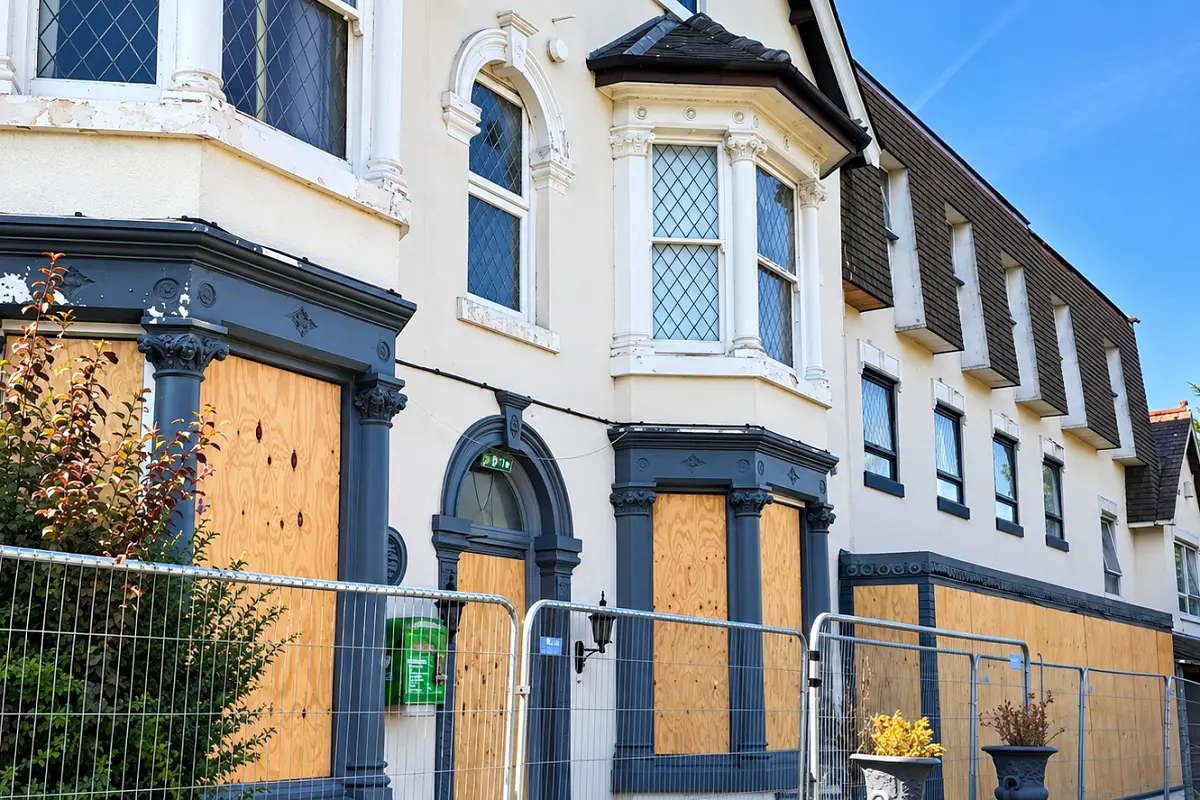
Plywood now covers the ground floor windows of a hotel that once opened its doors to some of the most vulnerable people arriving in Britain. Silver security barriers line the pavement outside. This is what remains of one property caught up in the latest round of West Midlands asylum seeker hotel closures. It marks a quiet but significant shift in how the region handles asylum accommodation.
The Home Office confirmed this week that the Goldthorn Hotel Wolverhampton closure and the closure of the Grosvenor Hotel Stratford upon Avon are both complete. Both sites join 13 properties across England now handed back to local communities. Residents who watched these buildings sit behind fencing for months now face a new question. What comes next for each site remains far from settled.
West Midlands Asylum Seeker Hotel Closures Affect Two Distinct Properties
The Goldthorn hotel in Wolverhampton has occupied a particular place in local conversation for some time. Its 19th century facade sits partially boarded and wrapped in barriers rather than welcoming overnight guests. Supermarket chain Lidl resubmitted plans last month to demolish the former hotel for a new store, according to the Local Democracy Reporting Service. An earlier proposal was narrowly approved more than three years ago, though that permission lapsed this year after the project failed to progress.
Stratford upon Avon tells a slightly different story. Back in 2023, then Conservative MP Nadhim Zahawi publicly called for the Grosvenor Hotel to stop housing asylum seekers, a position that reflected broader tensions in towns where hotels were repurposed with little advance consultation. More than two years after that intervention, the site has finally closed, showing how gradually these policy shifts unfold on the ground.
A National Wind Down Behind the West Midlands Asylum Seeker Hotel Closures
These two closures form part of a broader pattern rather than a standalone decision. According to the Home Office, the latest 13 closures follow 11 asylum hotel closures in April and 20 more in June, meaning fewer than 160 hotels now remain in use nationwide. That marks a sharp retreat from the system's 2023 peak, when 400 asylum hotels operated at a reported cost of £9 million a day.
Financially, the department stated the latest closures should save taxpayers £51 million, bringing total expected savings from this year's closures to £224 million. Numbers at this scale reveal how large the asylum hotel system had grown as a line item in public spending, and why its steady reduction carries real weight for government finances.
What Happens Next to the Buildings Themselves
According to the Home Office, the two Wolverhampton asylum seeker hotel and Stratford upon Avon asylum hotel sites could return to business as usual or be transformed for uses that better serve local communities. That phrasing leaves considerable room for interpretation. Already, the Goldthorn situation hints at how varied these outcomes can be, with demolition for a supermarket now a live possibility rather than simply a return to hotel use.
For neighbouring residents, boarded and fenced buildings often outlast the policy announcement that triggered closure. Plywood and barriers do not disappear the moment a statement is issued. Months can pass between closure and redevelopment, leaving communities to live alongside an unresolved property in the meantime.
The Policy Reasoning Behind Home Office Asylum Hotel Closures
The Home Office said these closures form part of Home Secretary Shabana Mahmood's wider plan to restore control to the border and fairness to Britain's immigration system. Removing incentives that encourage illegal migration formed part of that plan, alongside ramping up removals of those with no right to remain, while still protecting genuine sanctuary seekers.
Looking ahead, the government said it is increasing use of larger, basic accommodation, including former military sites, as more asylum hotels close. Discussions have already started on three new former Ministry of Defence sites, the Home Office confirmed, suggesting the shift away from hotel based accommodation is accelerating rather than slowing. Full details on the announcement are available on the official BBC website.
A Wider Question About Repurposing Former Hospitality Spaces
Beyond asylum accommodation, a broader question lingers about what happens to a hotel once it stops being a hotel. Buildings designed for one use rarely convert cleanly into another. Location, brand identity and community fit matter just as much in reuse as they do in a hotel's original launch, a dynamic explored in how operators approach launching a hotel in London, where careful planning determines whether a property succeeds within its neighbourhood.
Neither the Goldthorn nor the Grosvenor has a settled next chapter. One may become a supermarket. The other's fate has not yet been confirmed. Both sit quietly behind their barriers for now, waiting for a decision that will shape their next use.
West Midlands Asylum Seeker Hotel Closures Leave a Longer Story Behind
Eventually, once the fencing comes down, these buildings will still carry the memory of housing people who had nowhere else to go. That history does not disappear with a change of use. Instead, it becomes part of a longer story about what a building becomes once its original purpose has run its course.