Launching a Hotel in London Demands More Than Prime Location
Launching a hotel in London requires more than location, as Dominus Hospitality's Matt Williams explains how brand, design and talent shape success today.
 RUKAIYA KADIWAL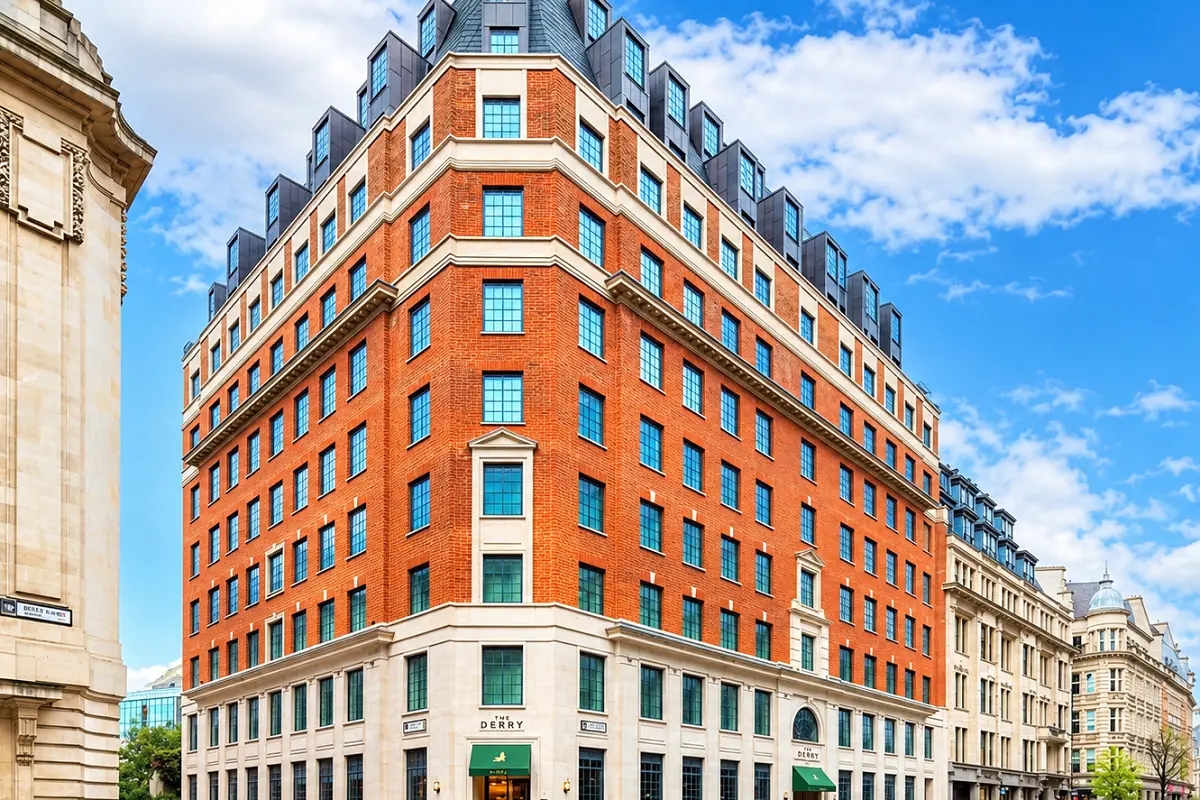
The Derry rises above a City of London street corner, its red brick facade catching the afternoon light in a way that makes passersby slow their pace, if only for a moment. Inside, guests move through a lobby that feels deliberately unlike the transactional business hotels this neighbourhood was once known for. It is a small but telling scene, one that captures exactly the shift Matt Williams, director of hotels at Dominus Hospitality, has spent his career studying. Launching a hotel in London today, he argues, requires far more than simply finding the right address.
For over two decades, the phrase location, location, location has shaped how Britain thinks about property, and hotels have never been an exception. Williams does not dispute the principle's staying power. What he questions is whether it remains sufficient on its own in a market as competitive, and as informed, as London's has become.
Why Location Alone No Longer Guarantees Success
Tourist numbers across the UK have continued to rebound in the years following the pandemic, translating into strong underlying demand for hotel rooms. But that same period has produced a more discerning traveller, one shaped by the sheer volume of information now available in an age defined by artificial intelligence. Guests arrive already knowing what they want, and increasingly, what alternatives exist just a few clicks away.
Williams frames this shift plainly. Location remains the foundation a successful hotel is built on, he says, but operators can no longer rely on it alone to drive performance. Sustaining room rates and long term profitability now depends on creating distinctive experiences that guests actively seek out, rather than simply stumble into by proximity.
Reading a Neighbourhood Before Building Within It
Delivering that kind of experience starts with understanding what makes a particular area distinctive in the first place. In a city as varied as London, neighbourhood identity carries real weight in booking decisions. Visitors choose Shoreditch, Covent Garden, King's Cross or the City of London for entirely different reasons, whether that is shopping, transport links, walkability, or nightlife, and hotels that reflect the character of their surroundings tend to stand out more effectively than those that could exist anywhere.
The City of London offers a particularly clear illustration of how quickly these dynamics can evolve. Once defined almost entirely by weekday business travel, the Square Mile is gradually becoming a more diverse seven day destination, a transformation supported by the City of London Corporation's Destination City strategy. As neighbourhoods change, Williams suggests, hotels are not simply passive beneficiaries. They can actively contribute to that transformation, creating spaces that serve local communities as well as visitors passing through.
Brand Affiliation as a Strategic Choice, Not a Formality
Across Dominus Hospitality's portfolio, this philosophy plays out through a clear focus on location, brand identity and guest experience, reflecting a broader shift in what today's travellers actually value. Guests increasingly look for experiences that feel connected to a destination's character, which means the most successful hotels are built around a clear role they want to play within their city and neighbourhood, rather than a generic promise of comfort.
That principle extends directly into how operators choose their operating model and brand affiliation, both of which should be shaped by location, customer profile and the experience a hotel is trying to create. Soft brands such as Hilton's Curio Collection and Marriott's Autograph Collection offer a particular kind of balance in this equation, allowing individual hotels to retain their own identity and sense of place while still benefiting from global distribution networks and loyalty programmes. Full details on Dominus Hospitality's approach and portfolio are available on the official Dominus Hospitality website.
Where Operational Thinking Meets Design
Beyond questions of location and brand, operational effectiveness has to be considered from day one, particularly in hotel conversions where design decisions are inevitably shaped by the constraints and character of an existing building. Conversions carry clear sustainability advantages, but they also allow the history of a building to actively influence the hotel's story, giving guests a sense of place that new construction often struggles to replicate.
Early operational input into design, Williams notes, helps optimise space and ensures the guest experience is built in from the start rather than retrofitted afterward. It is a subtle but important distinction, one that separates hotels designed around how guests will actually move through and use a space from those designed primarily for visual impact.
The Human Factor Behind Every Successful Launch
Even a perfectly located, expertly branded and well designed hotel will not succeed without the team running it. At a moment when the hospitality sector continues to face significant recruitment and retention challenges, attracting and developing talent has become essential rather than optional. Guests, Williams observes, remember how they felt far more than they remember the interiors, which makes service standards, local expertise and genuine hospitality critical to the overall experience.
Investing in people, in this framing, is not simply an operational consideration. It directly influences guest satisfaction, reputation and commercial performance alike. Talent development deserves treatment as a strategic priority, with a strong focus on training, mentorship and internal progression that allows colleagues to grow into leadership positions rather than leave the industry altogether. This same emphasis on strategic growth is echoed elsewhere in hospitality expansion, as seen in Lemon Tree Hotels' recent expansion across India, where scaling a brand still depends on the people delivering the experience at each individual property.
A Market Entering a More Sophisticated Phase
London's hotel market, in Williams's assessment, is entering a more sophisticated phase altogether. Demand remains strong across the city, but success will increasingly be determined by how effectively hotels connect with their surroundings and deliver memorable guest experiences rather than relying on footfall alone.
The fundamentals, he maintains, still matter. The right brand, the right location, the right team and operational excellence from day one remain non negotiable. But in an increasingly competitive market, long term value will ultimately be created by hotels that offer something visitors cannot find elsewhere, properties that become destinations in their own right rather than simply convenient places to sleep.
What The Derry Represents Beyond Its Facade
Back on that City of London corner, The Derry continues its quiet transformation of a neighbourhood once defined almost entirely by office towers and weekday commuters. It is easy to see the building simply as brick and glass rearranged into something photogenic. It is harder, and far more accurate, to see it as a working answer to the question Williams keeps returning to, what does it actually take to succeed in launching a hotel in London today.
The answer, it turns out, has less to do with any single decision and more to do with how deliberately each one, location, brand, design and people, is made to work together. In a city with no shortage of hotels, that kind of deliberateness may be the only thing left that guests genuinely cannot find anywhere else.