Book Explores How Gay Restaurants Shaped LGBTQIA+ Community Life
Erik Piepenburg's book Dining Out explores how gay restaurants across the US became comfort spaces, activist hubs and community lifelines. Read the story. (154 chars)
 Prajakta Sanjay Warwadkar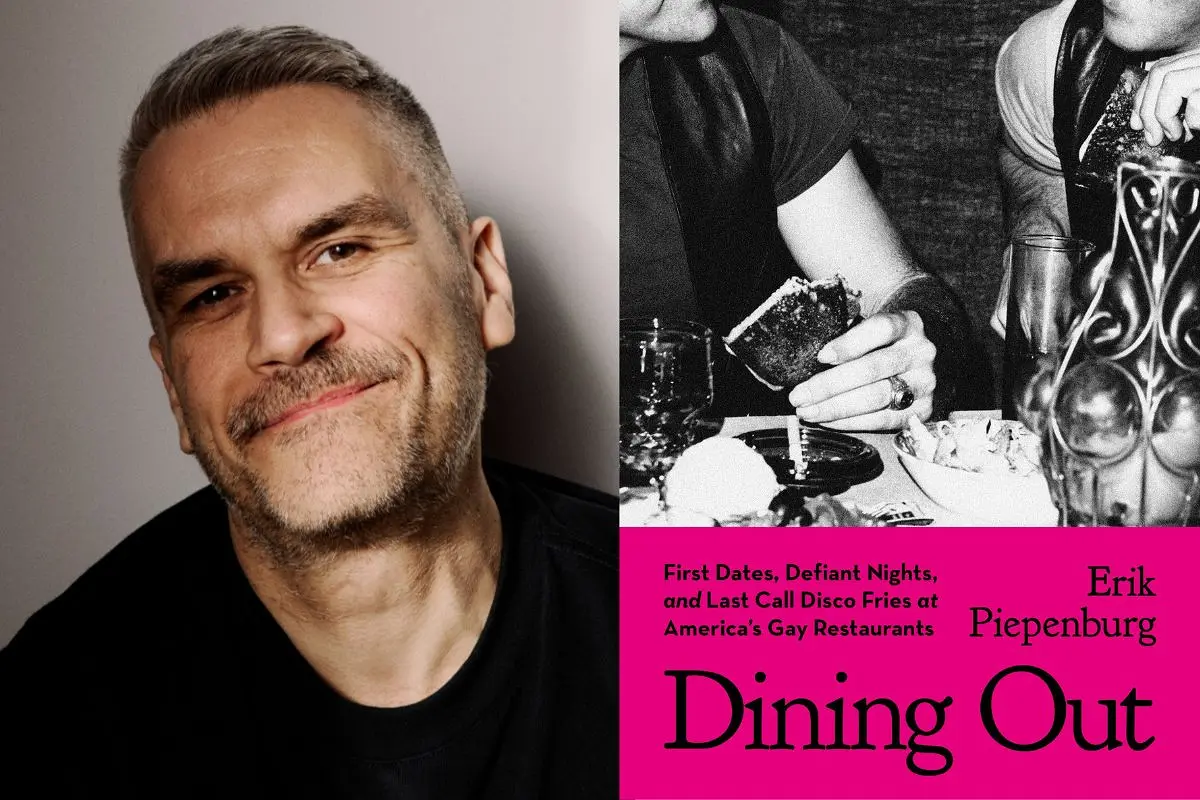
NEW YORK, June 9, 2026 — When journalist Erik Piepenburg's favourite gay restaurant in Chicago closed in 2017, he expected to find a story about decline. What he found instead, through years of archival research and travel across the United States, was a community of gay restaurants still very much alive in big cities and small towns, serving roles far beyond the delivery of a meal. His book Dining Out: First Dates, Defiant Nights, and Last Call Disco Fries at America's Gay Restaurants traces that history across more than a century, and he discussed its themes this week with Civil Eats ahead of Pride Month.
Piepenburg, a journalist for The New York Times who lives in Hell's Kitchen, describes gay restaurants not by the identity of their owners or chefs but by the composition of the people eating in them. "To me, a 'gay restaurant' is a restaurant where most of the people eating there are a part of the community," he told Civil Eats. The book covers diners, automats, bars and clubs that serve food, bathhouses with buffets, fine dining and neighbourhood bistros any space where queer people have gathered over food and found something that felt like safety.
Comfort, Mourning and Mobilisation at the Table
The through-line in Dining Out, Piepenburg says, is comfort. "Gay restaurants have been places of comfort," he said. "Give me an omelet and pancakes and I'm happy." But the book documents how that comfort has extended well beyond the plate. During the AIDS crisis, gay restaurants opened their dining rooms for memorial services, functioning as places where the community could grieve together when few other spaces would accommodate them.
Restaurants also served as bases for activism. Piepenburg points to Woody's and Benny's Burritos in New York — both now closed where ACT UP, the AIDS activist group, would gather after their meetings to continue organising. "Gay restaurants have also been places of mobilization and activism," he said. "They kept the work going."
At FLEX, a bathhouse in Cleveland, a chef named Rick serves a weekly buffet that reaches a different corner of the community entirely. "For a lot of elders in the community, a gay restaurant can be the only place where someone makes you a meal and people talk to you," Piepenburg said. For those who feel invisible at venues pitched toward younger crowds, these spaces become a point of inclusion rather than exclusion.
From Archive to Living Dining Room — A Research Journey
Piepenburg spent days in archives leafing through old gay newspapers to trace where queer people ate across different eras of American history, when a gay restaurant might have been identifiable only by the way a door was held open or the warmth of a knowing glance. He also travelled to cities including Washington D.C., Fort Lauderdale, Los Angeles and Palm Springs to sit in dining rooms where gay restaurant culture remains active and visible.
The challenge of historical documentation, he notes, is that gay spaces often had no formal markers in periods when visibility carried risk. "I had to think: 'How would the gay people who went there at the time identify these places as gay spaces?'" he said. "I wanted to honour those places in the past where it wasn't as easy as today."
Bloodroot in Bridgeport, Connecticut a lesbian feminist restaurant that closed at the end of 2025 after decades of operation stands in the book as one of the clearest examples of a restaurant functioning as a centre for civil rights activity. Its closure, Piepenburg notes, represents the kind of loss that motivates the book's existence.
Drag Brunch, Small Towns and the Question of What Is Still Gay
One of the more complex questions Dining Out raises is whether the mainstreaming of gay restaurant culture particularly drag brunch, which Piepenburg traces to the 1960s but identifies as a fixture of the early 1990s dilutes its original purpose. During the AIDS crisis, drag brunch functioned as a fundraising format accessible to straight audiences. Now, he says, some drag brunches are attended almost entirely by straight women. "Is something lost in having drag brunch be so mainstream?" he asked. "I don't know the answer."
What he does know is that gay restaurants are not disappearing. They have expanded in geography and in the breadth of the community they serve. Napalese Lounge and Grille in Green Bay, Wisconsin, hosts a monthly trans mixer a detail that illustrates how the concept of a gay restaurant now reaches small-town America with an inclusivity that the early gay restaurant scene, segregated by gender even within the community, did not always achieve. "This isn't just happening in New York," Piepenburg said. "It's happening in Green Bay, Wisconsin, too."
Annie's Paramount Steakhouse in Washington D.C. what Piepenburg calls a "legacy gay restaurant" keeps drawing packed houses with rainbow flags everywhere and a dining room that, he says, feels like a second home to many Washingtonians. The formula is not reinvention. It is consistency. "They're just doing what they do very well," he said.
For broader context on the role food and communal dining play in building social solidarity, HCP Good Food's guide to the history of food culture offers relevant perspective on how eating together has shaped communities across time and place. Further information on the book is available at erikpiepenburg.com.
Read more: Dining Out Trends 2026: Why People Prefer Dining Out Over Cooking More Than Ever
Rise of Experience-Based Restaurants: Why Are They Taking Over Dining?