Bengaluru Supper Clubs Reveal the Secret Behind New Restaurants
Bengaluru supper clubs run by home chefs are becoming permanent restaurants, from Mala Kitchen's Sichuan menu to Minibe's dessert tasting experience.
 RUKAIYA KADIWAL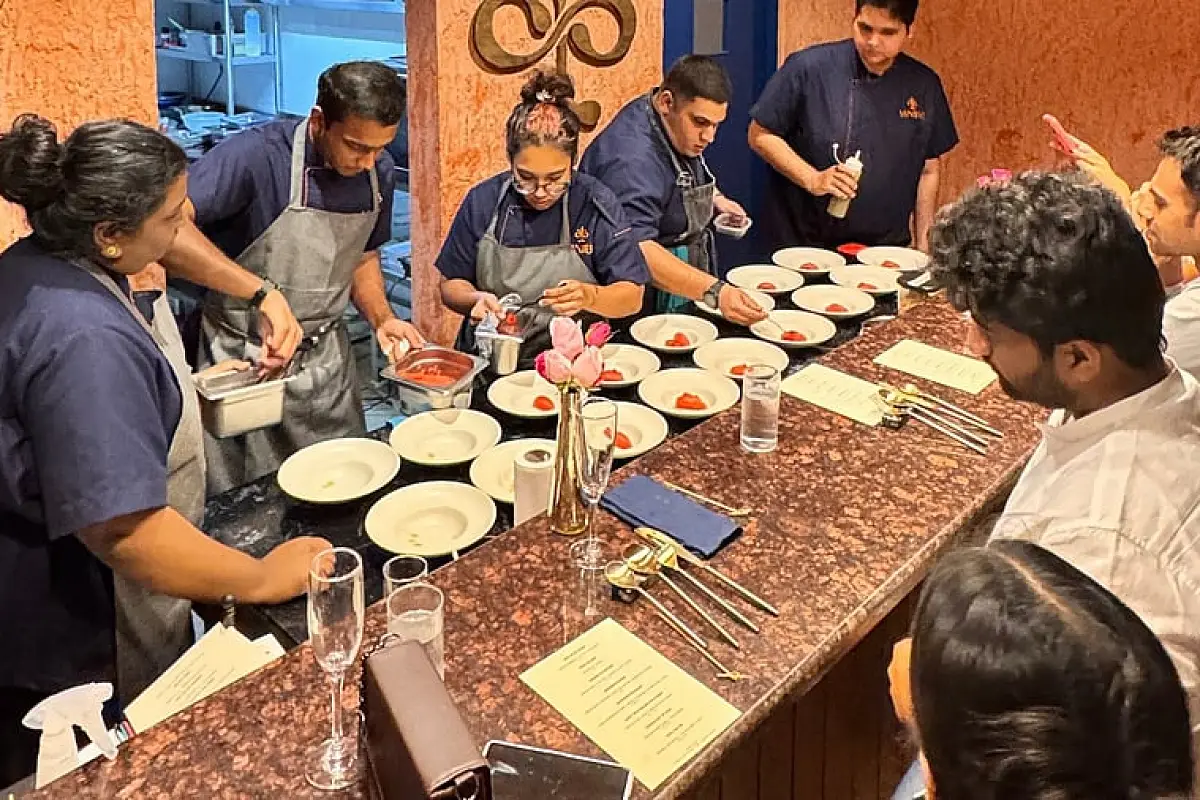
Bengaluru supper clubs have a particular sound before dinner begins, the clatter of borrowed crockery, the low hum of a playlist chosen more carefully than the guest list, and somewhere in the kitchen, a home cook plating a dish they once made only for family. Three years ago, that sound belonged to Aditya Ramakrishnan's apartment, where his supper club, Mala Kitchen, would eventually host more than 3,000 guests. Now, that same sound is preparing to move into a permanent address. "It is expected to open by November," Aditya said of the new 2,400 square foot space on 100ft Road, Indiranagar, a location that once housed the Pecos Stones 1.0 outlet.
Aditya is one of a small but growing group of Bengaluru entrepreneurs turning informal home dinners into full restaurants, a shift reported as part of the city's evolving Bengaluru dining scene covered by Deccan Herald. What began as personal experiments in home kitchens is now reshaping how the city eats out.
From Family Recipes to a Public Table
For Aditya, the story started with his wife, Dongli Zheng, who grew up in Chengdu, the capital of China's Sichuan province. "None of the Chinese restaurants in Bengaluru quite match the taste of authentic Sichuan food," he explained, describing the frustration that led the couple to start recreating her family's recipes at home. What began as dinners for friends soon expanded to include respected chefs like Kavan Kuttappa of Naru and Rhea Aaron of Klaa Kitchen, before Aditya eventually opened his table to the wider public, hosting dinners roughly three nights a week.
He later travelled to Chengdu himself, enrolling in cooking courses to sharpen the techniques he had been learning secondhand through his wife's memory of home. That willingness to formally train, even after years of positive feedback, says something about how seriously these supper club hosts treat their craft, not as a hobby dressed up as a business, but as a genuine culinary practice still being refined.
Music, Ramen, and an Unexpected Restaurant
Not every supper club journey began with a shared cuisine. Sushant Jaiswal hosted around eight pop-ups over the course of a year through Oxalis Fine Dining, a venture run by chef Clive Fernandes, with the first edition stretched across four consecutive nights. For Sushant, food was only half the appeal. "I have an extensive collection of LPs and wanted to bring that into the experience," he said, describing how his passion for music shaped the atmosphere of his early dinners as much as anything on the plate.
His path to the kitchen was informal at first. "I would invite friends home for dinner, and we would cook together. One day, I made ramen from scratch and invited about 15 people," recalled Sushant, who left a career as a product designer to eventually open Evil Onigiri on St Mark's Road. Barely a month old, the restaurant serves experimental Japanese cuisine built around dishes that rarely appear on menus across the city. "We wanted to focus on dishes that not many Japanese restaurants in Bengaluru serve," he said, pointing to standout dishes such as Tuna and Citrus, alongside his own invention, Shoyu Butter Gohan, a dish that began as a simple bowl of shoyu rice made for his girlfriend before evolving into something heartier.
Building a Brand Through Dessert
Chef Jenny Clinta took yet another route into the city's supper club to restaurant pipeline. She opened Sakare in July 2024, a supper club dedicated entirely to a five course tasting menu of desserts, run out of her own apartment. Her path there was equally unconventional, starting as a home baker in the Andamans before formally training in pastry and later interning at a Michelin Guide restaurant in Normandy.
In December 2025, she opened her restaurant, Minibe, in Indiranagar, translating the supper club format into something more layered. "The eight course restaurant menu is a bit more elaborate and evolved," she said, describing the current menu, called Mosaic, which shifts every four months. The structure blends technique across courses, with the first three savoury dishes incorporating pastry elements, followed by five dessert courses that include a palate cleanser, a fruit based dessert, a bread course that doubles as ice cream, and a chocolate dessert built around an element of mystery. "We encourage guests to have no inhibitions and come with an open mind," Jenny said, a philosophy that has carried directly from her supper club days into her restaurant's identity.
Why Bengaluru's Intimate Restaurants Are Multiplying
Back at Mala Kitchen, Aditya's plans for the new restaurant reflect a deliberate blending of formats rather than a clean break from the past. "We hope to hold a seven or eight course meal thrice a week in a small space dedicated to the format," he said, describing a hybrid model that pairs the supper club experience with regular a la carte dining. The design itself reflects Chengdu, with paintings, architectural details, crockery, and tableware imported directly from the city his wife calls home.
All three chefs point to the same underlying truth: their supper clubs were consistently sold out, evidence of genuine demand rather than novelty. Yet each arrived at the decision to formalise their businesses for different reasons. Aditya ran into practical constraints, including friction with his apartment committee and the limitations of cooking with large woks in a small home kitchen. Sushant wanted to leave behind a corporate career entirely. Jenny had always intended to open a restaurant, treating her supper club as a way to build a following before committing to a larger investment.
What This Shift Means for Bengaluru's Food Culture
Running a restaurant brings its own set of financial and operational pressures, from lease costs to staffing to the loss of the intimacy that made these dinners special in the first place. Yet the shift also carries a clear benefit: greater accessibility. A supper club, by nature, is limited by seating, scheduling, and word of mouth. A restaurant, however small, opens that same food to a wider and more consistent audience, at a price point far more approachable than the ticketed dinners many of these chefs once ran.
This pattern is not unique to Bengaluru. Cities around the world have watched informal dining formats evolve into permanent fixtures once demand proves itself, a trajectory similar to the momentum seen behind niche food and drink events elsewhere, including the recent surge of interest around Vancouver's seasonal wine events drawing crowds to niche pours. In both cases, curiosity built slowly through smaller, personal formats before scaling into something the wider public could access.
A City Still Learning What It Wants to Eat
What ties Aditya, Sushant, and Jenny together is not simply ambition, but a shared instinct that Bengaluru's diners were hungry for something more specific than what existing restaurants offered, whether that meant authentic Sichuan flavours, experimental Japanese small plates, or a dessert tasting menu with no direct comparison in the city. Their supper clubs functioned as proof of concept, tested quietly in home kitchens long before any investment was made.
As these intimate dinners give way to permanent addresses, something is inevitably lost, the closeness of a shared table in someone's living room, the sense of being let in on a secret. But something else takes its place, a wider circle of diners who might never have found their way into a private supper club now able to walk through a restaurant door instead. Whether that trade feels like progress or quiet nostalgia may depend on whether you were lucky enough to get a seat at the original table.