Bikanervala Adelaide Restaurant Opens: A Legacy of Flavour Arrives
Step inside the new Bikanervala Adelaide Restaurant in Campbelltown, where a 120 year old Indian food legacy finds its first Australian home.
 RUKAIYA KADIWAL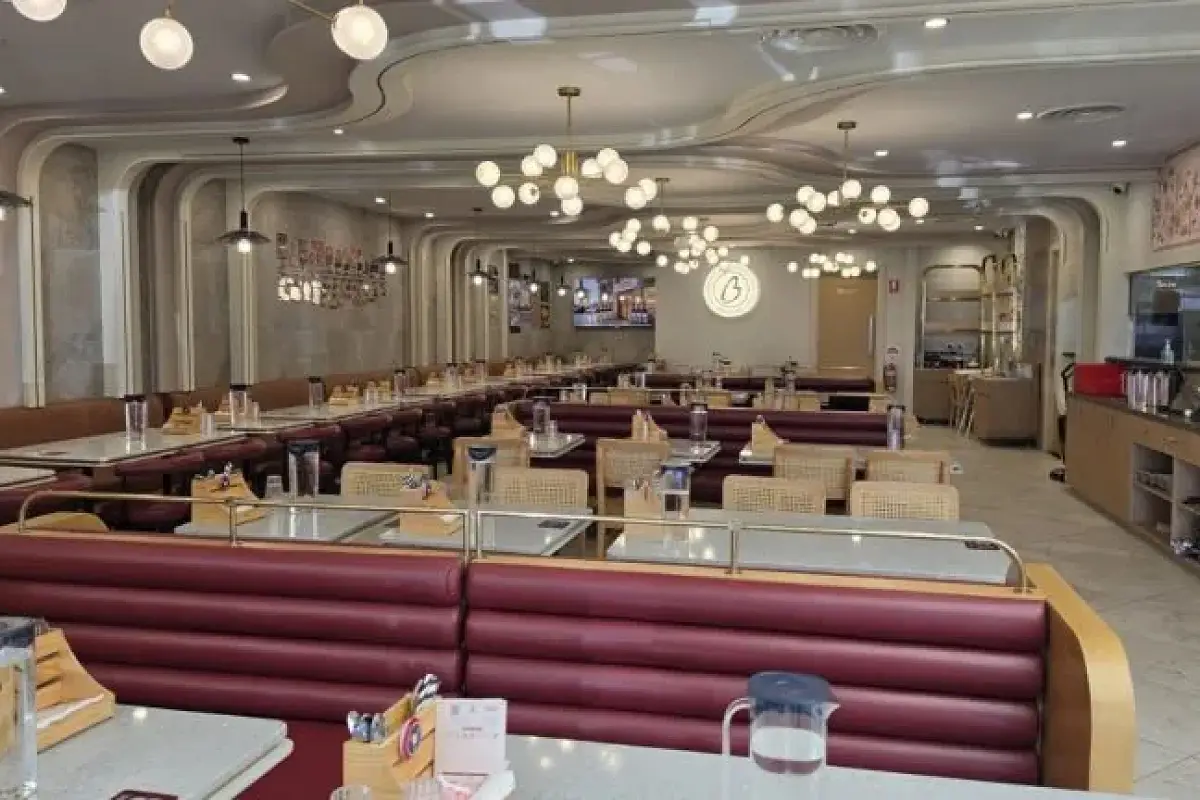
At five o'clock, the doors of the Bikanervala Adelaide Restaurant open onto Lower North East Road, and for a moment the room is still. A chandelier of small glass globes hangs low over the maroon leather booths, catching the last light before the evening service begins. Somewhere near the pass, a ladle taps twice against the rim of a steel pot, a small, ordinary sound that, on this particular evening, carries the weight of something much larger than a single dinner service.
Mohit Taneja stands near the entrance, watching the first guests find their seats. He has lived in Australia for twenty one years, long enough to build a life here, and long enough to remember what it felt like, as a younger man in India, to walk past a Bikanervala counter on the way home from school or work. "I've been in Australia for 21 years, and what we used to call it was the KFC and Burger King of India," he says, not as a boast, but as an attempt to explain something that resists easy translation. "That's how well known it was. It's where everyone used to go."
Now, on a quiet stretch of road in Campbelltown, that same name sits above a 96 seat dining room, the first restaurant Bikanervala has opened in Australia.
A Name That Needed No Introduction, Except Here
For diners unfamiliar with the brand, the Bikanervala Adelaide Restaurant might read simply as another addition to the city's growing list of Indian eateries. For those who grew up with it, the opening carries a different kind of meaning entirely. Mohit has partnered with Himanshu Kaushik to bring the restaurant to South Australia, and the two men speak about the project less like investors unveiling a new venture and more like custodians handing something familiar to a new audience.
"The restaurant focuses on freshly cooked food, bringing authentic Bikanervala flavours to Adelaide with an emphasis on freshness and quality," Himanshu says. It is a modest sentence for what is, in practice, a considerable undertaking: recreating, thousands of kilometres from Bikaner, a taste that generations of customers have carried with them as a kind of edible memory.
From a Sweet Shop at Kote Gate to a Global Name
The story behind the name reaches back to 1905, when Shri Lal Chand Agarwal opened a small sweet shop called Bikaner Namkeen Bhandar near the historic Kote Gate in Bikaner, Rajasthan. It was, by most accounts, an unremarkable beginning, a single counter selling namkeen and sweets to a local clientele. When the business later expanded into Delhi, customers began referring to the shop simply as "Bikanervala," the one from Bikaner, and the nickname outlasted the original name entirely.
Over the following decades, that nickname became attached to one of India's most recognised food brands, now operating more than 300 locations across India and abroad. The Adelaide restaurant is not a reinvention of that legacy so much as an extension of it, carried across an ocean and set down in a Campbelltown shopping strip.
Inside the Room
Walk into the dining room and the design speaks before the food does. Architects from India worked alongside Australian designers on the fit-out, and the result is a room that gestures toward Bikanervala's visual identity without feeling imported wholesale. A feature ceiling curves above the tables, dramatic lighting pools over the booths, and the maroon upholstery running the length of the room lends the space a formality that feels closer to a family gathering hall than a casual diner.
The menu matches the scale of the room. North Indian curries and thalis sit alongside rice dishes, naan and salads, while a separate section carries South Indian favourites and Indo-Chinese plates. A glass counter near the entrance holds the traditional sweets and snacks the brand built its name on, the kind of display that invites lingering rather than a quick glance on the way out.
Among the savoury dishes, chole bhature has emerged as an early favourite, a spiced chickpea curry served alongside pillowy fried bread that guests describe with the kind of enthusiasm usually reserved for something eaten far less frequently than it deserves. "Our chefs are coming from India, and we're bringing the same flavours to Australia that we've grown up with," Mohit says. "That's the ultimate selling point."
Busy Nights and What They Mean
In the weeks since opening, the restaurant has not struggled to fill its seats. "It's been very busy," Mohit says, a simple observation that nonetheless answers a question every new hospitality venture quietly asks itself: does the market actually want this? For a city like Adelaide, with an Indian community that has grown steadily over the past two decades, the early crowds suggest an answer that goes beyond curiosity.
That demand sits within a broader pattern across Australian hospitality, where migrant communities have increasingly supported the arrival of brands they knew from home, giving international chains a foothold that pure novelty rarely provides on its own. Industry watchers have noted similar dynamics playing out elsewhere in the Asia Pacific hospitality sector this year, as international hotel and restaurant groups continue to expand into new markets, a trend explored in detail in recent coverage of new hotel openings across Asia in 2026, including moves by Anantara, Sheraton, MGM and Wyndham.
What Comes Next
Campbelltown is intended as a beginning rather than a destination in itself. Mohit and Himanshu have indicated that Melbourne and Sydney locations are expected to follow in the coming months, part of a broader Australian expansion for the brand. Whether that rollout matches the pace of demand in Adelaide remains to be seen, but the early signs, a full dining room on a weeknight, a steady flow of orders for chole bhature and sweets, suggest the appetite exists.
Not every guest walking through the door will know the history behind the name on the sign. Some will simply be looking for a good curry on a Tuesday evening. Others will recognise something closer to home in the smell of the kitchen, in the particular sweetness of a barfi, in the cadence of a menu that reads like it was written for people who already know what they are looking for. Both kinds of diners will find something at this table, though perhaps not quite the same thing.
A Ladle, a Chandelier, a Long Way From Kote Gate
There is a particular kind of restaurant opening that matters less for what is new about it and more for what it carries forward. The Bikanervala Adelaide Restaurant belongs to that category. It is not attempting to reinvent Indian dining in Australia, nor does it need to. Its task is quieter and, in its own way, more difficult: to make a shop that began at a gate in Bikaner in 1905 feel exactly as familiar, and exactly as new, on a road in Campbelltown in 2026. On the evidence of a busy dining room and a ladle still tapping against a steel pot at closing time, it appears to be succeeding.