Growth of Local & Regional Cuisine Trends: What’s Behind India’s Culinary Revival in 2026?
Explore the growth of local & regional cuisine trends in India and discover why authentic regional food, cultural storytelling, and traditional dining experiences are driving restaurant trends in 2026.
 Prajakta Sanjay Warwadkar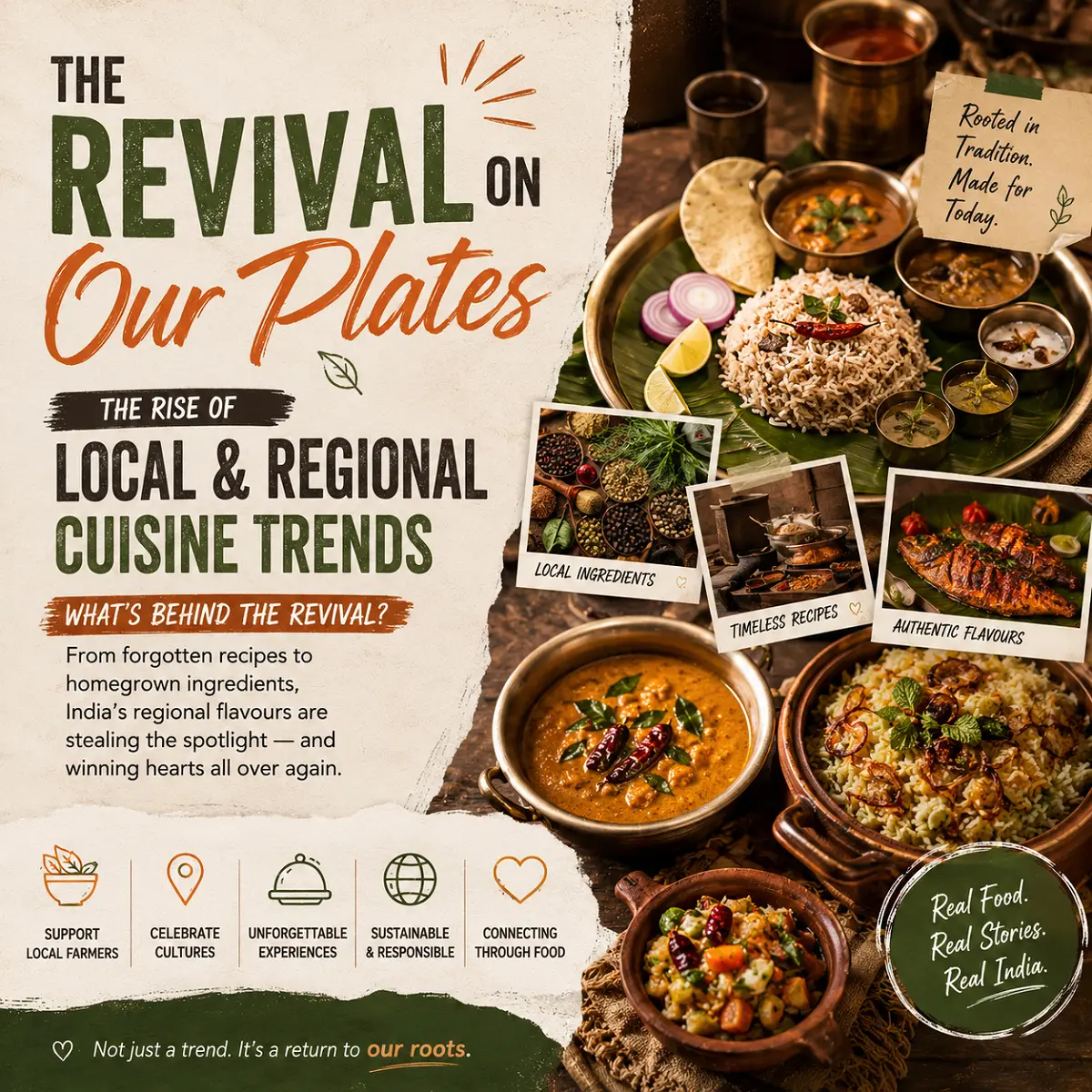
Growth of Local & Regional Cuisine Trends: What’s Behind the Revival?
For years, restaurant menus in India leaned heavily toward global food trends. Sushi, wood-fired pizza, Korean buns, all of it. But somewhere along the way, diners started wanting food that felt closer to home again. Local and regional cuisines are growing because people are craving food that feels familiar, rooted, and actually connected to a place. And honestly restaurants are finally realising that “local” doesn’t mean boring anymore.
Why Is Local and Regional Cuisine Suddenly Having Such a Big Moment?
After a long stretch of food globalisation, people got tired of eating versions of the same thing everywhere. Menus started blending together a little too much. One café looked like the next. One pasta dish tasted pretty similar to another.
Regional cuisine breaks that pattern.
A proper Konkani curry or a smoky Chettinad gravy carries something bigger than flavour. It carries memory. Geography. Family habits. Tiny cooking techniques that don’t really come from culinary school but from years of watching someone cook at home without measuring anything.
And diners notice that difference immediately.
What Is Actually Driving This Trend Inside Restaurants?
A lot of younger chefs grew up eating regional food at home, and now they’re putting those dishes on menus without trying to make them look “international” first. That shift matters more than people think.
Social media pushed it further too. A bowl of Manipuri eromba or bamboo shoot pork from the Northeast photographs beautifully now, especially when restaurants explain where it comes from instead of treating it like a novelty item.
A few years ago, regional food was often seen as too niche for modern dining spaces. Now it’s usually the dish people remember most after the meal. Funny how quickly that changed.
How Does Local Regional Cuisine Compare to Global Cuisine on a Restaurant Menu?
The two aren’t really competing directly. They just satisfy different emotions.
|
Global Cuisine |
Local & Regional Cuisine |
|
Built around novelty and global exposure |
Built around familiarity and cultural identity |
|
Uses standardised or imported ingredients |
Uses seasonal, local, often native ingredients |
|
Appeals to curiosity and experimentation |
Appeals to nostalgia and comfort |
|
Uses globally recognisable menu terms |
Keeps regional names and stories intact |
|
Focuses on refinement of classic formats |
Focuses on rediscovery and preservation |
Restaurants today are trying to balance both. But diners usually connect emotionally with the regional side faster. Especially in India.
What Are Diners Really Looking for When They Choose Regional Food?
More than anything, people want food that feels honest.
Not “inspired by.” Not toned down for everybody. Just authentic enough to feel believable.
There’s a visible difference between a restaurant that truly understands a cuisine and one that simply borrows aesthetics from it. Diners can usually tell when the spices are adjusted too much or when a traditional dish is redesigned so heavily that it loses its original character.
And when a restaurant gets it right, customers talk about it naturally. Word spreads quicker than ads sometimes. Someone recommends the place to family, then friends, then suddenly there’s a waiting line every weekend.
Is Leaning Into Regional Cuisine Actually a Good Business Move for Restaurants?
Yes. Increasingly, it’s becoming one of the smartest ways for restaurants to stand out.
Global cuisine exists almost everywhere now. But a restaurant known for proper Awadhi cooking or authentic Parsi food builds a different kind of reputation. It becomes associated with something specific. Something harder to copy.
That matters because diners today don’t just want variety anymore. They want credibility too.
Regional cuisine also helps restaurants work more closely with local farmers, spice suppliers, and smaller ingredient networks. In some cases, it even lowers dependency on expensive imported products. So financially, it can make sense as well.
What Do Chefs and Restaurateurs Who’ve Done This Well Say About It?
The restaurants earning the most trust around regional cuisine usually keep things simple. They don’t over-modernise every recipe or turn everything into fusion food immediately.
Instead, they focus on cooking the dish properly first.
Menus that explain where a dish comes from, how it’s traditionally eaten, or why a certain ingredient matters tend to create stronger connections with diners. People enjoy learning small details like that while eating. It makes the meal feel personal somehow.
Pro-Tip
In our experience, the regional restaurants that perform best usually keep around 60–70% of the menu completely traditional. The places that rush too quickly into experimental fusion often lose the very identity that made diners curious in the first place. A little reinterpretation works. Too much, and people stop recognising the cuisine altogether.
According to Indian cuisine traditions, regional cooking styles across India are shaped by geography, climate, trade routes, agriculture, and centuries of cultural exchange.
What’s Next for Local and Regional Cuisine Trends Heading into 2026?
Regional cuisine in India is only going to get bigger heading into 2026, especially outside major metro cities. Smaller cities are beginning to celebrate their own food cultures instead of copying dining trends from Mumbai or Delhi all the time.
Food tourism is quietly growing too. Travellers are now searching for places specifically known for regional dishes, not just famous restaurants generally. Someone visiting Goa wants authentic Saraswat food. Someone travelling through Rajasthan wants local thalis cooked the traditional way, not hotel versions.
And honestly, that shift feels important.
The food that was once considered too simple or too “home-style” for restaurant menus is slowly becoming the reason people choose a restaurant in the first place.
Keep exploring: Dining Out Trends 2026: Why People Prefer Dining Out Over Cooking More Than Ever ,
Rise of Experience-Based Restaurants: Why Are They Taking Over Dining?