Modern Cafés Drive Innovation in Kulfi with New Flavours and Formats
Modern cafés across India are reinventing kulfi with innovative flavours and formats, appealing to younger consumers and evolving dessert trends.
 Prajakta Sanjay Warwadkar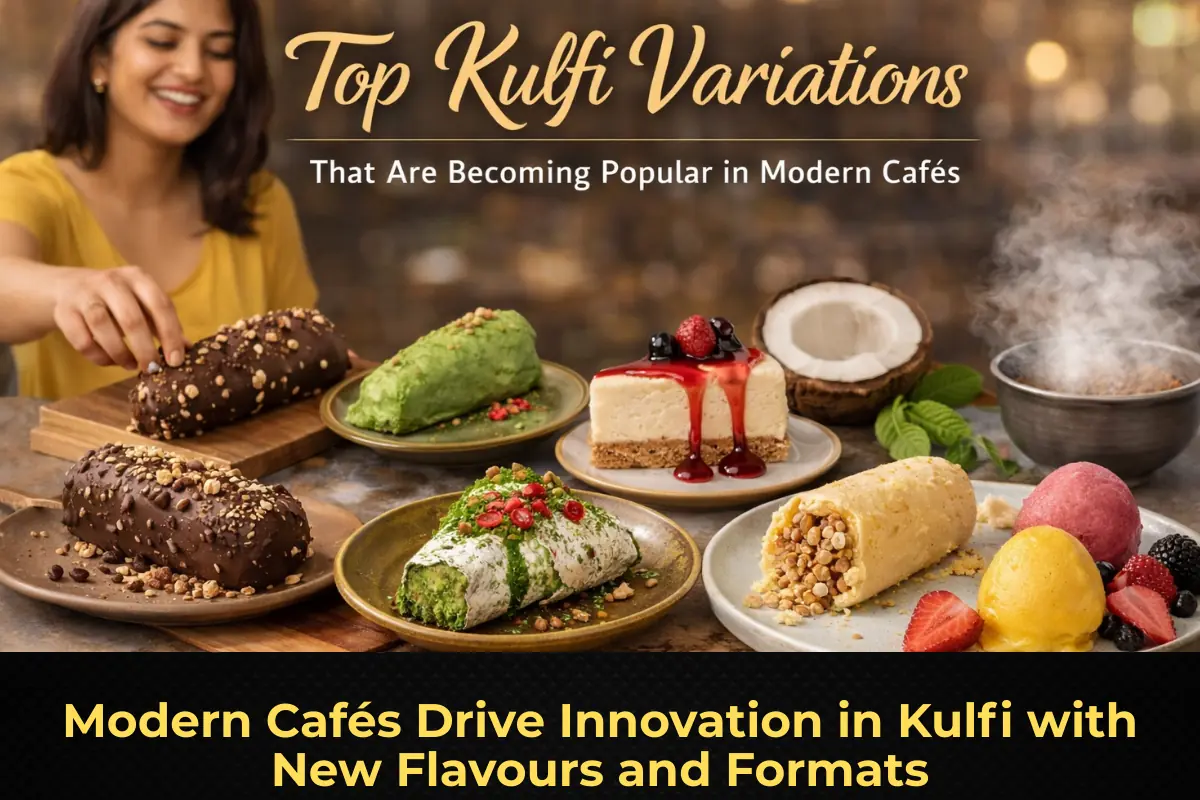
Modern Cafés Drive Innovation in Kulfi with New Flavours and Formats
India’s traditional frozen dessert kulfi is undergoing a transformation in 2026 as modern cafés and dessert chains introduce innovative flavours, formats, and presentations to appeal to evolving consumer preferences. The shift is being driven by younger diners, urban café culture, and a growing demand for unique and experiential dessert offerings across major cities.
Long regarded as a staple of Indian street food and traditional sweet shops, kulfi is now finding a place in contemporary café menus, where it is being reimagined with global influences, premium ingredients, and creative serving styles. This evolution reflects broader changes in the country’s food and beverage landscape, where heritage dishes are being adapted to suit modern tastes.
Reinventing a Traditional Favourite
Cafés and dessert brands are reinterpreting kulfi by introducing a wide variety of new flavours that go beyond classic options such as malai, pista, and kesar. Contemporary variations include chocolate-based profiles, fruit-infused options, and fusion flavours inspired by international desserts.
Ingredients such as matcha, coffee, cookies and cream, and exotic fruits are being incorporated to attract younger consumers who are accustomed to diverse flavour palettes. These innovations are helping kulfi compete with global frozen desserts such as gelato and ice cream in urban markets.
By blending tradition with experimentation, operators are positioning kulfi as both nostalgic and modern, broadening its appeal across different customer segments.
Emergence of Premium and Artisanal Offerings
The rise of premium café culture has also influenced the positioning of kulfi, with many establishments focusing on artisanal preparation methods and high-quality ingredients. Handmade processes, organic dairy products, and natural flavorings are being emphasized to create a more refined product.
This premiumization allows cafés to differentiate themselves in a crowded dessert market while catering to consumers willing to pay for quality and uniqueness. Presentation has also become a key element, with kulfi being served in innovative formats such as plated desserts, kulfi sandwiches, and layered parfaits.
The shift toward premium offerings reflects a broader trend in the hospitality industry, where traditional foods are being elevated to meet contemporary expectations.
Innovative Formats and Presentation Styles
In addition to new flavours, cafés are experimenting with formats to enhance the consumer experience. Kulfi is increasingly being served in bite-sized portions, on sticks with decorative coatings, or as part of elaborate dessert platters.
Some outlets are incorporating interactive elements, allowing customers to customize their kulfi with toppings such as nuts, syrups, and sauces. Others are blending kulfi into beverages, creating milkshakes and smoothies that combine traditional and modern elements.
These innovations are designed to make the dessert more visually appealing and shareable, particularly in the age of social media where presentation plays a significant role in driving customer engagement.
Influence of Café Culture and Urban Consumers
The transformation of kulfi is closely linked to the growth of café culture in India’s urban centers. Cafés are increasingly seen as social spaces where consumers seek not just food but also experiences. As a result, menu innovation has become essential for attracting and retaining customers.
Younger consumers, in particular, are driving demand for novel and Instagram-friendly desserts. Their willingness to experiment with new flavours and formats has encouraged cafés to push the boundaries of traditional offerings.
This demographic shift is reshaping how traditional Indian desserts are perceived and consumed, creating opportunities for innovation and growth.
Competition in the Dessert Segment
The dessert market in India is becoming increasingly competitive, with a mix of local and international brands offering a wide range of products. Kulfi’s reinvention is partly a response to this competition, as operators seek to differentiate themselves and capture market share.
Global dessert options such as waffles, frozen yogurt, and artisanal ice creams have gained popularity in recent years, prompting traditional dessert categories to evolve. By modernizing kulfi, cafés can position it as a viable alternative within this competitive landscape.
Maintaining authenticity while introducing innovation is a key challenge, as consumers continue to value the traditional essence of the dessert.
Role of Social Media and Branding
Social media platforms are playing a significant role in popularizing modern kulfi variations. Visually striking presentations and unique flavour combinations are often shared online, generating interest and driving foot traffic to cafés.
Brands are leveraging digital marketing strategies, including influencer collaborations and user-generated content, to promote their offerings. The emphasis on aesthetics and storytelling helps create a strong brand identity and enhances customer engagement.
This digital influence is accelerating the adoption of new dessert trends and shaping consumer expectations.
Opportunities for Regional and Local Flavours
While innovation is a key focus, there is also a growing interest in regional and local flavours, which are being reintroduced in contemporary formats. Ingredients such as paan, gulkand, and regional fruits are being incorporated into kulfi to create unique yet familiar taste profiles.
This approach allows cafés to celebrate India’s culinary diversity while appealing to modern sensibilities. It also provides an opportunity for differentiation, as regional flavours can offer a distinct identity in a crowded market.
Balancing innovation with cultural authenticity remains an important consideration for operators.
Challenges in Scaling Innovation
Despite its growing popularity, the modernization of kulfi presents operational challenges, particularly in maintaining consistency and quality across multiple outlets. The use of premium ingredients and artisanal methods can also increase costs, impacting pricing strategies.
Supply chain considerations, including sourcing specialized ingredients, may pose additional challenges for expanding brands. Ensuring that innovative offerings remain accessible to a broad customer base is essential for sustained growth.
Operators must carefully balance creativity with practicality to ensure long-term viability.
Future Outlook for Kulfi in Modern Dining
The evolution of kulfi is expected to continue as cafés and dessert brands explore new ways to innovate and engage consumers. The dessert’s versatility and cultural significance provide a strong foundation for further experimentation.
As the Indian hospitality industry continues to evolve, traditional foods that can adapt to modern trends are likely to see sustained growth. Kulfi’s transformation into a contemporary dessert highlights its potential to remain relevant in a dynamic market.
With continued innovation and strategic positioning, kulfi is poised to strengthen its presence in India’s modern café landscape.
Conclusion
The reinvention of kulfi by modern cafés underscores a broader shift in India’s dessert market, as traditional offerings are adapted to meet changing consumer preferences and competitive dynamics.