Osaka Restaurant Fights to Survive as Tourists Vanish
This Osaka restaurant in Dotonbori is losing tourists fast. Here is how one chef is fighting to keep her kitchen alive
 RUKAIYA KADIWAL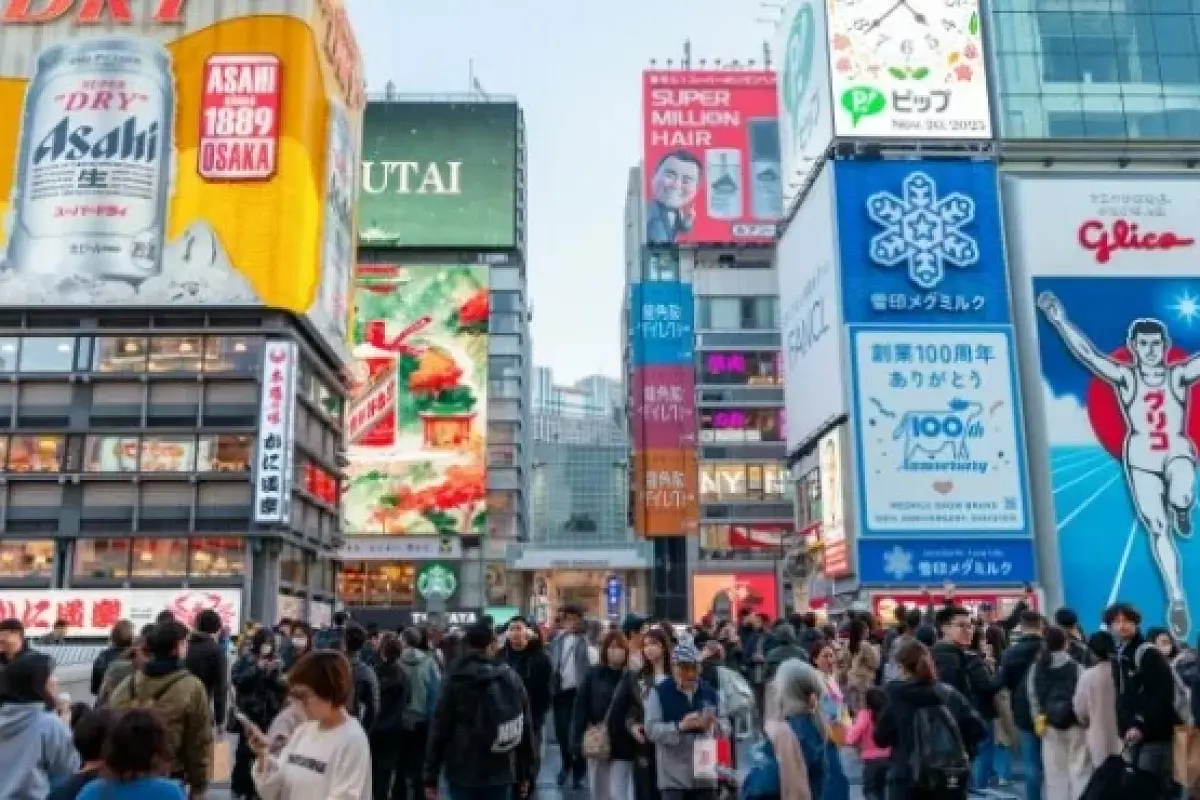
The Osaka restaurant sat one alley back from the canal, and on a Tuesday just past eight, its steam rose first, then the sound. A low hiss of batter hit the iron griddle. It was steady, almost like a heartbeat.
Michiko Hara stood where she always stood. She was at the far left corner of a nine seat counter, spatula in hand. She was watching the second empty stool of the night.
Two years ago, that stool would have filled within minutes. A line used to curl past the pharmacy next door. Tonight the stool stayed empty. Hara walked over. She straightened the chopstick rest. She returned to the griddle without a word.
"I used to know the rhythm of this street by ear," she said. She was not looking up from the batter. "Now I'm learning a new one."
The Osaka Restaurant and Its Owner
Hara's okonomiyaki counter has fifteen seats. It has occupied the same narrow storefront for eleven years. She took it over from her uncle in 2019. She inherited a cast iron griddle scarred silver at its center. She also inherited a clientele that, for a while, seemed to double every season.
She is fifty two. Her movements are unhurried. Her precision comes from repetition, not instruction. Her father cooked on the same street before her uncle did. She rarely calls the restaurant a business. She calls it a room she is responsible for keeping warm.
What Changed at This Osaka Restaurant
The change did not arrive all at once. It arrived the way a tide goes out, slowly, then suddenly obvious. Group tours that once filled her early seating thinned first. Solo travelers who used to wander in after seeing the Glico sign began arriving less often too.
Industry data later confirmed what Hara had already felt in her reservation book. Visitor arrivals from China fell sharply through spring and into early summer. The decline followed a travel advisory urging caution about trips to Japan. Hotel analytics firm STR reported that average daily room rates across Osaka Prefecture dropped 18.8 percent year on year in June. Rates elsewhere in the country climbed during the same period. Restaurants like Hara's depend on the foot traffic that hotel guests generate. The shift reached her within weeks.
Background on Dotonbori's Boom
Dotonbori has spent two decades absorbing the story of Osaka's tourism boom. Its canal side blocks are thick with illuminated signage. The smell of grilling octopus drifts between them. For years, nearly every storefront counted on a visitor from abroad walking in without a reservation.
That dependence built quickly. Restaurateurs on the street now admit it built too completely. "We built our hours, our staffing, our menu size around a version of this street that assumed the growth would keep going," Hara said. "Nobody built a plan for it slowing down."
Voices From the Counter
Her sous chef, Daichi Nomura, has worked the griddle beside her for six years. He remembers the loudest nights as chaotic. He also, quietly, misses them. "There wasn't time to talk to anyone," he said, sliding a plate toward a customer. "Now there's time. I'm not sure that's entirely a bad thing."
A regular, Etsuko Fujimori, comes to the counter every other week. Her office moved nearby a year ago. She noticed the shift before she understood its cause. "It used to be hard to get a seat here on a weeknight," she said. "Now I can just walk in. I feel a little guilty saying that's been nice for me, because I know it isn't nice for her."
Hara does not dwell on any single complaint. She talks about adjustment instead. She now prepares smaller batches of batter per hour. She trimmed the menu to remove dishes that moved slowly. She closes earlier on weeknights. She said this actually improved the quality of what she serves. "You cook better food when you're not rushing to feed a line outside," she said.
Dining at This Osaka Restaurant Today
Sitting at Hara's counter now means noticing details that once blurred past. The batter pours in a slow circle. It holds cabbage shredded so fine it nearly dissolves into the mix. She presses pork belly into the surface twice, then leaves it alone. There is no flipping, no checking. Only patience, until the edges begin to curl.
The smell arrives before the sound does. Char comes first, then sweetness, then the sharper note of sauce brushed on at the end. She serves it still on the griddle. A scallion garnish sits at an angle. She says nothing as the customer takes the first bite. She has stopped performing the dish. She has started simply making it.
The Emotional Cost
Quieter nights have reshaped more than order volume. Nomura said the kitchen's mood has changed. There is less adrenaline now, and more conversation between courses. Hara worries about her two part time staff. She has had to trim their hours. She has not laid anyone off. Instead, she works longer shifts herself so their paychecks stay whole.
"I would rather earn less than watch someone I trained have to leave," she said. She said it plainly, without theatrics. That is how she says most things.
What the Numbers Show About Osaka Tourism
Hara's counter is a small window onto a larger shift. Data from the Japan National Tourism Organization showed visitor arrivals from China fell 57.3 percent year on year in June. That decline had narrowed only slightly from a 60.4 percent drop the month before. Hotel rates were not uniformly affected nationwide. STR reported Japan's overall average daily rate rose 2.1 percent year on year in June, to roughly 18,512 yen. Longer stays from European, American, and Australian travelers helped offset the pullback from China.
Osaka's exposure was different. Its tourism economy had grown tightly wound around Chinese visitor volume specifically. Analysts cited in the same reporting suggested the city's room rates may have limited room to fall further. Few were willing to predict how quickly demand might return. Summer in Japan is traditionally carried more by domestic travel than inbound tourism. That means the softness Hara feels may ease, worsen, or simply hold, depending on factors well beyond her kitchen.
Business Realities for a Small Osaka Restaurant
For an independent operator like Hara, the macroeconomic story becomes arithmetic. She reworks it weekly. Ingredient costs have not fallen alongside revenue. Rent on Dotonbori's ground floor storefronts remains among the highest in the city. It was priced for a boom that assumed foreign visitor traffic would keep climbing. She has renegotiated one supplier contract. She delayed a planned renovation. She now tracks which nights of the week draw enough covers to justify full staffing.
Not every operator on the street agrees with her outlook. A neighboring bar owner, who asked not to be named, called the slowdown a temporary correction after years of unsustainable growth. He welcomed the return of local customers who had been priced out of the neighborhood's attention. Hara is less certain there is a silver lining. She does not dismiss the point entirely. "Maybe we needed to remember who this street was for before it was for everyone," she said. "I just don't know yet if remembering pays the rent."
A Final Night at the Counter
Near ten, the counter filled in briefly. A couple returned from a day trip to Nara. Three coworkers debated where to go next. Fujimori came back for what she called her second dinner of the week. Hara moved along the griddle without hurry, plating, wiping, starting again.
Outside, the Glico sign kept its runner mid stride against the dark. It has held that same pose for decades, indifferent to the numbers moving beneath it. Inside, a woman who spent her life reading a street by its noise was learning, one quieter night at a time, to read it by what remained.
Related reading: Inside England's best castle hotels