Restaurant Spending in the US Rises as Diners Seek Third Spaces
Restaurant spending in the US is climbing as OpenTable research shows diners treat neighborhood restaurants as third spaces that anchor local communities.
 RUKAIYA KADIWAL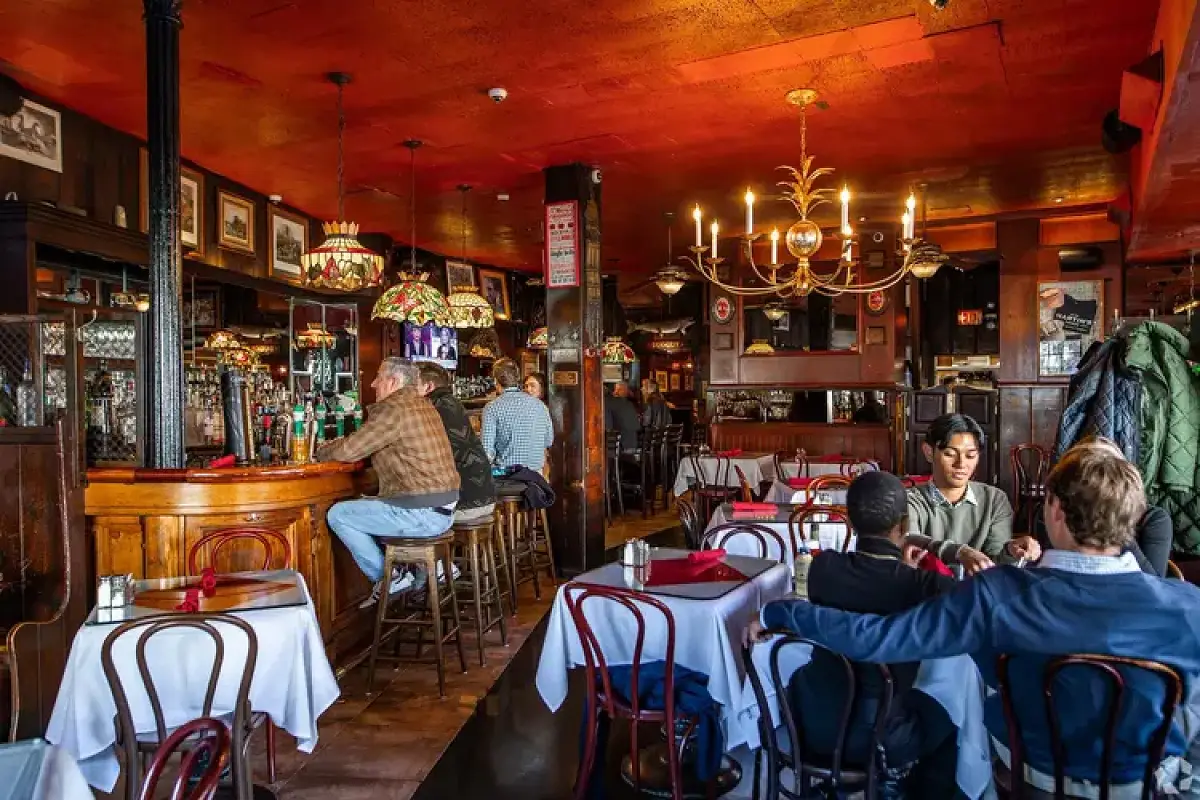
Restaurant spending in the US begins as a sound before it becomes a number. It is the scrape of a bentwood chair on a wooden floor. It is the murmur of guests at a long bar and the clink of glass from a shelf lined with bottles. At Martin's Tavern in Georgetown, Washington, D.C., those sounds fill a room the color of burnt copper.
Stained glass lamps hang low over the bar and throw amber light across the polished wood. A brass chandelier with candle shaped bulbs glows near the center of the room. Tables wear white cloths and red napkins. Nothing in the scene suggests a hurry.
The picture is ordinary, and that is the point. A new study from OpenTable says American restaurants act as gathering places for their communities. The OpenTable restaurant report also finds that these rooms help lift the local economies around them.
Restaurant Spending in the US Points to a Return to the Table
The numbers behind the mood are steady. OpenTable's 2026 Dining Trends Report, released in November 2025, found that dining grew 8 percent year over year in 2025. Americans said they expected to eat out about 10 times a month on average in 2026. More than half, 55 percent, said they planned to spend even more on restaurants.
OpenTable chief executive Debby Soo framed the finding as good news for operators. People, she said, continue to "make room in their lives and budgets for dining out." The remark matters because it describes a choice rather than a habit. Diners are weighing many demands on their money and still setting a place for restaurants.
Why Restaurants as Third Spaces Matter
A third space is a place that is neither home nor work, where people gather without a fixed agenda. Restaurants have always played that role quietly. The new research gives the idea weight in the language of US dining trends 2026.
Group dining rose 11 percent year over year in the OpenTable data, and 40 percent of Americans said they would rather eat with a group than alone. Shared plates are losing ground, with 52 percent preferring their own dish. The table is still full. Only the way people share it is changing.
Location plays a part too. Thirty six percent of diners said they favor neighborhood gems over the newest openings. Experiential dining, from chef's tables to pop ups, grew 46 percent. A familiar room with a sense of occasion is US restaurant spending at its most human.
The Business Case Behind Restaurant Spending in the US
The commercial picture is large. The National Restaurant Association projects that restaurant and foodservice sales will reach 1.55 trillion dollars in 2026. It expects operators to add more than 100,000 jobs. Each of those jobs sits inside a neighborhood, which is why the restaurant local economy impact reaches beyond the dining room.
The view is not uniformly bright. Analysts summarizing the OpenTable findings noted that Americans hold mixed views on the wider economy. Affordability remains a top concern for diners, and survey intentions are not the same as receipts. Operators must protect value without losing the warmth that brings guests back.
Owners weighing a new venture can find practical restaurant opening advice on how to build that kind of loyalty from the first day.
What a Georgetown Dining Room Reveals
Consider the room again. The bar draws regulars who face the bottles and one another. The tables draw groups who lean in across white linen. The ceiling glows above all of them, as it has for years, and people arrive for reasons that no spreadsheet fully captures.
Statistics can show that restaurants as third spaces are growing in value. They cannot show the evening itself. A chair pulled out for a friend. A story that runs past the check. When the last guests step into the Georgetown dark, the lamps still burn, and the room waits for tomorrow's conversation.