PepsiCo Global Potato Expertise Shared Through Agro University
PepsiCo global potato expertise is shared through its Global Agro University, transferring precision farming knowledge across 25,000 farmer partners in six continents.
 RUKAIYA KADIWAL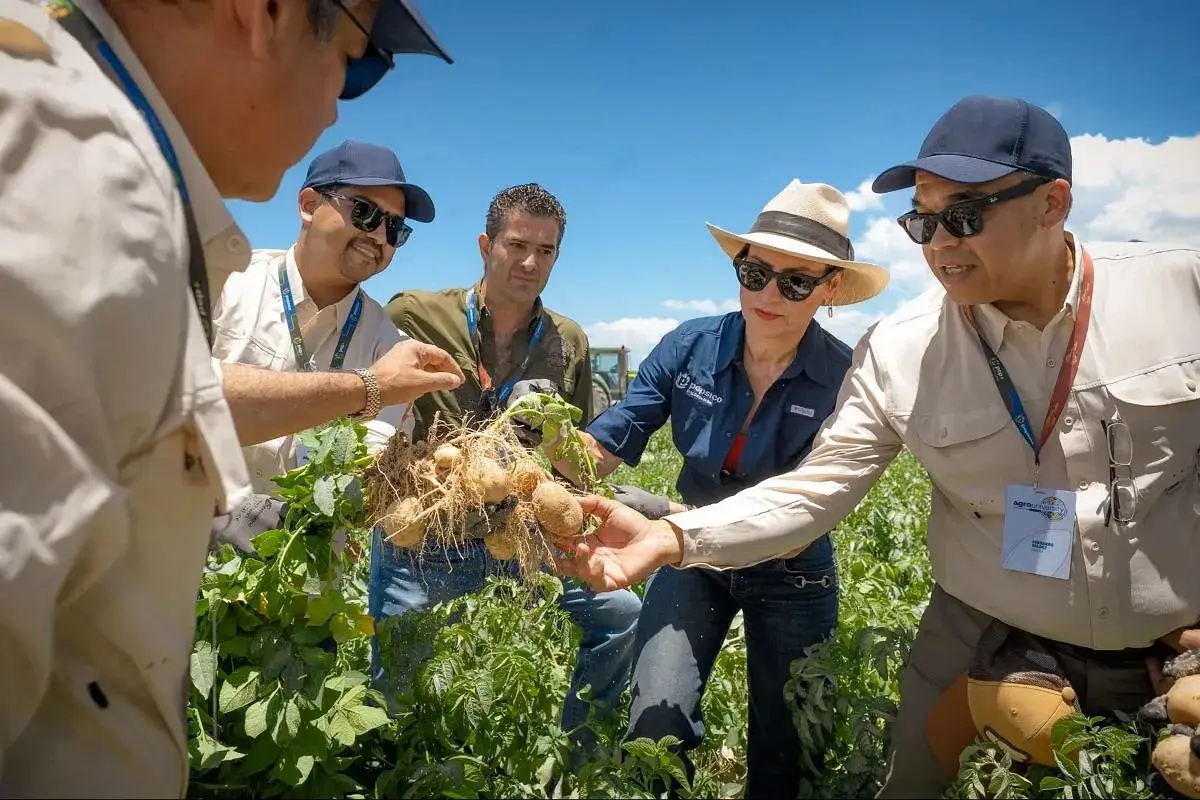
In a potato field in Mexico under a midday sun, a small group of agronomists stands around a freshly pulled plant. Someone holds the root cluster up, turning it slowly so everyone can examine the size and distribution of the tubers along the stem. The woman in the PepsiCo shirt leans in. She has seen this plant disease before, in a different field, in a different country, in a season with different rainfall. She knows what the root structure means before the local agronomist has finished explaining it. This is how PepsiCo global potato expertise actually moves: not through manuals or presentations but through people standing in soil together, comparing what they are seeing against what they have already seen.
PepsiCo's Global Agro University programme formalises that knowledge transfer. It brings together farmers, agronomists, and agricultural experts from across PepsiCo's potato supply chain to share technical knowledge, compare production challenges, and apply learnings from one market to the conditions of another. The programme is a structured response to a supply chain reality: a company that processes potatoes into Lay's crisps across dozens of countries cannot afford to treat each market's agricultural challenges as isolated from the rest.
PepsiCo Global Agro University: What the Programme Does
The Global Agro University is not a university in the conventional sense. It has no campus, no fixed curriculum, and no graduation ceremony. What it has is a rotating programme of knowledge exchange events, field visits, and technical workshops that bring together participants from markets as different as Mexico, Egypt, India, Pakistan, and Kazakhstan to work through the same agricultural problems from different starting points.
The programme's practical focus is what distinguishes it from corporate training. Participants spend time in actual fields rather than conference rooms, examining soil conditions, disease pressure, irrigation efficiency, and yield data in the context of a specific growing season. The knowledge that circulates through the programme is not theoretical. It is the accumulated experience of agronomists who have solved the same problems in different climates with different varieties and different infrastructure constraints.
Potato Farming Expertise and the Supply Chain It Supports
PepsiCo sources potatoes from around 25,000 farmer partners globally, a supply network that spans every major potato growing region on earth and produces the raw material for one of the world's largest snack food categories. Managing that supply chain sustainably requires consistency in yield, quality, and environmental practice across markets where the baseline conditions, soil type, water availability, pest pressure, and climate variability, differ enormously.
Precision farming has become central to how PepsiCo supports its farmer partners in navigating those differences. Variable rate application of inputs, satellite monitoring of crop health, soil moisture sensors, and data-driven irrigation scheduling are all part of the technical toolkit that agronomists within the Global Agro University network are developing and sharing. The goal is not to standardise farming practice across all markets but to ensure that the best-performing techniques in any one market are available to farmers in others who face comparable challenges.
PepsiCo Potato Farming: The Human Scale Behind the Supply Chain
Alejandro Muñoz, PepsiCo's head of agronomy for Latin America, described what makes the Global Agro University approach distinct from conventional technical assistance. The exchange, he has noted, runs in both directions rather than from a central headquarters outward. A technique developed by a farmer partner in the Netherlands for managing late blight in a wet season may be directly applicable to a farm in India during monsoon. The same knowledge transfer that helps a large commercial operation in Kazakhstan can be adapted for a smallholder in Pakistan.
That bidirectionality matters because it treats knowledge as something the supply chain generates collectively rather than something a corporate agriculture team delivers to passive recipients. Farmers who participate in the Global Agro University are contributing their own experience to the shared pool as well as drawing from it, which changes the relationship between PepsiCo and its farmer partners from a purely commercial one toward something closer to a technical community.
Global Potato Production and the Challenges the Programme Addresses
Global potato production faces mounting pressure from multiple directions simultaneously. Climate change is altering the timing and severity of disease cycles in ways that historic management calendars cannot anticipate. Water scarcity is intensifying in key producing regions. Input costs, including fertiliser and pesticides, have risen sharply since 2022. Labour availability in some markets has tightened enough to make mechanisation an urgent rather than a long-term consideration.
These pressures fall unevenly across PepsiCo's supply network. A large commercial potato operation in the United States or Germany has access to capital, technical consultants, and mechanisation that a smallholder in Egypt or India typically does not. The Global Agro University is one mechanism through which PepsiCo attempts to reduce that gap, providing smaller and less capitalised farmer partners with access to knowledge and techniques that they could not develop independently.
Agricultural Knowledge Exchange and What It Produces
The outcomes of agricultural knowledge exchange programmes are difficult to measure cleanly. Yield improvements attributable to a specific training programme are hard to separate from the effect of better rainfall, a new seed variety, or a favourable market price that motivated a farmer to invest more carefully in crop management. PepsiCo reports improvements in water use efficiency, yield, and sustainability metrics across its potato supply chain, but attributing those improvements to the Global Agro University specifically requires the kind of controlled comparison that field agriculture rarely permits.
What is measurable is engagement. The programme has expanded its geographic reach year by year, drawing participants from markets that did not engage with it initially and producing documented cases where a technique transferred from one market has been adopted in another. That pattern of adoption is the practical evidence that the knowledge exchange is working rather than merely taking place.
The Farm-to-Table Chain That Restaurants Depend On
The connection between a potato field in Mexico and a restaurant table is long but direct. The same supply chain thinking that drives PepsiCo's Global Agro University also shapes how fine dining restaurants build their supplier relationships, a commitment to knowing where ingredients come from and how they are grown that has become a defining characteristic of serious culinary culture. Coverage of how Michelin star restaurants in Belfast build their menus around Northern Irish produce and direct supplier relationships reflects the same instinct at a smaller scale: the quality of what reaches the plate depends on the quality of the agricultural relationship that precedes it.
PepsiCo global potato expertise operates at an entirely different scale from a Michelin-starred kitchen in Belfast. But the underlying logic connects them. A plant pulled from the soil in a Mexican field by an agronomist who understands what the root structure means before it is explained is the beginning of a chain that ends, many steps later, in a product that a consumer trusts enough to buy repeatedly. Building that trust starts in the field, and the Global Agro University is where PepsiCo invests in making sure the people standing in those fields know what they are looking at.
Learn more at PepsiCo's official website.