Restaurant Burger Prices Reveal a Costly Transformation
Restaurant Burger Prices have doubled at spots like Le Diplomate, where a $14 burger now costs $29, reflecting soaring beef costs nationwide.
 RUKAIYA KADIWAL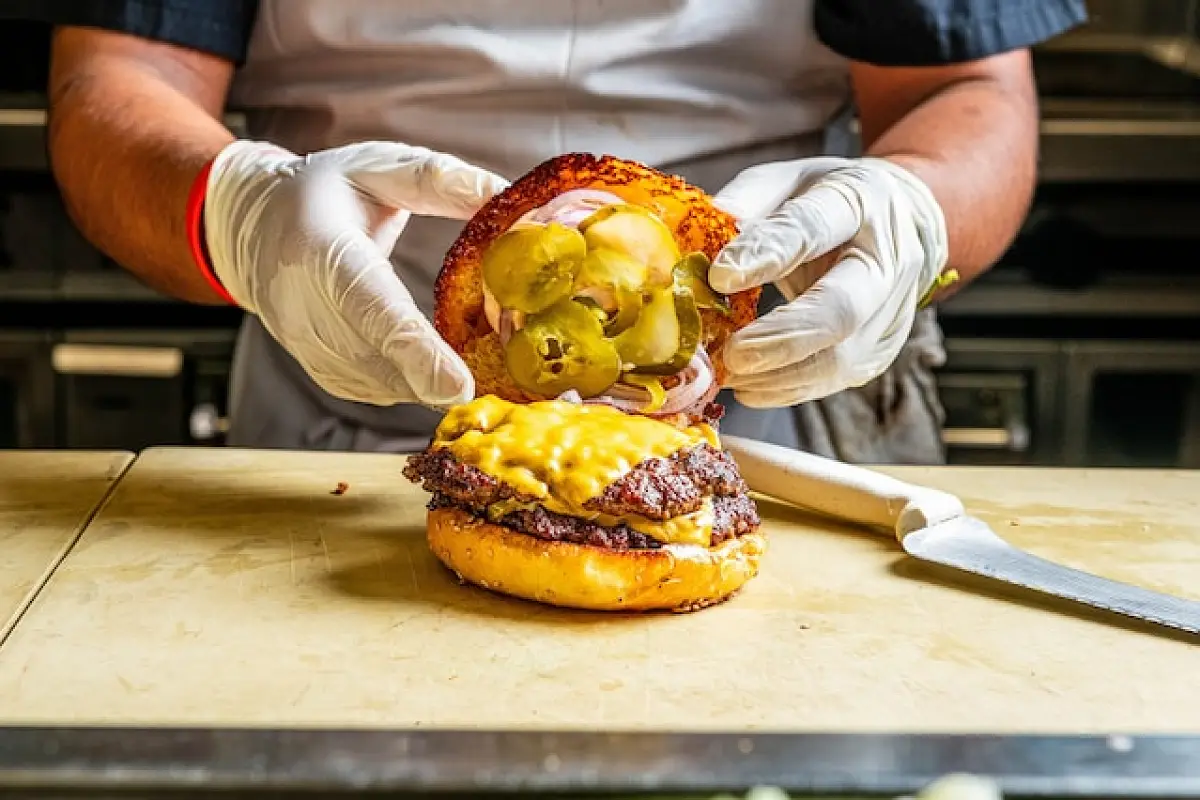
Gloved hands lift a toasted brioche bun heavy with pickles and thinly sliced red onion, revealing a molten drape of cheddar clinging to a charred patty below, the knife resting nearby waiting to cut it clean in two. It is an ordinary kitchen moment, repeated nightly across thousands of American restaurants, yet the price attached to that particular burger tells a story considerably larger than the plate itself. Restaurant Burger Prices have quietly climbed into territory once reserved for steak dinners, and nowhere is that shift more visible than at Le Diplomate in Washington.
The Burger Américain, a fastidious and Frenchified version of the Big Mac served at Le Diplomate, set diners back $14 when Stephen Starr debuted his stylish brasserie in Washington in 2013. Thirteen years later, the same burger and fries cost $29, a figure that has more than doubled without the dish itself changing in any fundamental way.
A Single Burger, A Larger Pattern
That kind of steady, compounding price increase rarely happens through a single dramatic jump. Instead, it accumulates gradually, a dollar here, two dollars there, until enough years pass that the gap between the original price and the current one becomes genuinely startling when placed side by side. Le Diplomate's burger offers a particularly clean example precisely because its price history is so well documented, stretching back to a specific opening year with a specific starting figure.
For diners who remember ordering the Burger Américain in its early years, the current $29 price tag registers as more than simple inflation, it reflects a broader repositioning of what a burger is even meant to represent on an upscale restaurant menu.
Beef Costs Reshaping the Math Behind Every Patty
Restaurant burgers across the country have followed a remarkably similar trajectory, with the $30 burger now appearing on menus from New York to California, despite ongoing efforts by operators to rein in soaring beef prices. That national consistency suggests the pressure driving these increases extends well beyond any single restaurant's pricing strategy or a particular chef's ambitions for a signature dish.
Ground beef and the higher grade cuts often used for premium burger blends have both climbed considerably in cost over recent years, driven by tightening cattle supplies and elevated feed and processing expenses throughout the supply chain. For a dish built almost entirely around a single protein, that kind of sustained cost pressure translates directly and visibly onto the final menu price in a way many other dishes can better absorb or disguise.
From Casual Comfort Food to Considered Indulgence
The burger has long occupied a unique place in American dining culture, simultaneously humble enough for a backyard grill and elevated enough to headline a white tablecloth restaurant menu. What has shifted is where that spectrum now sits financially, with even casual, quick service burgers commanding prices that would have seemed reserved for a proper sit down entrée a decade ago.
That repositioning carries real consequences for how diners think about ordering a burger at all, transforming what was once a reliably affordable, no risk menu choice into something closer to a deliberate splurge, weighed and considered alongside more traditionally expensive dishes rather than treated as the safe, budget friendly option it once represented.
What Restaurants Are Actually Weighing
Operators navigating this pricing environment face a genuinely difficult balancing act, protecting already thin margins against beef costs that show little sign of retreating, while simultaneously avoiding prices steep enough to push loyal customers away entirely. Restaurants that built their identity partly around a beloved, moderately priced burger now find themselves managing that dish's reputation carefully, since a beloved $14 burger becoming a $29 burger risks feeling like a betrayal even when the underlying cost increases are entirely legitimate. Full reporting on this trend is available on the official Washington Post website.
Some restaurants have responded by leaning further into premium positioning, adding higher end toppings, house made condiments or specialty cheese blends that justify the elevated price through genuine culinary distinction rather than simply passing along raw cost increases unexplained. Others have quietly trimmed portion sizes or simplified preparation in an attempt to hold prices steadier, a tradeoff that carries its own risk of disappointing regulars who remember a more generous version of the same dish.
A National Trend With Local Consequences
Because this pricing shift has unfolded so broadly across American cities rather than concentrating within a single region or restaurant category, it offers a genuinely useful window into how rising input costs ripple through an entire industry simultaneously. Whether in Washington, New York or California, restaurants serving broadly similar customer bases have arrived at broadly similar pricing conclusions, suggesting the underlying beef cost pressure driving this shift is structural rather than tied to any one local market's particular economic conditions.
That kind of synchronized industry wide response mirrors similar cost pressures reshaping menus and pricing strategies across other corners of global hospitality, where operators everywhere continue searching for ways to protect quality and reputation while absorbing costs largely outside their own control, a dynamic also visible in how ambitious new restaurant concepts elsewhere navigate their own margins while pursuing recognition, as seen in recent coverage of Lava's nomination for Spain's best new restaurant opening, where culinary ambition and financial sustainability similarly intersect.
What a Doubled Price Actually Represents
Back in the kitchen, the burger assembled beneath gloved hands looks essentially identical to the one that would have left that same kitchen a decade earlier, the same char on the patty, the same careful stack of pickles and onion, the same molten cheese pooling at the edges. What has changed sits entirely outside the frame of that photograph, in cattle markets, feed costs and supply chains most diners never think about while deciding whether tonight calls for a burger. As that number on the menu keeps climbing, the real question facing restaurants and diners alike is no longer whether the $30 burger has arrived, but whether it is here to stay.