US and China Fast Food Chains Cross the Pacific Both Ways
US and China fast food chains are expanding across the Pacific simultaneously, as KFC reaches 13,000 Chinese locations and Mixue opens in New York and California.
 RUKAIYA KADIWAL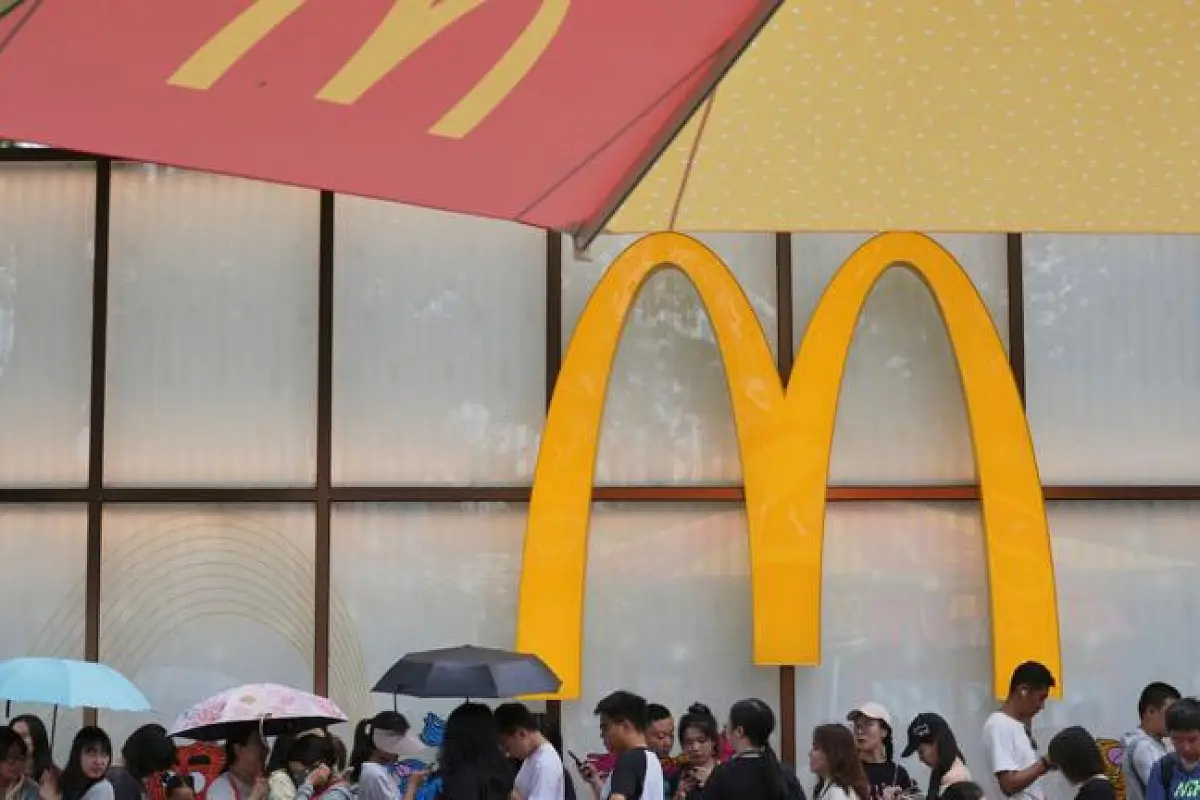
Last December, customers waited in the cold outside a Herald Square store in New York for something they could not have ordered in that city the previous week. Soft-serve ice cream. Fruit teas. Milk tea with toppings including coconut jelly and taro balls. The store was Mixue, a Chinese chain with more than 53,000 locations worldwide, and the people waiting for it were as much a statement as the product they were queuing for. They were not waiting because there was no other place to buy a drink in Midtown Manhattan. They were waiting because this particular drink, from this particular chain, was new in a way that mattered to them, and novelty at that scale is its own kind of draw.
US and China Fast Food Chains Build a Two-Way Culinary Bridge
The simultaneous expansion of US and China fast food chains across the Pacific is one of the more quietly consequential stories in the global restaurant industry in 2026. American chains are deepening their presence in China at pace. Chinese chains are testing the American market with growing confidence. The two movements are happening at the same time, in the same industry, between two countries whose governments are divided on most of the significant issues of the current era. What the restaurant industry has produced between them is something neither government designed and neither can fully claim: a bilateral consumer relationship built on burgers, bubble tea, and the particular kind of cultural curiosity that food satisfies more reliably than politics.
Yaling Jiang, founder of ApertureChina, a market research company with offices in Shanghai and London, has a name for what she is observing. She calls it business and consumer-led gastrodiplomacy. In China, she said, recent American arrivals like Popeyes and Five Guys are seen as a guilty pleasure. For Americans, increasingly international in their tastes, Chinese brands are serving as their nation's unofficial ambassadors. "Consumerism builds a safe, introductory channel for contemporary Chinese culture and can be a great way to elevate China's soft power," she said. Her framing positions a cup of bubble tea as something more than a beverage, a soft point of contact between two cultures that have fewer of those than the scale of their mutual dependence might suggest.
KFC in Beijing and What 1987 Made Possible
KFC became the first major American fast-food chain to enter mainland China when it opened a Beijing restaurant in 1987. The context of that arrival matters for understanding what it meant. Shaun Rein, founder and managing director of the Shanghai-based China Market Research Group, was clear about the signal the opening sent. "McDonald's and KFC were a beacon of health and hygiene compared to what you had in the rest of the market," he said. The restaurant was viewed as a premium destination, somewhere worth taking a date, a statement about aspiration as much as appetite.
McDonald's and Pizza Hut followed in 1990, and the next three and a half decades produced a growth trajectory that would have been difficult to project from the vantage point of that first Beijing opening. China is now KFC's largest market by far. The chain counts approximately 13,000 restaurants in China against around 3,750 in the United States, a ratio of more than three to one in favor of the country that did not invent it. Despite political tensions between the two nations, "Chinese actually still go crazy for American brands," Rein observed. The gap between geopolitical friction and consumer preference is, in his reading, both persistent and commercially significant.
The Rain Queue in Shanghai and the Lines Still Growing
Last month, Chinese customers lined up in the rain for the opening of the first Church's Texas Chicken in Shanghai. The image carries its own commentary on the appetite for American fast food in China, given that the effort of standing in wet weather for a fried chicken brand that was not previously available in the city speaks to a demand that proximity alone cannot explain. Church's plans at least 600 more locations across China. Wendy's anticipates opening 1,000 restaurants there over the next decade. McDonald's plans 1,000 new Chinese restaurants in the current year alone and 10,000 total by 2028. Burger King, in China since 2005, expects to triple its store count to 4,000 by 2035.
The speed of these projections reflects both the opportunity and the competitive pressure. China has four times the US population, and much of that population lives in smaller, inland cities where brands like McDonald's and Starbucks are rolling out stores at a pace that the coastal markets no longer require. Sory Park, a project manager at China-focused market research and strategy firm Daxue Consulting, described the frontier of American fast-food expansion in China as the interior rather than the coast. That observation has a commercial logic: brand recognition in Shanghai or Beijing is established. The growth question is what happens in the cities that have the population but not yet the store density.
What Adaptation Looks Like on the Ground
Expanding into China requires more than replicating a menu developed for a different market. Most American chains now rely on Chinese partners to find locations and share the financial risk, a structural adaptation to a market whose real estate dynamics and regulatory environment differ significantly from those of the United States. Menu adaptation follows the same logic. KFC restaurants in China serve french fries and Original Recipe chicken alongside custardy egg tarts and congee, a savory rice porridge that belongs to the Chinese breakfast tradition rather than the American one. The product is American. The context is Chinese. "They need to operate like a Chinese company but deliver American menus that incorporate Chinese values, eating habits, and tastes," Park said. That balance, between the brand identity that attracts the customer and the local adaptation that keeps them returning, is the central operational challenge for every American chain operating at scale in China.
Earlier this year, a Chinese investment firm acquired a 60 percent stake in Starbucks' China operation after several years of falling store traffic, a development that illustrates both the structural partnership model most American chains are adopting and the limits of operating in China without sufficiently localised ownership. A brand's recognition does not guarantee its operational success in a market as competitive and quickly evolving as China's, where the average lifespan of a restaurant or chain was projected to fall to fifteen months last year, according to a US government report.
Mixue in Herald Square and Heytea in San Francisco
The American side of the exchange is younger, smaller, and less certain in its outcomes. Mixue, whose more than 53,000 locations make it one of the world's largest fast-food chains by store count, opened its first three US stores in December and has announced at least two dozen more planned locations across four states. Heytea has reached 40 US locations. Luckin Coffee, which overtook Starbucks as China's biggest coffee brand by store count, has 20 stores in New York. At least nine mainland Chinese chains have made their US debuts since 2023, with most specialising in drinks and snacks rather than full-service meals.
The pricing advantage these chains carry is real and deliberate. At a Mixue in Hollywood in September 2026, a medium matcha latte cost $6.83. The same drink at a nearby Starbucks sold for almost a dollar more. Wallace, a chain that grew to more than 20,000 restaurants in China by selling American-style chicken and hamburgers at accessible price points, sells three full-size chicken sandwiches in California for $10. Aaron Allen, founder of restaurant consulting firm Aaron Allen and Associates, framed the competitive logic plainly. "The Chinese can build stuff cheaper and faster. Why would that not apply to food?" he said. The observation is not merely about price. It is about a production and scaling capability that the American restaurant industry has not previously encountered at this level of competitive intensity from an external source.
The Risks on Both Sides of the Pacific
Neither direction of this exchange is without its complications. Allen identified two specific risks facing Chinese chains as they expand in the US: the possibility of customer backlash if they undercut domestic rivals using low-cost Chinese imports, and potential regulatory scrutiny over the collection and use of customer data, a concern that has already shaped American policy toward Chinese technology companies. Wallace's US website and social media pages do not mention the brand's Chinese ownership or its headquarters in Fujian province, a decision that may reflect an understanding that transparency about origin carries commercial risk in the current political environment.
For American chains in China, the risks are different in character but similarly structural. Partnership dependence, menu adaptation requirements, and the vulnerability to shifts in consumer sentiment that geopolitical tension can produce are all factors that no brand presence, however established, can fully insulate against. The Starbucks China ownership change is a data point about what happens when the market moves faster than the operating model.
What Two Leaders and Their Eating Habits Reveal
The AP report that broke this story noted that both Xi Jinping and Donald Trump have documented relationships with the category of food under discussion. In 2013, Xi made a rare public visit to a steamed-bun restaurant in Beijing, waited in line, and paid 21 yuan for a meal that included six pork-and-scallion buns, vegetables, and a bowl of stewed pork liver and intestines. Trump's preference for fast food has been documented repeatedly, including a moment during his 2024 campaign when he manned a fry station at a Pennsylvania McDonald's. Both moments were images before they were meals, performances of accessibility that the camera was always intended to capture. The food was real. The politics attached to it were also real. Both leaders, in their different ways, understand that what a person eats in public communicates something about who they understand themselves to be.
A Queue Outside a Store and What It Has Always Meant
The United States accounts for one-third of global restaurant revenue despite containing roughly four percent of the world's population, a concentration that makes it the most commercially significant restaurant market on earth and a target that every major global chain eventually has to address. Chinese brands arriving in New York and California are not arriving naively. They understand where they are going. The question of whether novelty can translate into loyalty, whether the customer who waited in the cold at Herald Square in December returns in March and again in June, is the question that every brand crossing the Pacific in either direction is trying to answer. A queue is always a beginning. What comes after it is the harder story, and the one that will take several more years to read clearly.
Related reading: DiMaggio's Italian restaurant opens at Phoenix Uptown Plaza